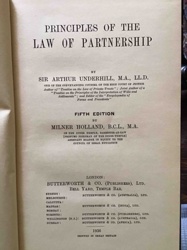
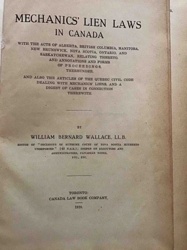
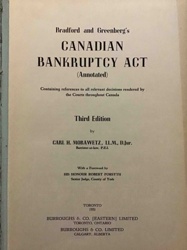
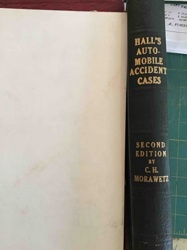
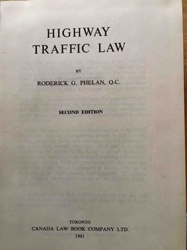
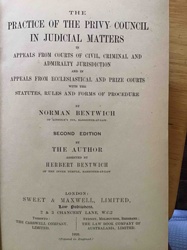
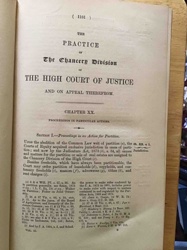
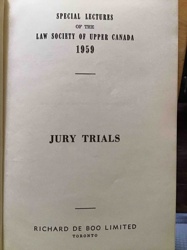
These notes were written by the person who submitted this item. Appraiser.AI has not verified them, and the AI's identification and estimate may rely on them.
AI Estimated Value
Not an official valuation
$100-200
AI estimate as of July 5, 2025 · verify with a professional before acting
AI-Generated · Verify before acting
Everything on this page is generated by AI for informational purposes only. AI can make mistakes — the AI may misidentify items or misattribute them (artist, maker, brand, designer, origin, era). This is not an official valuation and should not be used for insurance, sale, tax, estate, legal, or lending purposes — or any decision requiring a certified appraisal. It is not an authoritative claim about any person, brand, or rights holder — do not share or rely on it as a factual statement about a third party. Always consult qualified professionals before making financial decisions.
This analysis also relies on unverified notes provided by the user, which may be incomplete or inaccurate and could affect the result.
The item is a printed legal book titled 'The Revised Statutes of Nova-Scotia. Third Series.', published in 1864. The visible page is the title page, presenting a standard layout for legal texts of its era. It is constructed from paper, likely linen or rag paper, given its age, which tends to be more durable. The text is printed in black ink, featuring various weights and styles of serif fonts for headings and body text, indicating a methodical typographic design common for official publications. The page itself exhibits an off-white or cream color, consistent with aged paper. There are visible signs of wear and age, including what appears to be foxing (small brownish spots) scattered across the page, particularly noticeable towards the upper and lower right corners, suggesting moisture exposure or natural aging processes. The paper also shows some creasing and slight discoloration along the left margin near the binding, indicating handling and the natural curvature of a bound volume. The binding edge on the left appears to be intact, suggesting the full book is present. The craftsmanship is typical for 19th-century book production, focusing on clarity and durability for official records rather than elaborate artistry. The stated condition is 'fairly good', which aligns with the observed patina and minor imperfections that do not significantly detract from the legibility or structural integrity of the page. This is a publication from J. & W. Compton, Publishers, Halifax, N.S., and was prepared by Stewart Campbell, Charles F. Harrington, and Hiram Blanchard, Q.C.s, under the supervision of Hiram Blanchard, Q.C., and William Twining, Esquire. Its age clearly places it in the mid-19th century.
AI Appraisal Report
I have examined the provided image of 'The Revised Statutes of Nova-Scotia. Third Series.' from 1864, along with the owner's description of 'fairly good' condition. The visual evidence, including the off-white/cream paper, serif fonts, and typical 19th-century typographic design, is consistent with an authentic publication of that era. The stated condition aligns with the visible foxing, creasing, and minor discoloration, which are common signs of age but do not appear to compromise legibility or structural integrity. The intact binding edge suggests the full volume is present.
Legal texts from this period, especially those pertaining to specific regions like Nova Scotia, have a niche market. While not inherently rare in terms of general book production, their specific historical and legal context provides value. I've considered comparables for similar 19th-century Canadian legal statutes and regional historical documents. The demand is primarily from academic institutions, legal historians, and collectors specializing in Canadiana or legal history. Factors impacting value include the volume's completeness, the explicit stated authors and publishers, and its 'fairly good' condition, which is desirable for a usage item of this age.
Limitations exist in authenticating solely from images; full authentication would benefit from physical inspection to verify paper quality, binding integrity, and to rule out repairs or interventions not visible. Provenance documentation, such as the book's ownership history, would further enhance its value, confirming its journey since publication. Scientific testing on the paper or ink is typically not warranted unless significant doubts about authenticity arise.