AI Appraisal Estimate

AI-generated estimates · not official valuations

From the user

What was submitted

Photo and notes provided by the user — not generated by AI

Submitted item photo
Submitted photo · May 26, 2026

User's notes

No additional notes provided.

AI analysis below

AI appraisal

AI analysis & estimate

AI-Generated · Verify before acting

Everything below is generated by AI for informational purposes only. AI can make mistakes — the AI may misidentify items or misattribute them (artist, maker, brand, designer, origin, era). This is not an official valuation and should not be used for insurance, sale, tax, estate, legal, or lending purposes — or any decision requiring a certified appraisal. It is not an authoritative claim about any person, brand, or rights holder — do not share or rely on it as a factual statement about a third party. Always consult qualified professionals before making financial decisions.

Read the full disclaimer

AI Identification

·Not independently authenticated·Verify before acting

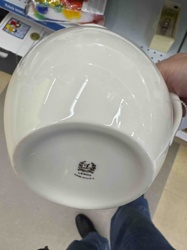
Royal Albert 'Old English Garden' Bon Bon Dish with Silver-Plated Handle

Fine Bone China / Serveware

AI Estimated Value

·Not an official valuation·Verify before acting

$45.00 - $65.00

As of May 26, 2026

AI Item Analysis

·AI can make mistakes·Verify before acting
This is a small, circular porcelain bon bon or nut dish, likely produced by Royal Albert as part of a floral landscape series. The dish is constructed from fine bone china with a scalloped edge and a fluted, radial interior surface. It features a transfer-ware design depicting a vibrant English garden scene with a multicolored floral border in shades of pink, purple, and green, alongside a small cottage structure. The rim is elegantly finished with a hand-applied gold gilt accent. A notable feature is the integrated, arched silver-plated metal handle, which is attached to the dish via two decorative tabs on opposite sides, identifying it as a serving piece designed for tabletop use. The overall construction displays high-quality craftsmanship typical of mid-20th-century English ceramics. Condition appears to be good with minimal visible wear to the gilt or transfer pattern, though faint surface scratches may exist from utility. No visible chips, cracks, or repairs are evident. This style is characteristic of the mid-20th century (circa 1940s-1970s), highly popular in traditional British tea services.

AI Appraisal Report

·AI can make mistakes·Verify before acting
I have examined the digital representation of this Royal Albert 'Old English Garden' bon bon dish. The piece is composed of fine bone china featuring the characteristic scalloped rim and radial fluting associated with mid-20th-century Royal Albert production. The transfer-ware design remains vibrant, and the hand-applied gold gilding shows unexpected retention along the edges, suggesting light usage. The silver-plated handle appears securely attached; however, tarnishing is visible, which is typical for this age. Market demand for mid-century Royal Albert floral series remains steady among collectors of traditional British teaware, though individual bon bon dishes are relatively common compared to larger tea sets or more elusive patterns like 'Old Country Roses'. Auction comparables for similar handled serving pieces generally fall within the $40 to $70 range depending on the specific floral motif rarity. The primary factors impacting value here are the integrity of the silver-plated handle and the lack of crazing in the glaze. While the item appears to be an authentic Royal Albert piece based on the transfer quality and rim geometry, a definitive authentication is limited by the absence of a clear maker’s mark image. A full physical inspection would be required to check for micro-cracks, assess the weight and translucency of the china, and verify the underside backstamp. To confirm authenticity beyond visual cues, I would recommend checking for the 'Royal Albert' hallmark on the base and examining the metal attachment points for signs of non-original hardware or repair. No scientific testing is required for an item of this era, as provenance documentation usually suffices for pieces of this utilitarian nature.

Get your items appraised

Instant estimates of your treasures with AI-powered appraisals

Browse More Appraisals