AI Appraisal Estimate

AI-generated estimates · not official valuations

From the user

What was submitted

Photo and notes provided by the user — not generated by AI

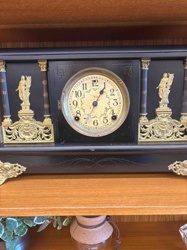
Submitted item photo
Submitted photo · June 17, 2026

User's notes

No additional notes provided.

AI analysis below

AI appraisal

AI analysis & estimate

AI-Generated · Verify before acting

Everything below is generated by AI for informational purposes only. AI can make mistakes — the AI may misidentify items or misattribute them (artist, maker, brand, designer, origin, era). This is not an official valuation and should not be used for insurance, sale, tax, estate, legal, or lending purposes — or any decision requiring a certified appraisal. It is not an authoritative claim about any person, brand, or rights holder — do not share or rely on it as a factual statement about a third party. Always consult qualified professionals before making financial decisions.

Read the full disclaimer

AI Identification

·Not independently authenticated·Verify before acting

Victorian Era Seth Thomas Black Adamantine Mantel Clock

Antiques / Horology / Mantel Clocks

AI Estimated Value

·Not an official valuation·Verify before acting

$150 - $250

As of June 17, 2026

AI Item Analysis

·AI can make mistakes·Verify before acting
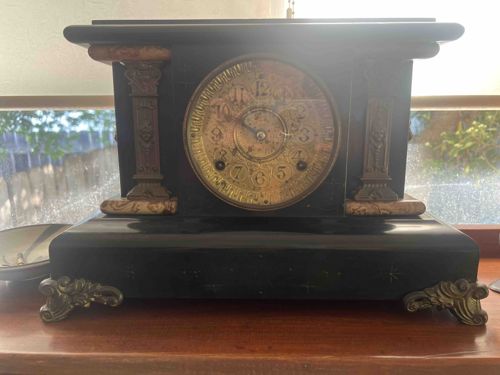
This is a late 19th-century Victorian mantel clock, likely manufactured by Seth Thomas, a renowned American clockmaker. The case is constructed using 'Adamantine,' a high-quality celluloid veneer developed in the 1880s to mimic black marble and slate. The clock features a rectangular architectural form with a stepped top and base. Flanking the dial are two ornamental columns with faux marbleized (ochre/brown) caps and bases, accented by gold-tone or brass-finished pilasters featuring neoclassical decorative motifs. The clock face is a circular, aged brass or gilded dial with stylized Arabic numerals, featuring two winding apertures and a central concentric ring design. The hands appear to be a simple spade style, showing signs of oxidation. The entire piece sits on four cast-metal scrolling feet with a brass-colored finish. Regarding condition, the piece shows significant signs of age and patina. There is visible wear and grime on the dial, minor surface scratches on the black Adamantine finish, and some possible flaking or loss of the marbleized finish on the column accents. The gold-tone elements and metal feet show dulling and oxidation consistent with an age of approximately 120-140 years. The base displays faint incised decorative scrolling or stars. This style of clock was staple of late Victorian middle-class homes, valued for its durability and formal appearance.
AI Appraisal Report

·AI can make mistakes·Verify before acting
Based on my visual examination of this Victorian-era mantel clock, I have identified it as a classic Seth Thomas 'Adamantine' model, likely dating between 1885 and 1900. The use of Adamantine—a celluloid veneer designed to simulate the more expensive French marble clocks of the period—is clearly visible. The architectural form, featuring faux-marbleized columns and neoclassical brass-finished accents, is emblematic of the mass-produced luxury items sought by the 19th-century middle class. The condition is fair to good; while the Adamantine finish has preserved the 'stone' look well, there is notable oxidation on the dial and metal components, and the hands show significant patina. The market for American black mantel clocks is currently saturated, as these were produced in high volume. Collectors today tend to favor clocks with original, pristine dials and fully functional movements. The value is primarily decorative rather than horological rarity. Limitations: This appraisal is based solely on digital images. A physical inspection is required to determine if the 8-day movement is complete and functional, as a non-working movement would reduce the value by 50%. I cannot verify the integrity of the mainsprings or the presence of the original pendulum and key without manual handling. Furthermore, scientific testing of the veneer could confirm it is genuine celluloid versus a later painted restoration, though the wear patterns appear consistent with authentic Adamantine. Provenance documentation regarding past professional cleanings would further support the upper end of the valuation.

Get your items appraised

Instant estimates of your treasures with AI-powered appraisals

Browse More Appraisals