AI identification & appraisal estimate

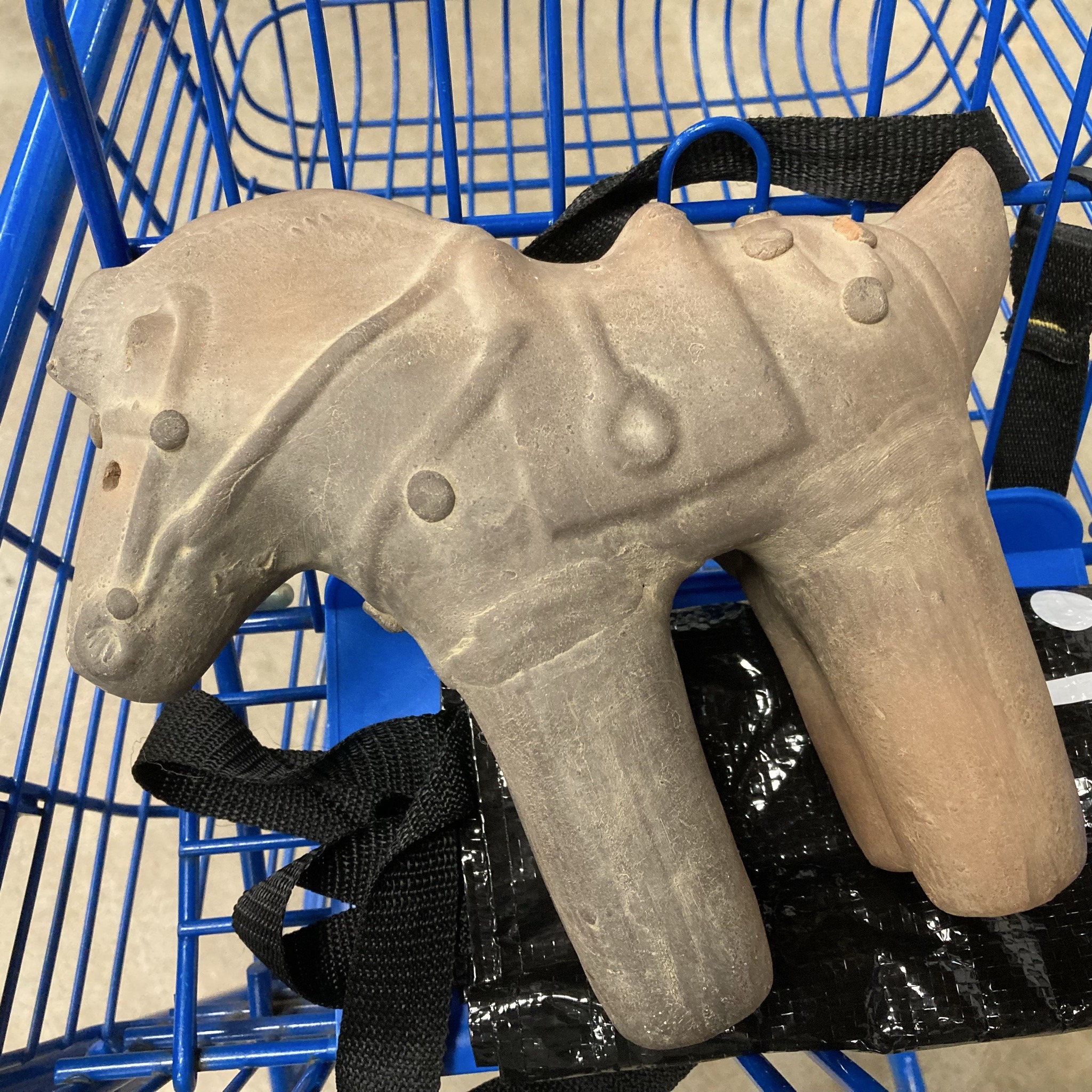
Haniwa Style Terracotta Horse Figurine

Submitted photo of Haniwa Style Terracotta Horse Figurine
Photo submitted by the user — not generated by AI

AI Estimated Value

Not an official valuation

$150 - $250

AI estimate as of May 9, 2026 · verify with a professional before acting

AI-Generated · Verify before acting

Everything on this page is generated by AI for informational purposes only. AI can make mistakes — the AI may misidentify items or misattribute them (artist, maker, brand, designer, origin, era). This is not an official valuation and should not be used for insurance, sale, tax, estate, legal, or lending purposes — or any decision requiring a certified appraisal. It is not an authoritative claim about any person, brand, or rights holder — do not share or rely on it as a factual statement about a third party. Always consult qualified professionals before making financial decisions.

Read the full disclaimer

AI Item Analysis

This item is a terracotta pottery horse, stylistically representative of Japanese Haniwa funerary objects from the Kofun period (3rd to 6th century AD), though this specific piece likely represents a modern 20th-century reproduction or 'in the style of' decorative object. The figurine is constructed from a coarse, reddish-brown unglazed earthenware with a matte, dusty surface finish. It measures approximately 10 to 12 inches in length. The design features a stylized equestrian form with cylindrical legs, a thick neck, and raised decorative elements representing a harness and saddle with circular medallions or studs. Notable features include the simplified, almost abstract facial features with small circular indentations for eyes and nostrils. The condition indicates a significant patina with accumulated dust and surface grime across the body. There is visible wear along the edges, including a small chip on the right rear haunch exposing the brighter orange clay beneath the darkened surface tone. The craftsmanship reflects traditional hand-building techniques, focusing on monolithic geometric shapes rather than anatomical realism. No visible maker's marks or signatures are apparent in this view, which is common for both authentic funerary wares and mass-produced replicas designed for the tourist or interior design market.
AI Appraisal Report

I have carefully examined the Haniwa-style terracotta horse figurine. Based on my visual analysis, the piece is a mid-to-late 20th-century decorative reproduction of a Kofun period funerary object. While it utilizes traditional terracotta hand-building techniques, the surface patina appears to be artificially induced through topical washes rather than centuries of burial. The visible chip on the rear haunch reveals a vibrant, modern kiln-fired orange clay that lacks the deep mineralization typically found in authentic excavated earthenware. The market for mid-century Japanese 'Mingei' style ceramics remains steady, but value is limited by its status as a decorative piece rather than an antiquity. Similar reproductions are frequently available in the interior design and boutique auction markets. The condition is fair, though the surface grime and chips do detract slightly from its aesthetic value. A significant limitation of this appraisal is the reliance on digital imagery. For a definitive authentication, I would require a physical inspection to check for 'kiln breath,' a Thermoluminescence (TL) test to determine the last firing date, and provenance documentation linking it to a known collection or excavation. Without a TL test confirming a date between the 3rd and 6th centuries, this item remains valued as a high-quality decorative reproduction.

Keep exploring

More art & antiques - pottery and ceramics appraisals

Get your items appraised

Instant AI-powered appraisal estimates from a photo

Browse More Appraisals