AI estimate as of December 5, 2025 · verify with a professional before acting
AI-Generated · Verify before acting
Everything on this page is generated by AI for informational purposes only. AI can make mistakes — the AI may misidentify items or misattribute them (artist, maker, brand, designer, origin, era). This is not an official valuation and should not be used for insurance, sale, tax, estate, legal, or lending purposes — or any decision requiring a certified appraisal. It is not an authoritative claim about any person, brand, or rights holder — do not share or rely on it as a factual statement about a third party. Always consult qualified professionals before making financial decisions.
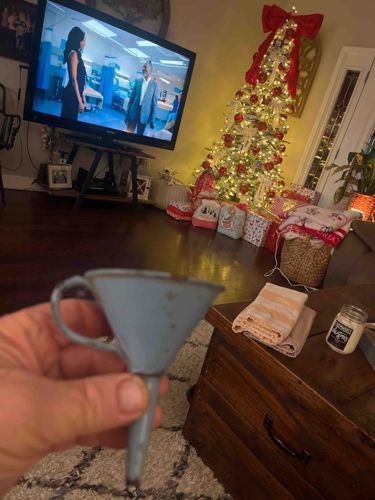
This appears to be a vintage small enamel funnel, likely used for transferring liquids into small-mouthed containers. Its primary material is metal, coated in a light blue enamel finish. The funnel features a classic cone-shaped top, gradually narrowing down to a slender spout. A small, curved handle is attached to the side of the cone, allowing for easier grip and manipulation during use. The overall size is diminutive, fitting comfortably in the palm of a hand, suggesting it's designed for more delicate pouring tasks rather than large-volume transfers.
The enamel coating shows significant signs of wear consistent with age and use. There are numerous chips, scuffs, and areas where the blue enamel has flaked away, revealing the darker metal underneath. This gives the funnel a heavily distressed or 'shabby chic' appearance. The exposed metal areas also show signs of oxidation or rust, particularly around the edges and within the spout. The interior also appears to have some discoloration and wear. There are no visible maker's marks, signatures, or stamps evident in the provided image. The style and material suggest it could date from the early to mid-20th century, possibly from the 1930s to 1960s, a period when enamelware was widely popular for kitchen and household items due to its durability and ease of cleaning. Its small size and worn condition contribute to its charm as a decorative or collectible item rather than a functional tool today. The craftsmanship appears utilitarian, as expected for common household goods of that era, but the surviving enamel hints at decent initial quality.
AI Appraisal Report
Based on my visual examination of the provided image, this item is a vintage small enamel funnel. The material appears to be metal with a light blue enamel coating. Its classic cone shape, slender spout, and small curved handle are consistent with utilitarian kitchenware from the early to mid-20th century, likely between the 1930s and 1960s. The diminutive size suggests it was for delicate pouring tasks.
The condition is heavily 'distressed,' exhibiting significant wear consistent with age and use. Numerous chips, scuffs, and areas of flaked enamel reveal the underlying darker metal. These exposed areas show signs of oxidation or rust, particularly around edges and within the spout. The interior also shows discoloration and wear. This 'shabby chic' aesthetic can be desirable to some collectors, but it significantly detracts from its functional value.
Authenticity: Without any visible maker's marks, signatures, or stamps, its precise origin and age are difficult to confirm from images alone. The style and material fit descriptions of period enamelware, but a physical inspection would be needed to assess the metal quality, enamel application technique, and potential hidden markings more accurately. Examining the patina of the rust and wear under magnification could offer further insights.
Market Conditions & Comparables: Small, worn enamelware pieces like this funnel are typically considered decorative collectibles rather than high-value antiques. Comparables on online marketplaces and at antique shops suggest similar items in this condition fetch modest prices. The demand for such items is generally steady among collectors of vintage kitchenalia or those seeking rustic decor. Rarity is low; while each piece is unique in its wear, the base item type was mass-produced.
Factors impacting value: The primary factors affecting value are its heavily worn condition, absence of maker's marks, and commonality. Its charm lies in its decorative appeal rather than its historical significance or pristine condition. A cleaner, less damaged example, especially with a discernible maker's mark, would command a higher price. The current value is purely as a decorative item or a low-end collectible.
Limitations: My assessment is based solely on the provided image. A physical examination for precise material analysis, closer inspection of the wear patterns, and potential hidden marks would be necessary for a definitive authentication and more precise dating.