Japanese Satsuma-style Baluster Vase Ceramic Lamp
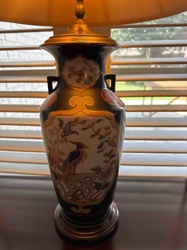
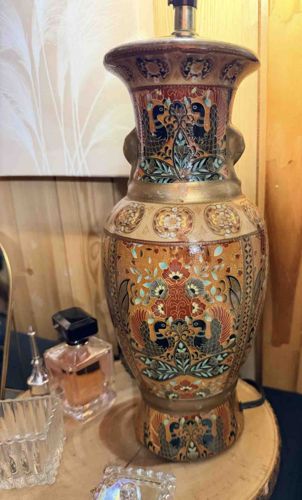
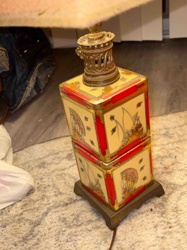
This item is a tall, baluster-shaped ceramic vase converted into a table lamp. The ceramic body features elaborate Satsuma-style decoration, characterized by a cracked cream-colored glaze and dense, intricate enameling. The color palette is dominated by earthy mustard yellows, deep oranges, and blacks, accented with light blue and green floral motifs. The central decorative theme includes heraldic-style bird figures, likely phoenixes or peafowl, symmetrically arranged amidst floral scrolls and geometric borders. The vase has small integrated handles on the neck and sits on a floured pedestal base. The lamp hardware is mounted at the top with a visible metal socket and a power cord exiting near the base, indicating a 20th-century conversion or manufacture. The surface shows visible crazing, which is typical for Satsuma-style pottery, along with some slight discoloration or 'patina' consistent with age. There are no immediate signs of large chips or cracks visible on the ceramic body, though some wear to the gilded accents is apparent. This style of 'export' Satsuma was popular in the early to mid-20th century, imitating the finer Kyoto Satsuma wares of the Meiji period with more mass-produced moriage (raised enamel) techniques.
AI-Generated Appraisal Disclaimer
Estimated Value
$450 - $650
Basic Information
Category
Home Decor / Lighting / Asian Ceramics
Appraised On
March 16, 2026
Estimated Value
$450 - $650
Item Description
This item is a tall, baluster-shaped ceramic vase converted into a table lamp. The ceramic body features elaborate Satsuma-style decoration, characterized by a cracked cream-colored glaze and dense, intricate enameling. The color palette is dominated by earthy mustard yellows, deep oranges, and blacks, accented with light blue and green floral motifs. The central decorative theme includes heraldic-style bird figures, likely phoenixes or peafowl, symmetrically arranged amidst floral scrolls and geometric borders. The vase has small integrated handles on the neck and sits on a floured pedestal base. The lamp hardware is mounted at the top with a visible metal socket and a power cord exiting near the base, indicating a 20th-century conversion or manufacture. The surface shows visible crazing, which is typical for Satsuma-style pottery, along with some slight discoloration or 'patina' consistent with age. There are no immediate signs of large chips or cracks visible on the ceramic body, though some wear to the gilded accents is apparent. This style of 'export' Satsuma was popular in the early to mid-20th century, imitating the finer Kyoto Satsuma wares of the Meiji period with more mass-produced moriage (raised enamel) techniques.
Get Your Items Appraised
Instant estimates of your treasures with AI-powered instant appraisals