Japanese Blue and White Porcelain Shard (Sometsuke Pottery Fragment)
Antique Ceramic Fragments / Archaeological Artifacts

Japanese Blue and White Porcelain Shard (Sometsuke Pottery Fragment)

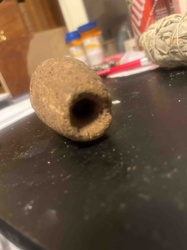
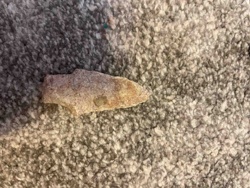
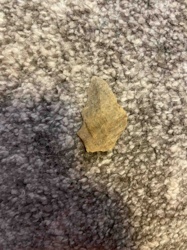
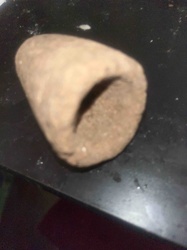
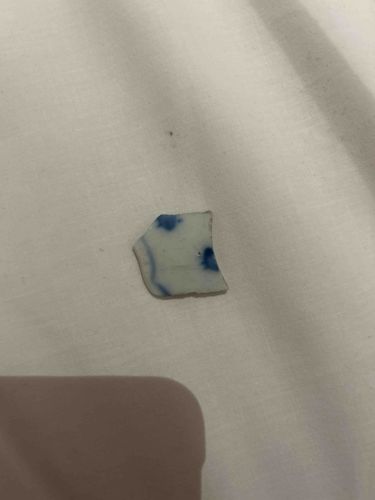
This item is a small ceramic shard, measuring approximately 2-3 cm per side with a roughly quadrangular, irregular shape. The fragment is composed of a dense, white porcelain body featuring hand-painted cobalt blue underglaze decoration, a style known in Japan as 'Sometsuke'. The visible motifs appear to be abstract or floral swirls, rendered in a deep, saturated blue that bleeds slightly into the surrounding white glaze, characteristic of traditional firing techniques. The glaze has a slight greyish-white tint rather than a pure stark white, suggesting an older composition likely from the Meiji or Taisho periods. Physically, the edges are jagged and unrefined, indicating a clean break from a larger vessel such as a rice bowl (chawan) or small plate. There is evidence of environmental weathering including surface micro-abrasions, slight dirt staining consistent with being buried in soil, and a dulling of the original luster. No maker's marks or signatures are present due to the small size of the fragment. The craftsmanship reflects a utilitarian yet artistic quality typical of regional kilns in central Japan, such as those found near Yamanashi or Shizuoka. Its provenance near Oshino Hakkai, an area with deep historical significance, suggests it may have been a domestic household item from the late 19th or early 20th century.
Estimated Value

$5.00 - $15.00

Basic Information

Category

Antique Ceramic Fragments / Archaeological Artifacts

Appraised On

March 24, 2026

Estimated Value

$5.00 - $15.00

Additional Details Provided By Owner

User Provided Information

White and blue porcelain fragment found near Oshino Hakkai, Japan buried in the top of the soil. 2-3 cm in size on each side (square-like)

Item Description

This item is a small ceramic shard, measuring approximately 2-3 cm per side with a roughly quadrangular, irregular shape. The fragment is composed of a dense, white porcelain body featuring hand-painted cobalt blue underglaze decoration, a style known in Japan as 'Sometsuke'. The visible motifs appear to be abstract or floral swirls, rendered in a deep, saturated blue that bleeds slightly into the surrounding white glaze, characteristic of traditional firing techniques. The glaze has a slight greyish-white tint rather than a pure stark white, suggesting an older composition likely from the Meiji or Taisho periods. Physically, the edges are jagged and unrefined, indicating a clean break from a larger vessel such as a rice bowl (chawan) or small plate. There is evidence of environmental weathering including surface micro-abrasions, slight dirt staining consistent with being buried in soil, and a dulling of the original luster. No maker's marks or signatures are present due to the small size of the fragment. The craftsmanship reflects a utilitarian yet artistic quality typical of regional kilns in central Japan, such as those found near Yamanashi or Shizuoka. Its provenance near Oshino Hakkai, an area with deep historical significance, suggests it may have been a domestic household item from the late 19th or early 20th century.
Get Your Items Appraised

Instant estimates of your treasures with AI-powered instant appraisals

Browse More Appraisals