Weathered Chert or Limestone Specimen
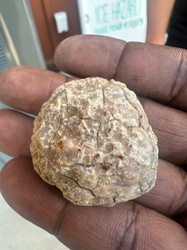
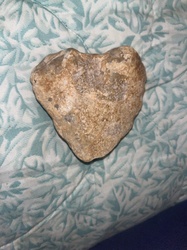
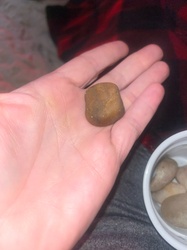
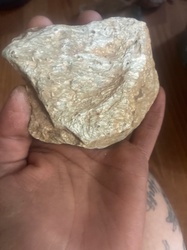
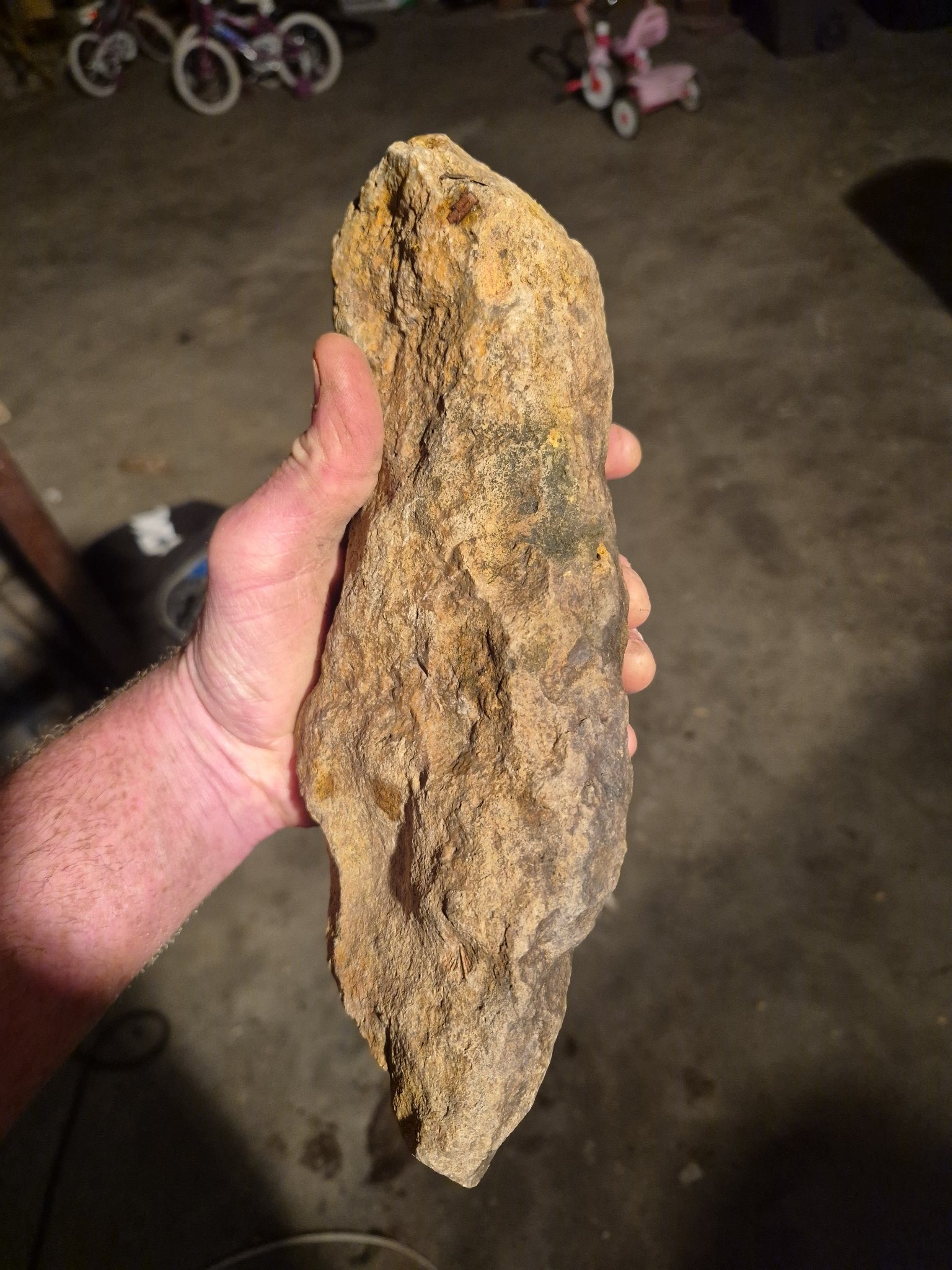
This item is an elongated, naturally weathered rock specimen, approximately 10 to 12 inches in length based on scale relative to the human hand holding it. The physical characteristics indicate a sedimentary or metamorphic origin, likely chert, flint, or a highly siliceous limestone. The surface texture is rough and irregular with significant pitting and angular protrusions, suggesting natural erosion or fracturing rather than intentional human modification. The color palette consists of earthy tones, including ochre, tan, and rust-orange, which are indicative of iron oxide staining (limonite or hematite) from prolonged exposure to soil or water. Darker grey and charcoal patches are visible on the lower right flank, possibly representing the original color of the unweathered lithic material. There are no definitive cultural markings, flake scars, or percussion bulbs that would categorize this as a prehistoric tool like a hand axe or biface; it appears to be a geofact or a large spall. Visible condition issues include heavy surface patination and encrusted sediment. The specimen lacks any manufacturing marks, stamps, or signatures, emphasizing its status as a natural geological object. Its age is geological, potentially dating back millions of years depending on the parent formation, but its current weathered state suggests it has been on the surface or in a fluvial environment for a considerable contemporary timeframe.
AI-Generated Appraisal Disclaimer
Estimated Value
$10 - $25
Basic Information
Category
Geological Specimens
Appraised On
May 11, 2026
Estimated Value
$10 - $25
Item Description
This item is an elongated, naturally weathered rock specimen, approximately 10 to 12 inches in length based on scale relative to the human hand holding it. The physical characteristics indicate a sedimentary or metamorphic origin, likely chert, flint, or a highly siliceous limestone. The surface texture is rough and irregular with significant pitting and angular protrusions, suggesting natural erosion or fracturing rather than intentional human modification. The color palette consists of earthy tones, including ochre, tan, and rust-orange, which are indicative of iron oxide staining (limonite or hematite) from prolonged exposure to soil or water. Darker grey and charcoal patches are visible on the lower right flank, possibly representing the original color of the unweathered lithic material. There are no definitive cultural markings, flake scars, or percussion bulbs that would categorize this as a prehistoric tool like a hand axe or biface; it appears to be a geofact or a large spall. Visible condition issues include heavy surface patination and encrusted sediment. The specimen lacks any manufacturing marks, stamps, or signatures, emphasizing its status as a natural geological object. Its age is geological, potentially dating back millions of years depending on the parent formation, but its current weathered state suggests it has been on the surface or in a fluvial environment for a considerable contemporary timeframe.
Related Tags
Get Your Items Appraised
Instant estimates of your treasures with AI-powered instant appraisals