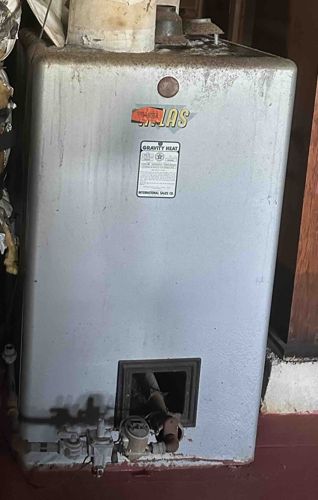
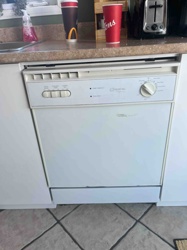
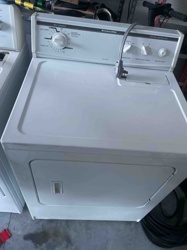
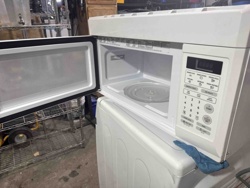
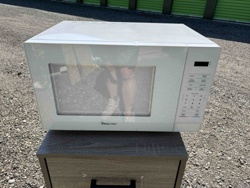
1970 vintage home furnace, was in working condition but plug gas line.
These notes were written by the person who submitted this item. Appraiser.AI has not verified them, and the AI's identification and estimate may rely on them.
AI Estimated Value
Not an official valuation
$0 - $50 (Scrap Value)
AI estimate as of July 27, 2025 · verify with a professional before acting
AI-Generated · Verify before acting
Everything on this page is generated by AI for informational purposes only. AI can make mistakes — the AI may misidentify items or misattribute them (artist, maker, brand, designer, origin, era). This is not an official valuation and should not be used for insurance, sale, tax, estate, legal, or lending purposes — or any decision requiring a certified appraisal. It is not an authoritative claim about any person, brand, or rights holder — do not share or rely on it as a factual statement about a third party. Always consult qualified professionals before making financial decisions.
This analysis also relies on unverified notes provided by the user, which may be incomplete or inaccurate and could affect the result.
This item is an Atlas Gravity Heat vintage home furnace, showing significant signs of age and wear. The furnace is a large, rectangular unit, primarily constructed of sheet metal, likely steel, with a light grey or off-white painted finish. Its dimensions appear to be approximately 5-6 feet in height, roughly 2.5-3 feet wide, and perhaps 2 feet deep. The paint exhibits considerable discoloration, dirt, and what appears to be rust bleeding through in several areas, particularly along the top edges and cascading down the sides, indicating prolonged exposure to moisture or simply lack of maintenance over decades. There is a prominent 'ATLAS' logo near the top center, which is a rectangular sticker with "ATLAS" in stylized orange lettering on a yellow background, partially obscured by an orange bar or sticker. Below this, a larger rectangular label, likely a data plate or instructional label, is visible, albeit unreadable in detail, but it clearly states 'GRAVITY HEAT'. The top surface shows significant dust and dirt accumulation, with what appears to be a vent pipe or flue connection extending upwards, seemingly made of an off-white material, possibly asbestos pipe wrapping given its age. Near the bottom front, there is a square access opening, roughly 1 foot by 1 foot, with a dark, possibly cast-iron frame, revealing internal components and piping. Below this opening, gas lines and a gas meter or regulator assembly are visible, indicating it runs on natural gas or propane. These elements include various pipes, valves, and a visible gauge, all showing rust and grime. The overall condition suggests the unit is well past its operational life for modern heating requirements and is likely inoperable without extensive repair and certification. Given the '1970 vintage home furnace' context, this unit dates to approximately the early 1970s, making it a piece of obsolete HVAC equipment. Its primary value would be as scrap metal or as a historical exhibit of mid-20th century heating technology.
AI Appraisal Report
Upon examining the provided images and description of the Atlas Gravity Heat vintage home furnace, my assessment is that this unit is at the end of its functional life. The furnace presents in poor cosmetic condition, consistent with its age of approximately 50 years. There is significant rust, discoloration, and grime visible on the steel casing. The 'ATLAS' and 'GRAVITY HEAT' branding appear authentic for the period. While the owner states it was in working condition before the gas line was plugged, its current operability is unknown and highly questionable without a thorough inspection and recertification by a qualified HVAC technician.
In the current market, vintage furnaces of this type have extremely limited demand. They are considered inefficient and potentially unsafe by modern standards, and replacement is almost always the chosen option. The cost of professional removal, potential asbestos abatement (given the likely pipe wrapping material), and repairs would far exceed any functional value. There is no significant collector's market for such HVAC units. Its primary value lies in its weight as scrap metal. Comparable non-functional, obsolete furnaces are typically removed at a cost to the homeowner or sold for their scrap metal value, which fluctuates but is generally low for this type of mixed-material appliance.
Therefore, the valuation is based solely on its scrap potential, minus the labor and potential hazards of removal. It is impossible to fully assess safety or operational status from images alone. An in-person inspection by a licensed HVAC professional would be required to determine if any components are salvageable or if the unit poses any immediate hazards.