AI identification & appraisal estimate

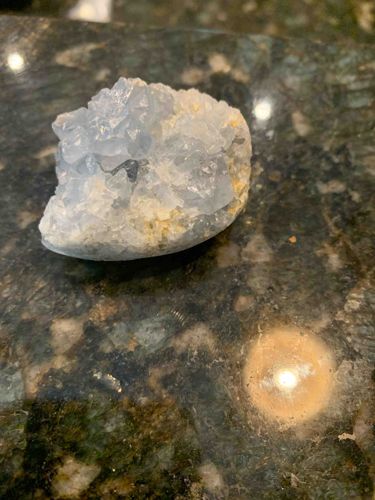
Bladed Celestine (Celestite) Crystal Cluster

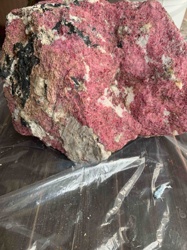
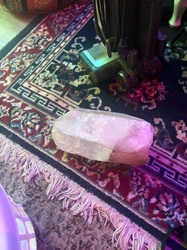
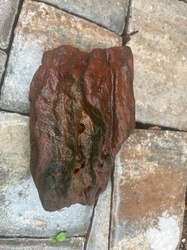
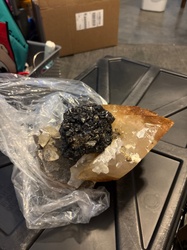
Submitted photo of Bladed Celestine (Celestite) Crystal Cluster
Photo submitted by the user — not generated by AI

User's notes

Mineral

These notes were written by the person who submitted this item. Appraiser.AI has not verified them, and the AI's identification and estimate may rely on them.

AI Estimated Value

Not an official valuation

$60 - $90

AI estimate as of July 10, 2025 · verify with a professional before acting

AI-Generated · Verify before acting

Everything on this page is generated by AI for informational purposes only. AI can make mistakes — the AI may misidentify items or misattribute them (artist, maker, brand, designer, origin, era). This is not an official valuation and should not be used for insurance, sale, tax, estate, legal, or lending purposes — or any decision requiring a certified appraisal. It is not an authoritative claim about any person, brand, or rights holder — do not share or rely on it as a factual statement about a third party. Always consult qualified professionals before making financial decisions.

This analysis also relies on unverified notes provided by the user, which may be incomplete or inaccurate and could affect the result.

Read the full disclaimer

AI Item Analysis

This specimen is a cluster of bladed Celestine (also known as Celestite) crystals. The overall form is a geode fragment or a partial nodule, characterized by numerous small, interconnected crystals creating a druzy appearance. The primary color is a soft, translucent sky blue to very pale blue, with areas appearing nearly colorless or milky white. The crystal habit exhibits bladed or tabular forms, with sharp, well-defined facets visible in many of the individual crystals. The surface of the crystal cluster presents a rough, uneven texture due to the aggregation of these distinct crystal formations. There are noticeable areas of a yellowish-brown or earthy discoloration, particularly on the underside or exposed matrix portions of the specimen, suggesting it was once embedded in a host rock or sediment. These yellowish areas appear to be natural inclusions or remnants of the original matrix rather than damage. The luster of the Celestine crystals appears vitreous to subvitreous, indicative of a natural, untreated mineral. There are no obvious signs of repair, but some minor nicks or abrasions on a few crystal points are possible due to handling or extraction, which is typical for such a specimen. No discernible maker's marks, signatures, or stamps are present, as this is a natural mineral formation. The estimated age corresponds to geological timeframes, though its precise human-collected age is unknown. The craftsmanship details refer to nature's formation processes, revealing well-formed crystal structures. The quality indicators suggest a good, representative sample of bladed Celestine, with its characteristic color and crystal habit. No major fractures or significant degradation of the crystals are overtly visible, maintaining its aesthetic appeal as a natural mineral.

AI Appraisal Report

Upon examining the provided images and description, I have evaluated this specimen of bladed Celestine, also known as Celestite. The piece presents as a geode fragment featuring numerous small, well-formed crystals. Its condition appears good for a natural mineral specimen; the characteristic pale blue color is present, and the bladed crystal habit is well-defined. The yellowish-brown matrix remnants are typical and do not detract from its value, instead attesting to its natural origin. Some minor nicks on crystal edges are noted, which is common from extraction and handling and has a minimal impact on value. The market for Celestine is relatively stable, with value being driven by color intensity, crystal size, clarity, and overall aesthetics. This specimen, with its smaller, densely packed crystals and pale coloration, falls into a more accessible category compared to large, gem-quality, deep-blue crystals from notable localities like Madagascar. Comparable druzy Celestine clusters of this size and quality are readily available. The primary value driver here is its pleasing aesthetic as a decorative mineral specimen rather than its rarity. It is important to note that this appraisal is based solely on images. While the visual characteristics are consistent with natural Celestine, a definitive authentication would require in-person examination. Physical inspection would allow for hardness testing (Celestine is very soft, H: 3-3.5), specific gravity measurement, and a more thorough inspection for any treatments or repairs not visible in photos.

Keep exploring

More mineral specimen appraisals

Get your items appraised

Instant AI-powered appraisal estimates from a photo

Browse More Appraisals