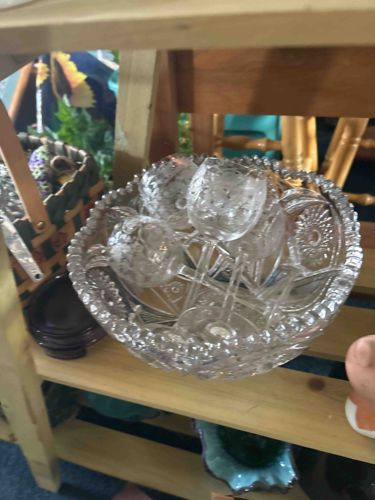
Early American Pattern Glass (EAPG) Bowl with Stemware
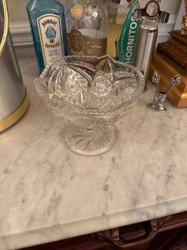
This item is a large clear pressed glass bowl, likely an example of Early American Pattern Glass (EAPG), containing several small cordial or wine glasses. The bowl features a scalloped, serrated rim known as a 'sawtooth' or 'toothed' edge. The exterior body of the bowl is heavily decorated with an intricate 'Pinwheel' or 'Star' pattern, which consists of deep geometric incisions that create a high level of brilliance and light refraction, mimicking the appearance of expensive hand-cut lead crystal. Within the bowl are at least four clear glass stems; these appear to be 'optic' or 'etched' cocktail/cordial glasses with a classic bowl shape and simple faceted stems. The construction of the bowl is thick and heavy, typical of Victorian-era pressed glass (late 19th to early 20th century). The visible condition appears fair to good with no large structural cracks; however, the sawtooth rim is particularly prone to micro-chipping (flea bites) due to the sharp angles of the glass. The glass displays a bright, clear clarity with no immediate signs of 'sick glass' (clouding), though a close inspection for manufacturer bubbles or straw marks—common in glass of this age—would be necessary for a final appraisal. No maker's mark is visible in this view, though patterns like these were famously produced by companies such as Imperial, Fenton, or L.E. Smith.
AI-Generated Appraisal Disclaimer
Estimated Value
$125.00 - $185.00
Basic Information
Category
Antique Glassware / Decorative Arts
Appraised On
March 21, 2026
Estimated Value
$125.00 - $185.00
Item Description
This item is a large clear pressed glass bowl, likely an example of Early American Pattern Glass (EAPG), containing several small cordial or wine glasses. The bowl features a scalloped, serrated rim known as a 'sawtooth' or 'toothed' edge. The exterior body of the bowl is heavily decorated with an intricate 'Pinwheel' or 'Star' pattern, which consists of deep geometric incisions that create a high level of brilliance and light refraction, mimicking the appearance of expensive hand-cut lead crystal. Within the bowl are at least four clear glass stems; these appear to be 'optic' or 'etched' cocktail/cordial glasses with a classic bowl shape and simple faceted stems. The construction of the bowl is thick and heavy, typical of Victorian-era pressed glass (late 19th to early 20th century). The visible condition appears fair to good with no large structural cracks; however, the sawtooth rim is particularly prone to micro-chipping (flea bites) due to the sharp angles of the glass. The glass displays a bright, clear clarity with no immediate signs of 'sick glass' (clouding), though a close inspection for manufacturer bubbles or straw marks—common in glass of this age—would be necessary for a final appraisal. No maker's mark is visible in this view, though patterns like these were famously produced by companies such as Imperial, Fenton, or L.E. Smith.
Related Tags
Get Your Items Appraised
Instant estimates of your treasures with AI-powered instant appraisals