AI Appraisal Estimate

AI-generated estimates · not official valuations

From the user

What was submitted

Photo and notes provided by the user — not generated by AI

Submitted item photo
Submitted photo · June 27, 2026

User's notes

No additional notes provided.

AI analysis below

AI appraisal

AI analysis & estimate

AI-Generated · Verify before acting

Everything below is generated by AI for informational purposes only. AI can make mistakes — the AI may misidentify items or misattribute them (artist, maker, brand, designer, origin, era). This is not an official valuation and should not be used for insurance, sale, tax, estate, legal, or lending purposes — or any decision requiring a certified appraisal. It is not an authoritative claim about any person, brand, or rights holder — do not share or rely on it as a factual statement about a third party. Always consult qualified professionals before making financial decisions.

Read the full disclaimer

AI Identification

·Not independently authenticated·Verify before acting

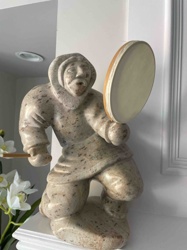
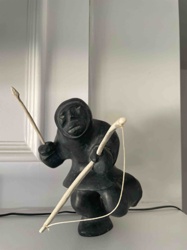
Inuit Soapstone Seal Carving

Fine Art / indigenous Sculpture

AI Estimated Value

·Not an official valuation·Verify before acting

$150 - $250

As of June 27, 2026

AI Item Analysis

·AI can make mistakes·Verify before acting
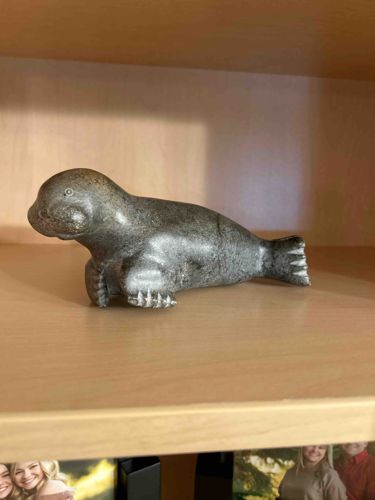
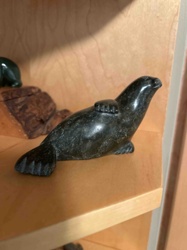
This item is a hand-carved soapstone sculpture of a seal, likely of Canadian Inuit origin. The piece is rendered in a dark greenish-grey serpentine soapstone, displaying a characteristic mottled texture with various mineral inclusions and a soft, matte finish. The sculpture depicts a stylized seal with a plump body, small incised eyes, and exaggerated flippers featuring deeply cut serrated edges to represent claws or joints. The form is smooth and rounded, typical of the 20th-century Inuit artistic movement known as 'The Sananguaqatigiit' or modern stone carving tradition, which began around 1949. Physically, the piece appears to be roughly 5 to 7 inches in length. The craftsmanship indicates hand-tool techniques, likely using files and sandpaper to achieve its fluid silhouette. Regarding condition, the surface exhibits minor scuffs and fine white scratches, which are common for soft soapstone and often occur through handling or household wear. There are no visible major cracks or structural repairs. While no hallmark or syllabic artist signature is visible in this orientation, such pieces often feature an 'Igloo Tag' or a disc number on the base to verify authenticity. The style and patina suggest a mid-to-late 20th-century origin, showcasing a harmonious balance between naturalism and abstract minimalism.
AI Appraisal Report

·AI can make mistakes·Verify before acting
I have conducted a visual inspection of this Inuit soapstone seal carving, measuring approximately 5-7 inches. The piece displays the characteristic dark greenish-grey serpentine and fluid silhouette associated with mid-to-late 20th-century Canadian Arctic traditions. The stylized execution of the flippers and the rounded, plump body form are hallmarks of the post-1949 commercial carving movement. Regarding condition, I noted several minor surface scuffs and fine white abrasions across the dorsal and lateral surfaces. These are typical of soapstone, which has a low Mohs hardness, and do not significantly detract from the structural integrity. The absence of visible 'Igloo Tags' or syllabic signatures in the visual field suggests this may be an unsigned work or from a less-documented community, which places it in the mid-range of the market. Comparables for unsigned Inuit seals of this scale and material typically realize between $150 and $250 at regional auctions. While demand for master-signed Inuit art remains high, anonymous or common animal subjects serve as accessible entry points for collectors. Limitation of Appraisal: This valuation is based solely on digital imagery. A definitive authentication requires physical inspection to verify tactile patina, weight, and the presence of any faint disc numbers or signatures on the base. Provenance documentation, such as the original Government of Canada certification of authenticity, would be necessary to elevate the valuation to the higher tier of the market. No scientific testing for mineral composition was performed, though the stone appears consistent with serpentine common to the Baffin or Keewatin regions.

Get your items appraised

Instant estimates of your treasures with AI-powered appraisals

Browse More Appraisals