Vintage Faux Fur Fabric / Garment Section
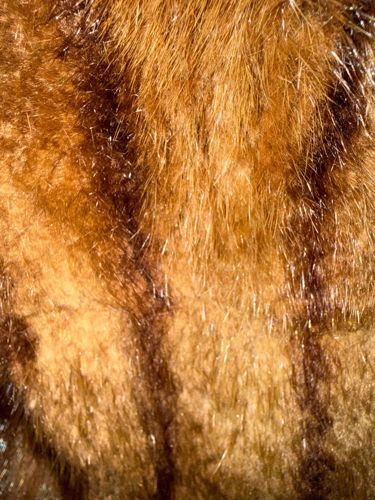
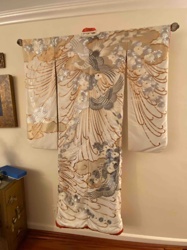
This item is a textile specimen or garment section featuring a multi-tonal synthetic 'faux' fur. The material is characterized by long, coarse guard hairs and a softer, denser undercoat, designed to emulate the appearance of natural pelage such as fox or raccoon. The color palette is a complex gradient of amber, russet, and deep mahogany brown, with darker vertical striations that suggest a 'let-out' pelt construction commonly seen in mid-20th-century furrier work. The texture appears somewhat stiff, typical of acrylic or modacrylic fibers used in vintage synthetic furs. There is visible sheen on the surface of the guard hairs, indicating a high-gloss finish. Regarding condition, the fibers show some clumping and directional matting, particularly in the lower left quadrant, which is consistent with age and storage. No visible backing or lining is seen in this close-up view, but the way the fibers separate suggests a woven knit base. This style of faux fur was highly popular during the late 1960s through the 1980s as a high-fashion alternative to real animal skins. The craftsmanship displays a deliberate attempts at realism through irregular color distribution and varied fiber lengths.
AI-Generated Appraisal Disclaimer
Estimated Value
$45.00 - $85.00
Basic Information
Category
Textiles and Apparel
Appraised On
March 29, 2026
Estimated Value
$45.00 - $85.00
Item Description
This item is a textile specimen or garment section featuring a multi-tonal synthetic 'faux' fur. The material is characterized by long, coarse guard hairs and a softer, denser undercoat, designed to emulate the appearance of natural pelage such as fox or raccoon. The color palette is a complex gradient of amber, russet, and deep mahogany brown, with darker vertical striations that suggest a 'let-out' pelt construction commonly seen in mid-20th-century furrier work. The texture appears somewhat stiff, typical of acrylic or modacrylic fibers used in vintage synthetic furs. There is visible sheen on the surface of the guard hairs, indicating a high-gloss finish. Regarding condition, the fibers show some clumping and directional matting, particularly in the lower left quadrant, which is consistent with age and storage. No visible backing or lining is seen in this close-up view, but the way the fibers separate suggests a woven knit base. This style of faux fur was highly popular during the late 1960s through the 1980s as a high-fashion alternative to real animal skins. The craftsmanship displays a deliberate attempts at realism through irregular color distribution and varied fiber lengths.
Get Your Items Appraised
Instant estimates of your treasures with AI-powered instant appraisals