AI Appraisal Estimate

AI-generated estimates · not official valuations

From the user

What was submitted

Photo and notes provided by the user — not generated by AI

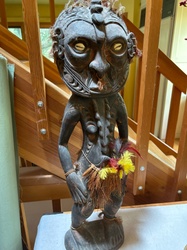
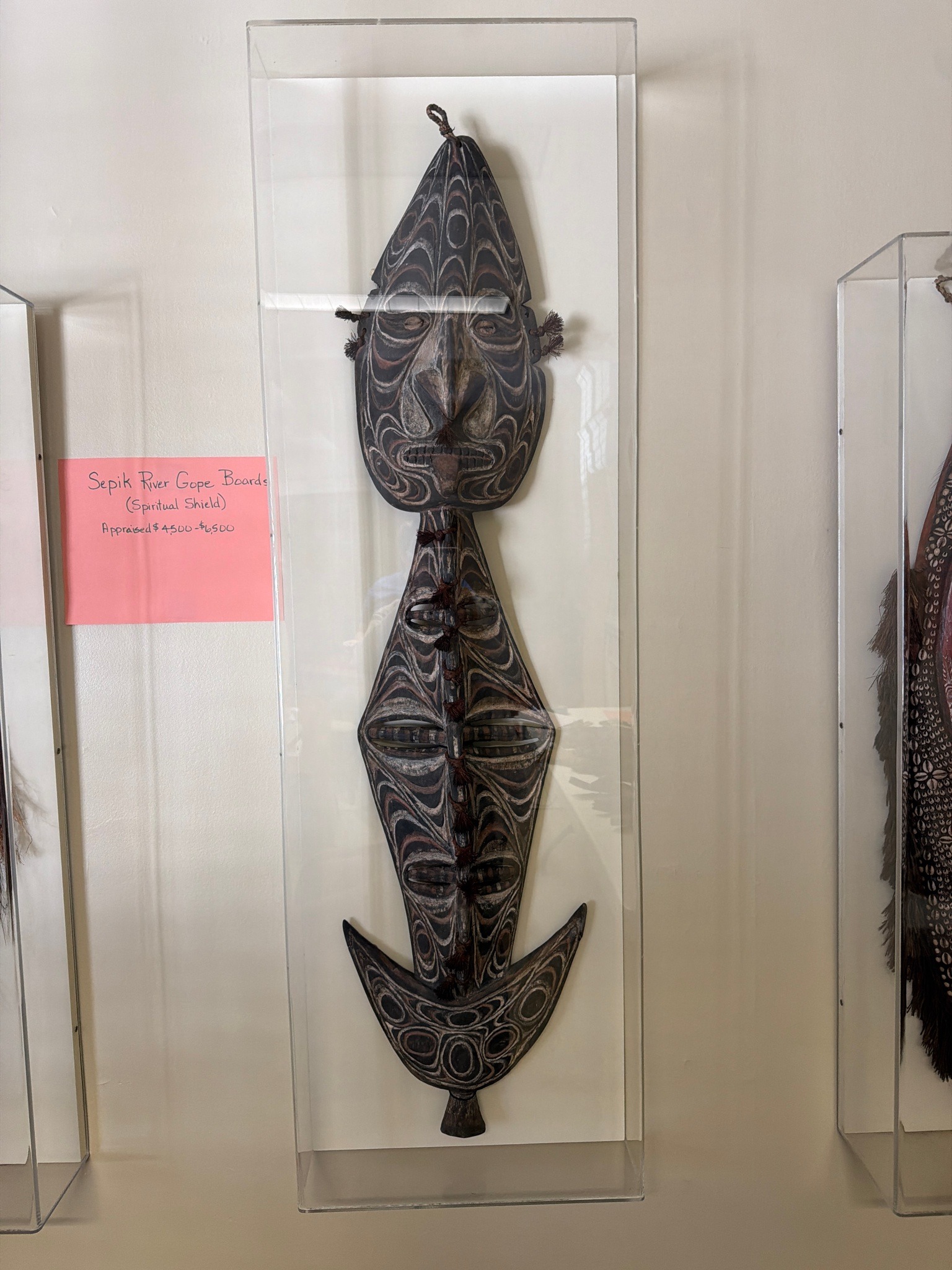
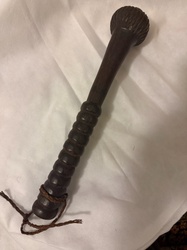
Submitted item photo
Submitted photo · June 22, 2026

User's notes

No additional notes provided.

AI analysis below

AI appraisal

AI analysis & estimate

AI-Generated · Verify before acting

Everything below is generated by AI for informational purposes only. AI can make mistakes — the AI may misidentify items or misattribute them (artist, maker, brand, designer, origin, era). This is not an official valuation and should not be used for insurance, sale, tax, estate, legal, or lending purposes — or any decision requiring a certified appraisal. It is not an authoritative claim about any person, brand, or rights holder — do not share or rely on it as a factual statement about a third party. Always consult qualified professionals before making financial decisions.

Read the full disclaimer

AI Identification

·Not independently authenticated·Verify before acting

Papua New Guinea Sepik River Gope Board (Spiritual Shield)

Ethnographic Art / Oceanic Tribal Artifacts

AI Estimated Value

·Not an official valuation·Verify before acting

$1,500 - $2,500

As of June 22, 2026

AI Item Analysis

·AI can make mistakes·Verify before acting
This is a meticulously hand-carved Gope board, also known as a spiritual shield, originating from the Sepik River region of Papua New Guinea. The artifact is crafted from a single elongated piece of hardwood, featuring a tall, vertical composition approximately 3 to 4 feet in height. The design is characterized by deeply incised relief carvings that form a series of stylized, interconnected faces and geometric motifs. At the top is a prominent ancestor face with almond-shaped eyes, an elongated nose, and a small mouth. Moving down the body, the design repeats with additional abstracted facial features and concentric oval patterns. The color palette is traditional, utilizing natural pigments of charcoal black, lime white, and red ochre to highlight the carved lines and create high visual contrast. Distinctive fiber tassels or tufts are integrated into the sides and center vertical line of the board, likely made from vegetable fibers or animal hair. The condition appears excellent for an ethnographic piece of this type, showing a fine aged patina and minor drying cracks consistent with its organic material and estimated mid-20th-century origins. It is mounted for conservation within a professional acrylic display case, indicating its status as a significant work of tribal art. The craftsmanship demonstrates the high level of skill typical of Melanesian woodcarvers, with balanced symmetry and fluid, rhythmic line work expressive of ancestral protection and clan identity.
AI Appraisal Report

·AI can make mistakes·Verify before acting
Based on the provided visual information, I have examined this Papua New Guinea Sepik River Gope board. The piece exhibits traditional craftsmanship, featuring complex relief carvings of ancestor faces and geometric motifs enhanced with natural charcoal, lime, and red ochre pigments. The integration of fiber tassels and the presence of an aged patina with natural drying cracks align with a mid-20th-century origin. Its condition appears excellent, and the professional acrylic mounting significantly enhances its presentation and preservation. Oceanic tribal art of this caliber maintains a dedicated collector base. Well-preserved Gope boards with strong aesthetic presence and original pigments generally realize auction prices between $1,500 and $2,500. However, please note that this appraisal is based solely on photographic evidence. While the visual characteristics strongly suggest authenticity, definitively verifying ethnographic age, original tribal use versus market-made origins, and pigment composition requires in-person physical inspection. Furthermore, establishing concrete provenance through previous collection records or acquisition history is crucial to maximize the value of such ethnographic works. Without physical handling, I cannot test the wood density or confirm the exact wear patterns on the verso. Recommended next steps for full authentication include an in-hand evaluation by an Oceanic art specialist and securing any available documentation regarding its collection history.

Get your items appraised

Instant estimates of your treasures with AI-powered appraisals

Browse More Appraisals