AI Appraisal Estimate

AI-generated estimates · not official valuations

From the user

What was submitted

Photo and notes provided by the user — not generated by AI

Submitted item photo
Submitted photo · May 24, 2026

User's notes

No additional notes provided.

AI analysis below

AI appraisal

AI analysis & estimate

AI-Generated · Verify before acting

Everything below is generated by AI for informational purposes only. AI can make mistakes — the AI may misidentify items or misattribute them (artist, maker, brand, designer, origin, era). This is not an official valuation and should not be used for insurance, sale, tax, estate, legal, or lending purposes — or any decision requiring a certified appraisal. It is not an authoritative claim about any person, brand, or rights holder — do not share or rely on it as a factual statement about a third party. Always consult qualified professionals before making financial decisions.

Read the full disclaimer

AI Identification

·Not independently authenticated·Verify before acting

Antiquarian Hand-Colored Crayon Enrichment Portrait

Antique Art & Photography

AI Estimated Value

·Not an official valuation·Verify before acting

$150 - $250

As of May 24, 2026

AI Item Analysis

·AI can make mistakes·Verify before acting
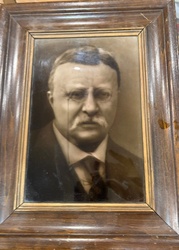
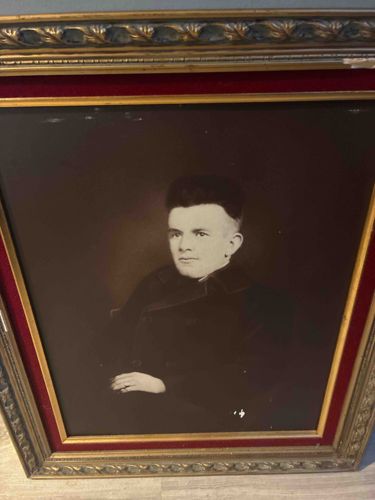
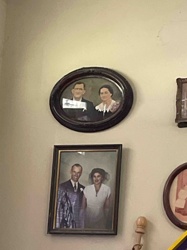
This item is an antique hand-colored portrait, likely a 'crayon enlargement' or solar print, common in the late 19th to early 20th centuries. It depicts a young man in formal attire, featuring a high-collared coat and a distinctive flat-top hairstyle. The piece is characterized by a monochromatic sepia or deep brown tone with subtle hand-finished highlights on the skin and eyes to create depth and realism. The portrait is housed in a substantial, ornate gilded wooden frame featuring a laurel leaf or acanthus pattern in low relief. A notable feature is the deep-set presentation, which includes a secondary inner frame lined with a plush red velvet or velour matting and a thin gold-toned fillet. The craftsmanship reflects typical Victorian or Edwardian photographic aesthetics, intended to mimic the appearance of a fine art charcoal drawing. Condition-wise, the image shows some age-related silvering and minor surface white flecks or losses near the bottom center. The frame exhibits wear consistent with age, including small chips on the gesso and light oxidation of the gilding. Dimensions appear larger than a standard cabinet card, likely sized for formal domestic wall display.
AI Appraisal Report

·AI can make mistakes·Verify before acting
I have conducted a visual examination of this Victorian/Edwardian crayon enlargement portrait. The piece is a classic example of late 19th-century photographic technology, where a solar print was used as a base for hand-finishing with charcoal, pastels, or crayons to mimic a fine art charcoal drawing. The ornate gilded frame and the secondary velvet-lined matting indicate this was originally an expensive domestic commission, likely dating between 1885 and 1905. Condition assessment shows typical age-related degradation. The 'silvering' in the darker areas is a chemical reaction common in silver gelatin-based prints of this era. While the frame is elaborate, the small chips in the gesso and oxidation of the gilding decrease its premium value. Market demand for anonymous portraits of this type is currently soft; while the aesthetic is desirable for 'shabby chic' or gothic Victorian interior design, the lack of a known subject or sitter identification limits interest from historical collectors. Comparables for similar framed enlargements in varying conditions typically sell at provincial auctions or antique malls in the $100-$300 range. The value here is predominantly in the frame and the overall decorative 'mood' rather than rarity. Please note: This appraisal is based solely on digital imagery. A full authentication requires a physical inspection to verify if the image is a true solar print or a later mechanical reproduction. I would need to remove the backing to check for studio stamps or lead-pencil signatures of the artist. Furthermore, scientific testing of the pigment binders and ultraviolet light examination of the gilding would be necessary to confirm that the frame and portrait have not been 'married' (combined from two different sources) at a later date.

Get your items appraised

Instant estimates of your treasures with AI-powered appraisals

Browse More Appraisals