AI identification & appraisal estimate

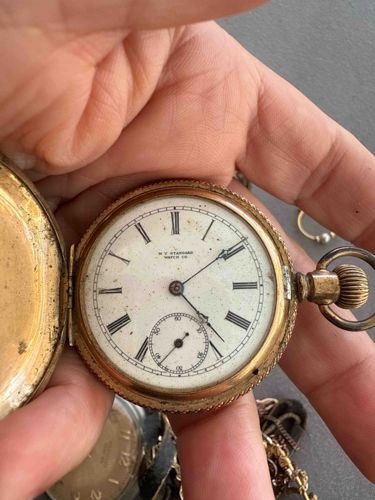
N.Y. Standard Watch Co. Open-Face Pocket Watch

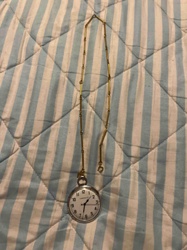
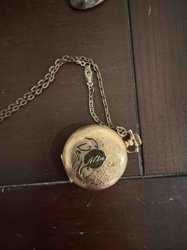
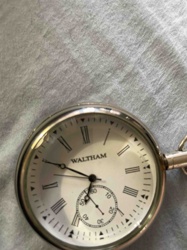
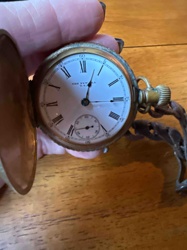
Submitted photo of N.Y. Standard Watch Co. Open-Face Pocket Watch
Photo submitted by the user — not generated by AI

AI Estimated Value

Not an official valuation

$75 - $150

AI estimate as of October 12, 2025 · verify with a professional before acting

AI-Generated · Verify before acting

Everything on this page is generated by AI for informational purposes only. AI can make mistakes — the AI may misidentify items or misattribute them (artist, maker, brand, designer, origin, era). This is not an official valuation and should not be used for insurance, sale, tax, estate, legal, or lending purposes — or any decision requiring a certified appraisal. It is not an authoritative claim about any person, brand, or rights holder — do not share or rely on it as a factual statement about a third party. Always consult qualified professionals before making financial decisions.

Read the full disclaimer

AI Item Analysis

This item is an antique open-face pocket watch, likely from the late 19th or early 20th century, manufactured by the N.Y. Standard Watch Co. The watch features a classic white enamel or painted dial with black Roman numeral hour markers, providing a high contrast for readability. A smaller sub-dial for the seconds is located at the 6 o'clock position, also delineated with black Arabic numerals and markings. The hands appear to be a blued steel 'spade' or 'dagger' style for the hour and minute, and a simple stick hand for the seconds. The watch case is round, made of a gold-toned metal, possibly gold-filled or brass, exhibiting some wear and discoloration consistent with age and use. The bezel has a finely reeded or coin-edge texture, adding a decorative element. A prominent crown and bow (or pendant) for winding and setting are located at the 12 o'clock position, showing typical wear and a slightly darker patina. The hinged back cover, also of the same gold-toned metal, is visible in the open position, revealing what appears to be some internal discoloration or residue. The dial itself shows numerous small dark spots and specks, indicating age and possibly moisture exposure or degradation of the dial material. The overall condition suggests a need for cleaning and potentially servicing, but the watch appears structurally intact for its age. The craftsmanship reflects typical mass-produced quality for the era, designed to be functional and modestly decorative.
AI Appraisal Report

Upon visual examination of this N.Y. Standard Watch Co. open-face pocket watch, I assess it to be a genuine example of mass-produced American timepieces from the late 19th or early 20th century. The watch appears authentic for its type, displaying typical design elements such as the white enamel dial, Roman numerals, subsidiary seconds dial, and spade-style hands. The gold-toned case is likely gold-filled rather than solid gold, which was common for this manufacturer. The condition is fair to average for its age, marked by significant cosmetic flaws including spotting and discoloration on the dial, and noticeable wear and patina on the case, crown, and bow. These condition issues are the primary factors limiting its value. N.Y. Standard Watch Co. was a prolific manufacturer, and their watches are not considered rare. The market for this type of pocket watch is driven by collectors of American horology and those interested in decorative antiques. Similar examples in comparable or slightly better condition typically sell in the $75 to $150 range. The value is contingent on its operational status; a non-working movement would place it at the lower end of this estimate, valued primarily for parts or display. To command a higher price, the watch would need to be in superior cosmetic condition and have a recently serviced, fully functional movement. It is crucial to note the limitations of an appraisal based solely on images. Full authentication and a definitive valuation would require in-person examination to assess the movement's condition, jewel count, and originality, as well as to test the case's metal content. Without physically inspecting the mechanics and case markings, its operational status and exact material composition cannot be confirmed.

Keep exploring

More pocket watch appraisals

Get your items appraised

Instant AI-powered appraisal estimates from a photo

Browse More Appraisals