Prehistoric Bifacial Stone Hand Axe
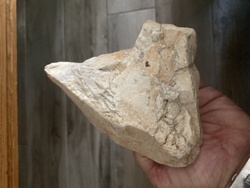
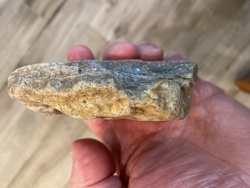
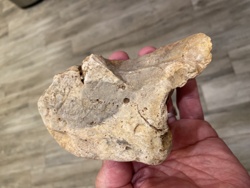
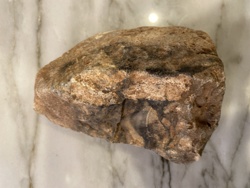
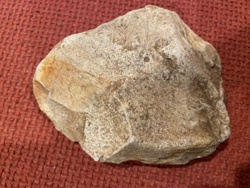
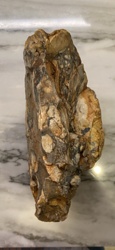
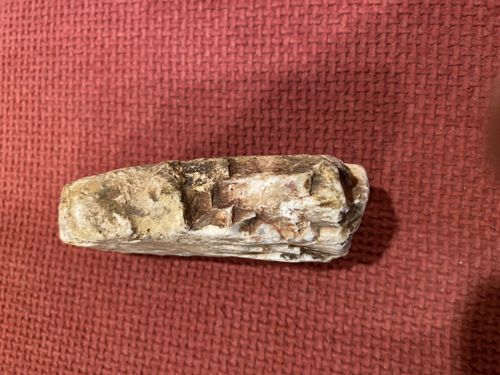
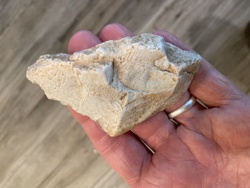
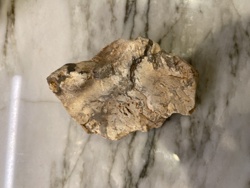
This artifact is a prehistoric bifacial stone hand axe measuring approximately 4.25 inches in length by 2.25 inches in width. Found in Guthrie, Oklahoma, the tool is crafted from a high-silica lithic material, likely a local chert or flint, exhibiting a varied color palette of earthy tans, creams, and dark mahogany browns. The piece shows evidence of percussion flaking on both sides (bifacial), though the visible angle highlights a thick, somewhat crude cross-section characteristic of early-stage lithic reduction or a specialized chopping tool. Its construction features jagged, irregular edges with several prominent hinge fractures and step fractures along the lateral margins. The surface displays a significant degree of patination and embedded soil deposits within the concave flake scars, consistent with long-term burial in the red clay or loamy soils typical of the Oklahoma region. There are no modern tool marks or signatures, suggesting ancient manufacture. The edges appear weathered rather than sharp, indicating significant age and potentially use-wear as a percussion instrument. Its form is asymmetrical with a heavy base, designed to be held in the palm of the hand without a hafted handle. The craftsmanship reflects a utilitarian Neolithic or Paleo-Indian tradition where durability was prioritized over refined aesthetics.
AI-Generated Appraisal Disclaimer
Estimated Value
$45–$85
Basic Information
Category
Archaeological Artifacts / Prehistoric Stone Tools
Appraised On
February 18, 2026
Estimated Value
$45–$85
Additional Details Provided By Owner
User Provided Information
Prehistoric stone Bi face hand axe found in Guthrie, OK measuring 4.25 x 2.25
Item Description
This artifact is a prehistoric bifacial stone hand axe measuring approximately 4.25 inches in length by 2.25 inches in width. Found in Guthrie, Oklahoma, the tool is crafted from a high-silica lithic material, likely a local chert or flint, exhibiting a varied color palette of earthy tans, creams, and dark mahogany browns. The piece shows evidence of percussion flaking on both sides (bifacial), though the visible angle highlights a thick, somewhat crude cross-section characteristic of early-stage lithic reduction or a specialized chopping tool. Its construction features jagged, irregular edges with several prominent hinge fractures and step fractures along the lateral margins. The surface displays a significant degree of patination and embedded soil deposits within the concave flake scars, consistent with long-term burial in the red clay or loamy soils typical of the Oklahoma region. There are no modern tool marks or signatures, suggesting ancient manufacture. The edges appear weathered rather than sharp, indicating significant age and potentially use-wear as a percussion instrument. Its form is asymmetrical with a heavy base, designed to be held in the palm of the hand without a hafted handle. The craftsmanship reflects a utilitarian Neolithic or Paleo-Indian tradition where durability was prioritized over refined aesthetics.
Get Your Items Appraised
Instant estimates of your treasures with AI-powered instant appraisals