AI estimate as of August 7, 2025 · verify with a professional before acting
AI-Generated · Verify before acting
Everything on this page is generated by AI for informational purposes only. AI can make mistakes — the AI may misidentify items or misattribute them (artist, maker, brand, designer, origin, era). This is not an official valuation and should not be used for insurance, sale, tax, estate, legal, or lending purposes — or any decision requiring a certified appraisal. It is not an authoritative claim about any person, brand, or rights holder — do not share or rely on it as a factual statement about a third party. Always consult qualified professionals before making financial decisions.
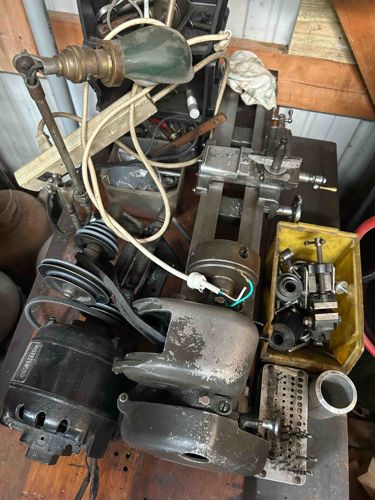
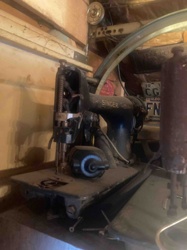
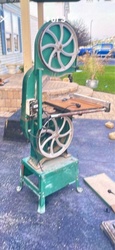
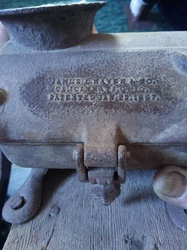
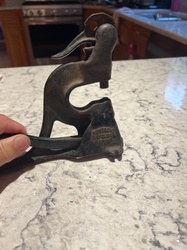
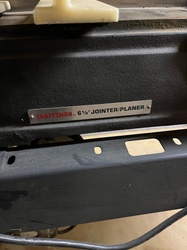
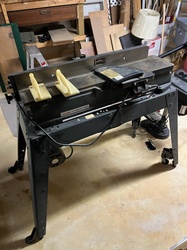
The image features a collection of what appears to be components of a vintage metalworking lathe, possibly a benchtop or small precision model, along with associated accessories. The main body of the lathe, likely made of cast iron or heavy steel, is visible with its ways and carriage assembly. It exhibits a dark, possibly original, painted finish that shows significant wear, chips, and scratches, indicating heavy use and age. The surface appears somewhat dull and dusty, suggesting it has been stored for an extended period. The compound slide and toolpost are discernable, showing typical mechanical adjustments and clamping mechanisms. There's a separate electric motor, black in color with ventilation slots, likely an induction motor, which would have powered the lathe's spindle via a belt drive system. A multi-groove pulley and a section of a drive belt are visible, suggesting a stepped pulley system for variable speeds. Another large, grey-painted metal casing, possibly part of a gear train housing or motor cover, lies nearby and shows extensive paint chipping and surface oxidation. A yellow plastic bin contains various smaller metal parts, including collets, cutting tools, or chuck jaws, typical accessories for a machinist's setup. Additionally, a work lamp with a green-painted metal shade and a brass-colored adjustable arm is present, featuring heavily aged electrical wiring with cloth insulation, indicative of an older electrical appliance. Another item resembles a plate with multiple small holes, potentially a drill bit index or a part of a jig. The overall condition suggests that the items are disassembled, requiring reassembly and restoration. The age is estimated to be mid-20th century, likely between the 1940s and 1970s, given the style of the motor and machine components. The manufacturer's details are not directly visible, but the presence of a 'COMBI...' label on the motor suggests a brand name, possibly 'COMBINATION'. The craftsmanship appears robust and functional, characteristic of industrial-grade tools of that era, built for durability rather than aesthetic appeal.
AI Appraisal Report
Upon visual examination of the provided image, I have assessed this collection of disassembled vintage metal lathe components and accessories. The primary components, including the lathe bed, carriage, and compound slide, appear to be largely intact but show significant wear, chipping, and dust, indicative of heavy use and prolonged storage. The original dark painted finish is heavily compromised. The accompanying electric motor, multi-groove pulley, and drive belt सेक्शन confirm this is a belt-driven system, likely from the mid-20th century (1940s-1970s) given the aesthetic and wear patterns. The 'COMBI...' label on the motor might indicate a brand, though full identification would require clearer images or in-person inspection. The presence of a vintage work lamp with cloth-insulated wiring reinforces the age. The miscellaneous smaller parts in the yellow bin are typical accessories.
Market conditions for vintage tools of this nature are niche, appealing primarily to hobbyists, restorers, or small-scale machinists. Comparables show that fully functional, restored vintage lathes can fetch significantly more, but these disassembled components are valued for their potential. Demand is moderate, driven by the desire for durable, repairable older machinery, though rarity is not exceptionally high for generic models. The disassembled state, evident wear, and lack of immediate operational readiness are the most significant factors impacting value negatively. The cost and effort of reassembly, cleaning, potential repair of worn parts, and sourcing missing components reduce its "turn-key" value.
Limitations in authenticity verification from images alone are considerable. I cannot confirm the completeness of all components or the extent of internal wear on gears, bearings, or lead screws. Rust pitting beneath the surface grime is also undeterminable. Full authentication and a more precise valuation would require an in-person examination to assess crucial mechanical tolerances, confirm the absence of major cracks or irreparable damage, test motor functionality, and identify specific manufacturer markings not visible here. Without physical inspection, the presence of critical missing parts cannot be ruled out.