AI Appraisal Estimate

AI-generated estimates · not official valuations

From the user

What was submitted

Photo and notes provided by the user — not generated by AI

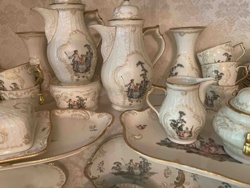
Submitted item photo
Submitted photo · June 30, 2026

User's notes

No additional notes provided.

AI analysis below

AI appraisal

AI analysis & estimate

AI-Generated · Verify before acting

Everything below is generated by AI for informational purposes only. AI can make mistakes — the AI may misidentify items or misattribute them (artist, maker, brand, designer, origin, era). This is not an official valuation and should not be used for insurance, sale, tax, estate, legal, or lending purposes — or any decision requiring a certified appraisal. It is not an authoritative claim about any person, brand, or rights holder — do not share or rely on it as a factual statement about a third party. Always consult qualified professionals before making financial decisions.

Read the full disclaimer

AI Identification

·Not independently authenticated·Verify before acting

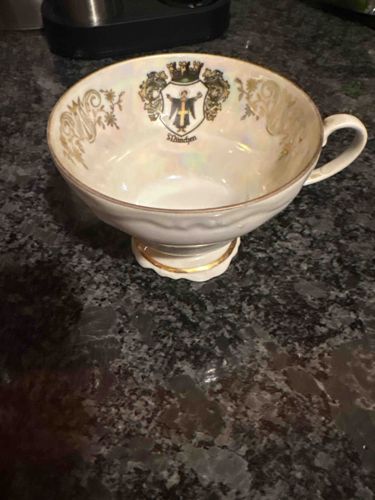
Vintage Lusterware Souvenir Teacup with Munich Coat of Arms

Antique Porcelain and Ceramics

AI Estimated Value

·Not an official valuation·Verify before acting

$45 - $65

As of June 30, 2026

AI Item Analysis

·AI can make mistakes·Verify before acting
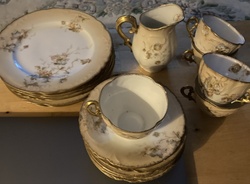
This is a vintage fine porcelain teacup featuring a distinctive iridescent pearlized lusterware finish on the interior and exterior. The cup is designed in a pedestal footed style with a wide, flared rim and a delicate c-scroll handle. It is prominently decorated on the interior with the 'Münchner Kindl' (Munich Child), the official coat of arms for the city of Munich, Germany, which depicts a monk in a black cowl with gold trim holding a red book and a small cross. The coat of arms is flanked by elaborate gold gilt scrollwork and floral motifs. The rim and the base of the pedestal are finished with a fine hand-painted gold gilt line. The craftsmanship suggests mid-20th-century European production, likely from a Bavarian or German porcelain factory such as Schumann Arzberg or Winterling, which frequently produced such commemorative souvenir wares. The luster finish provides a rainbow-like sheen when catching the light, which was a popular decorative technique from the 1920s through the 1960s. The condition appears fair to good with no visible chips or cracks, although there is minor evidence of gold loss on the rim consistent with age and gentle handling. The interior luster remains vibrant, indicative of minimal abrasive cleaning.
AI Appraisal Report

·AI can make mistakes·Verify before acting
Based on my visual examination of this mid-20th-century lusterware souvenir teacup, I find it to be a charming example of Bavarian commemorative porcelain, likely produced between 1950 and 1965. The interior features a well-rendered 'Münchner Kindl' transfer-print with hand-gilded accents. This specific combination of the pearlized iridescent finish and traditional heraldry was a staple of the post-WWII German tourism market. The condition appears fair to good. I observe typical shelf wear on the pedestal base and minor thinning of the gold gilt along the scalloped rim, which is expected for porcelain of this age. The luster remains intact without the 'oil-slick' degradation often seen from improper storage or acidic cleaning. Authenticity is supported by the specific stylization of the Munich monk and the characteristic glaze quality of German kilns specializing in 'Glanzgold' decoration. The market for mid-century souvenir porcelain is stable but niche. Demand is primarily driven by regional collectors of Germaniana or 'München' memorabilia rather than fine porcelain investors. Comparables for unsigned Bavarian souvenir cups generally realize between $30 and $75 depending on the complexity of the gilding. The value is limited by the lack of a prominent maker's mark (e.g., Nymphenburg or Meissen), which would significantly elevate the price. Note: This appraisal is based on photographic evidence only. A physical inspection is required to check for 'invisible' repairs under UV light, verify the presence of a maker's mark on the underside of the base, and assess the tactile weight of the porcelain body to differentiate between bone china and hard-paste porcelain.

Get your items appraised

Instant estimates of your treasures with AI-powered appraisals

Browse More Appraisals