Lower Paleolithic Style Chert Biface Hand Axe Scraper
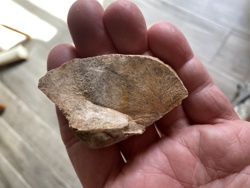
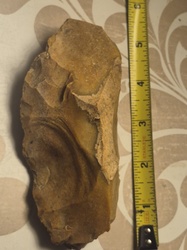
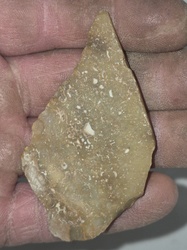
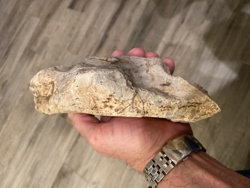
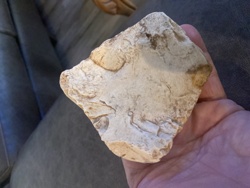
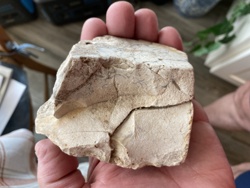
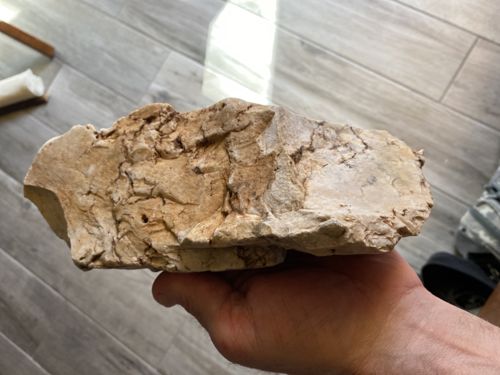
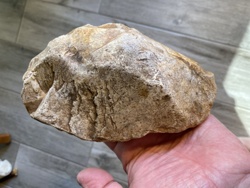
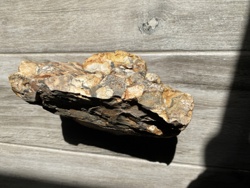
This large lithic specimen measures approximately 9 inches by 3.75 inches and is composed of a light-colored chert or cream-toned silicate stone. The object demonstrates bifacial reduction techniques, characterized by multi-directional flake scars across both primary surfaces. Its construction is robust and ergonomic, featuring a tapered point and a broader, heavier base typical of Lower Paleolithic percussion-flaked tools, such as the Acheulean or similar early lithic industries. The color palette consists of earthy tans, creams, and ochre-stained fissures, indicating long-term environmental exposure. Visible condition issues include significant iron mineral staining and a heavy patina consistent with find-sites in Guthrie, Oklahoma. The edges show evidence of utilization and possible retouching for use as a scraper or chopping implement. While it lacks modern maker's marks, the rhythmic pattern of conchoidal fractures suggests intentional human manufacture rather than natural geofact percussion. The craftsmanship represents a functional, primitive aesthetic designed for high-impact tasks.
AI-Generated Appraisal Disclaimer
Estimated Value
$150-$300
Basic Information
Category
Archeological Artifacts
Appraised On
February 18, 2026
Estimated Value
$150-$300
Additional Details Provided By Owner
User Provided Information
Lower Paleolithic Chert very large Bi face Hand axe scraper tool found in Guthrie OK measuring 9" x 3.75"
Item Description
This large lithic specimen measures approximately 9 inches by 3.75 inches and is composed of a light-colored chert or cream-toned silicate stone. The object demonstrates bifacial reduction techniques, characterized by multi-directional flake scars across both primary surfaces. Its construction is robust and ergonomic, featuring a tapered point and a broader, heavier base typical of Lower Paleolithic percussion-flaked tools, such as the Acheulean or similar early lithic industries. The color palette consists of earthy tans, creams, and ochre-stained fissures, indicating long-term environmental exposure. Visible condition issues include significant iron mineral staining and a heavy patina consistent with find-sites in Guthrie, Oklahoma. The edges show evidence of utilization and possible retouching for use as a scraper or chopping implement. While it lacks modern maker's marks, the rhythmic pattern of conchoidal fractures suggests intentional human manufacture rather than natural geofact percussion. The craftsmanship represents a functional, primitive aesthetic designed for high-impact tasks.
Get Your Items Appraised
Instant estimates of your treasures with AI-powered instant appraisals