Tarnished Silverplate Goblet
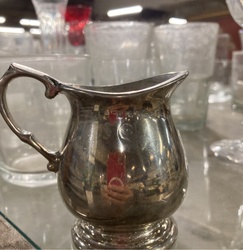
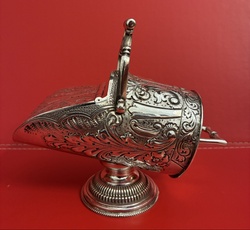
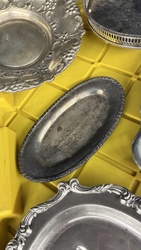
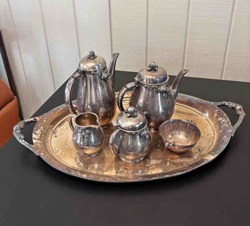
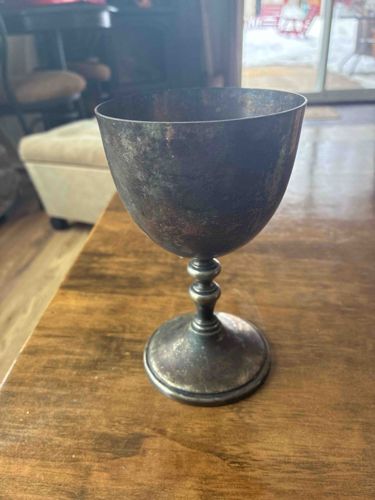
This item is a traditional chalice-style goblet, likely constructed from silver-plated brass or copper. It features a deep, U-shaped bowl supported by a turned pedestal stem with rounded knops, terminating in a weighted, domed circular base. The exterior is characterized by heavy, uneven atmospheric oxidation and tarnish, which has developed into a dark, mottled grey and blue-black patina over much of the surface. This level of tarnish suggests the item has been stored in open air for a significant period. While the underlying metal appears structurally sound with no major dents or deformities visible, the plating exhibits significant wear particularly around the rim and base. There are no visible maker's marks or hallmarks from this angle, though they would typically be found on the underside of the base. Based on the silhouette and construction, this piece likely dates to the mid-20th century (1940s-1970s) and was intended for formal dining or decorative use. The craftsmanship is standard for mass-produced holloware of that era, emphasizing classic proportions over intricate engraving.
AI-Generated Appraisal Disclaimer
Estimated Value
$15.00 - $35.00
Basic Information
Category
Antique & Vintage Metalware / Silverplate
Appraised On
January 10, 2026
Estimated Value
$15.00 - $35.00
Item Description
This item is a traditional chalice-style goblet, likely constructed from silver-plated brass or copper. It features a deep, U-shaped bowl supported by a turned pedestal stem with rounded knops, terminating in a weighted, domed circular base. The exterior is characterized by heavy, uneven atmospheric oxidation and tarnish, which has developed into a dark, mottled grey and blue-black patina over much of the surface. This level of tarnish suggests the item has been stored in open air for a significant period. While the underlying metal appears structurally sound with no major dents or deformities visible, the plating exhibits significant wear particularly around the rim and base. There are no visible maker's marks or hallmarks from this angle, though they would typically be found on the underside of the base. Based on the silhouette and construction, this piece likely dates to the mid-20th century (1940s-1970s) and was intended for formal dining or decorative use. The craftsmanship is standard for mass-produced holloware of that era, emphasizing classic proportions over intricate engraving.
Get Your Items Appraised
Instant estimates of your treasures with AI-powered instant appraisals