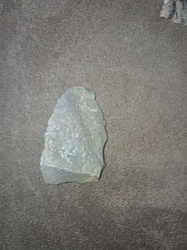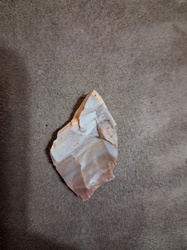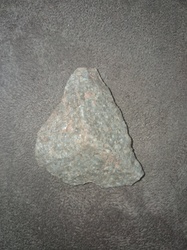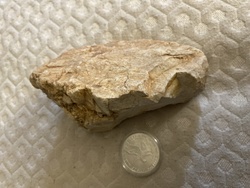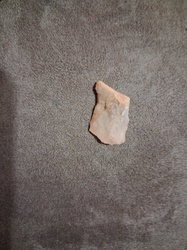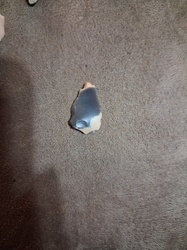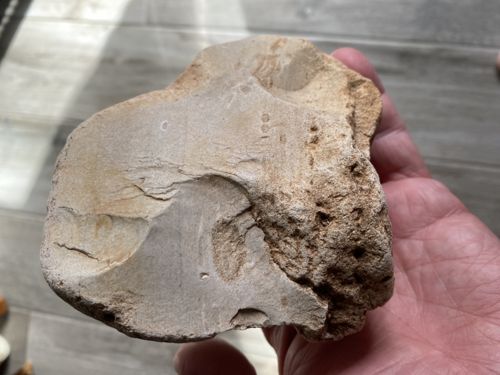
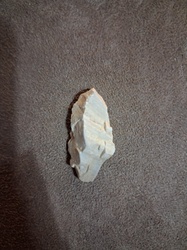
Chert Hand Axe Scraper Tool
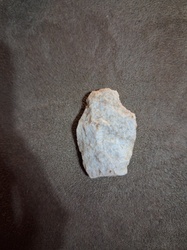
This is a 4-inch lithic artifact identified as a hand axe or scraper tool, reportedly of Middle Paleolithic Mousterian style though found in Guthrie, Oklahoma. The piece is crafted from chert, characterized by its fine-grained, cryptocrystalline texture. Its coloration is predominantly a light tan to creamy beige, with sections of darker, earth-toned cortex remainders and internal greyish hues. The object shows evidence of intentional flaking, featuring several large percussion scars (conchoidal fractures) that suggest it was shaped through flintknapping to create functional edges. The tool possesses a thick, robust body that tapers toward a worked edge, suitable for heavy scraping or chopping tasks. Its surface exhibits a weathered patina and mineral deposits consistent with long-term environmental exposure. While there are some irregular pits and natural inclusions in the stone, the overall form retains a purposeful ergonomic shape. The craftsmanship reflects an expedient design rather than highly refined symmetry, typical of utilitarian prehistoric implements. Condition is good for its age, showing some edge wear and minor modern abrasions, but no major structural breaks beyond the original reductive shaping.
AI-Generated Appraisal Disclaimer
Estimated Value
$40.00 - $75.00
Basic Information
Category
Archaeological Artifacts
Appraised On
February 19, 2026
Estimated Value
$40.00 - $75.00
Additional Details Provided By Owner
User Provided Information
Middle Paleolithic Mousterian chert hand axe scraper tool found in Guthrie OK 4". 4"
Item Description
This is a 4-inch lithic artifact identified as a hand axe or scraper tool, reportedly of Middle Paleolithic Mousterian style though found in Guthrie, Oklahoma. The piece is crafted from chert, characterized by its fine-grained, cryptocrystalline texture. Its coloration is predominantly a light tan to creamy beige, with sections of darker, earth-toned cortex remainders and internal greyish hues. The object shows evidence of intentional flaking, featuring several large percussion scars (conchoidal fractures) that suggest it was shaped through flintknapping to create functional edges. The tool possesses a thick, robust body that tapers toward a worked edge, suitable for heavy scraping or chopping tasks. Its surface exhibits a weathered patina and mineral deposits consistent with long-term environmental exposure. While there are some irregular pits and natural inclusions in the stone, the overall form retains a purposeful ergonomic shape. The craftsmanship reflects an expedient design rather than highly refined symmetry, typical of utilitarian prehistoric implements. Condition is good for its age, showing some edge wear and minor modern abrasions, but no major structural breaks beyond the original reductive shaping.
Related Tags
Get Your Items Appraised
Instant estimates of your treasures with AI-powered instant appraisals