Antique Blue and White Striped Ceramic Plate
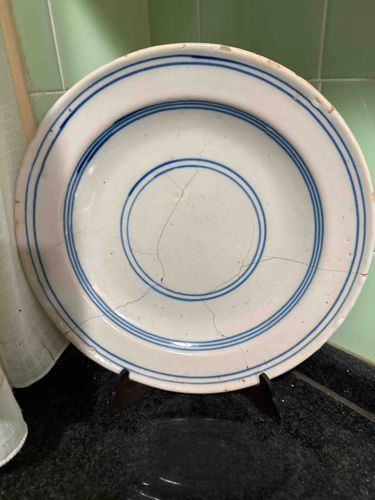
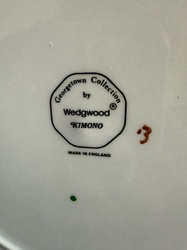
This item is an antique ceramic plate, primarily white with blue striped decoration. The plate features a shallow, rounded form with a distinct rim. The primary decoration consists of concentric blue lines, with a triple-line band encircling the outer edge of the eating surface, and another triple-line band forming a central medallion. The blue coloration appears to be underglaze, giving it a somewhat muted and integrated appearance. The material is likely earthenware or a similar ceramic, possibly tin-glazed earthenware (faience or majolica) given its age and appearance. The surface exhibits significant crazing, a network of fine cracks in the glaze, which is a common characteristic of older ceramics and suggests an estimated age of late 19th to early 20th century, though it could potentially be older. Several larger, more prominent cracks are visible across the plate's surface, indicating structural damage rather than just crazing, particularly in the central area. The edges of the rim also show signs of wear, including chips and abrasions, revealing the underlying body material which appears to be a light buff or off-white color. There are no discernible manufacturer's marks or signatures visible from the provided image. The craftsmanship, while appearing somewhat rustic or utilitarian, is typical for domestic wares of its period. The hand-painted nature of the blue lines, with slight variations in thickness and spacing, suggests it was not mass-produced with highly precise machinery. The overall condition indicates significant use and age, with the extensive crazing and structural cracks being the most notable condition issues. Despite the damage, the plate retains a historical charm.
AI-Generated Appraisal Disclaimer
Estimated Value
$40-80
Basic Information
Category
Ceramic Tableware
Appraised On
December 9, 2025
Estimated Value
$40-80
Item Description
This item is an antique ceramic plate, primarily white with blue striped decoration. The plate features a shallow, rounded form with a distinct rim. The primary decoration consists of concentric blue lines, with a triple-line band encircling the outer edge of the eating surface, and another triple-line band forming a central medallion. The blue coloration appears to be underglaze, giving it a somewhat muted and integrated appearance. The material is likely earthenware or a similar ceramic, possibly tin-glazed earthenware (faience or majolica) given its age and appearance. The surface exhibits significant crazing, a network of fine cracks in the glaze, which is a common characteristic of older ceramics and suggests an estimated age of late 19th to early 20th century, though it could potentially be older. Several larger, more prominent cracks are visible across the plate's surface, indicating structural damage rather than just crazing, particularly in the central area. The edges of the rim also show signs of wear, including chips and abrasions, revealing the underlying body material which appears to be a light buff or off-white color. There are no discernible manufacturer's marks or signatures visible from the provided image. The craftsmanship, while appearing somewhat rustic or utilitarian, is typical for domestic wares of its period. The hand-painted nature of the blue lines, with slight variations in thickness and spacing, suggests it was not mass-produced with highly precise machinery. The overall condition indicates significant use and age, with the extensive crazing and structural cracks being the most notable condition issues. Despite the damage, the plate retains a historical charm.
Related Tags
Get Your Items Appraised
Instant estimates of your treasures with AI-powered instant appraisals