Nephrite Jade or Chalcedony River-Worn Nodule
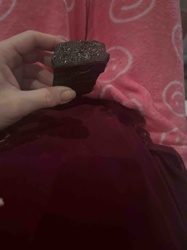
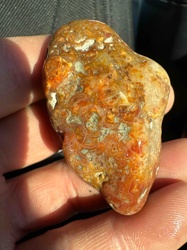
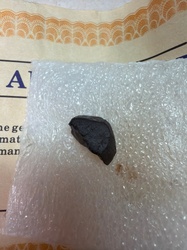
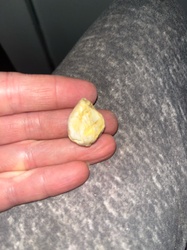
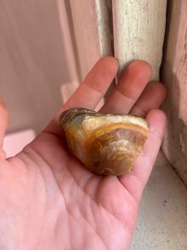
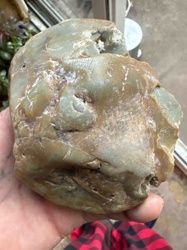
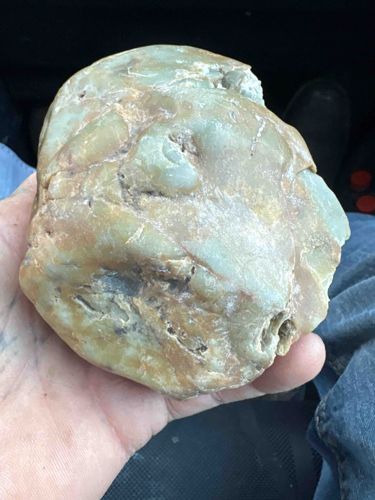
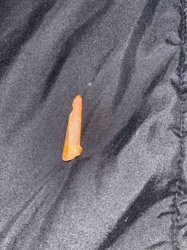
This item is a natural mineral specimen, likely a nephrite jade or a variety of chalcedony, appearing as a significant river-worn cobble or nodule. It measures roughly the size of an adult's palm, suggesting a weight between 500 to 800 grams. The color profile is predominantly a pale, waxy pale green to celadon hue, obscured in many areas by a thick, yellowish-brown cortex or 'skin' caused by oxidation and mineral staining from long-term environmental exposure. The surface texture is uneven and weathered, displaying characteristic 'waxy' luster in more translucent areas. There are visible fractures, internal cleavages, and several deep gouges or impact scars across the surface, which are consistent with travel in a high-energy riverbed. No lapidary work or human-made polishing is evident; the rounded shape is the result of natural water-tumbling over centuries. The stone shows high opacity with some translucency at the edges, a key indicator of quality for potential carving material. There are no maker's marks or signatures, as this is a raw natural specimen. Its age in geological terms spans millions of years, though its time as a loosened cobble is impossible to determine without geographic context.
AI-Generated Appraisal Disclaimer
Estimated Value
$150 - $400
Basic Information
Category
Rocks, Fossils & Minerals
Appraised On
January 11, 2026
Estimated Value
$150 - $400
Item Description
This item is a natural mineral specimen, likely a nephrite jade or a variety of chalcedony, appearing as a significant river-worn cobble or nodule. It measures roughly the size of an adult's palm, suggesting a weight between 500 to 800 grams. The color profile is predominantly a pale, waxy pale green to celadon hue, obscured in many areas by a thick, yellowish-brown cortex or 'skin' caused by oxidation and mineral staining from long-term environmental exposure. The surface texture is uneven and weathered, displaying characteristic 'waxy' luster in more translucent areas. There are visible fractures, internal cleavages, and several deep gouges or impact scars across the surface, which are consistent with travel in a high-energy riverbed. No lapidary work or human-made polishing is evident; the rounded shape is the result of natural water-tumbling over centuries. The stone shows high opacity with some translucency at the edges, a key indicator of quality for potential carving material. There are no maker's marks or signatures, as this is a raw natural specimen. Its age in geological terms spans millions of years, though its time as a loosened cobble is impossible to determine without geographic context.
Get Your Items Appraised
Instant estimates of your treasures with AI-powered instant appraisals