AI Appraisal Estimate

AI-generated estimates · not official valuations

From the user

What was submitted

Photo and notes provided by the user — not generated by AI

Submitted item photo
Submitted photo · May 24, 2026

User's notes

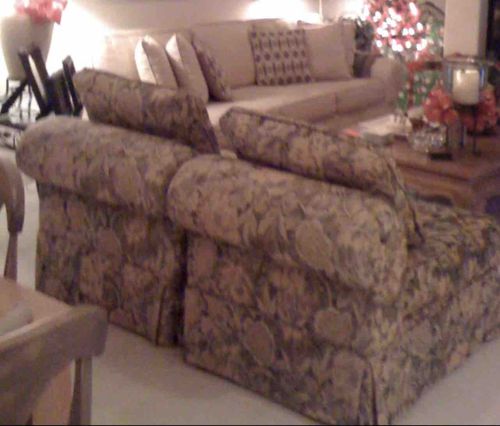
2 Tapestry Slipper Chairs

AI analysis below

AI appraisal

AI analysis & estimate

AI-Generated · Verify before acting

Everything below is generated by AI for informational purposes only. AI can make mistakes — the AI may misidentify items or misattribute them (artist, maker, brand, designer, origin, era). This is not an official valuation and should not be used for insurance, sale, tax, estate, legal, or lending purposes — or any decision requiring a certified appraisal. It is not an authoritative claim about any person, brand, or rights holder — do not share or rely on it as a factual statement about a third party. Always consult qualified professionals before making financial decisions.

Note

This analysis also relies on unverified notes provided by the user, which may be incomplete or inaccurate and could affect the result.

Read the full disclaimer

AI Identification

·Not independently authenticated·Verify before acting

Pair of Contemporary Tapestry-Style Upholstered Slipper Chairs

Furniture - Seating

AI Estimated Value

·Not an official valuation·Verify before acting

$400 - $600

As of May 24, 2026

AI Item Analysis

·AI can make mistakes·Verify before acting
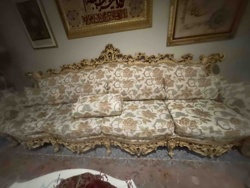
This is a matching pair of armless slipper chairs, likely manufactured in the late 20th century between 1980 and 2000. Each chair is fully upholstered in a heavy-weight tapestry-style jacquard fabric featuring an all-over floral and foliate motif in muted tones of tan, sage green, and mauve. The chairs feature a unique design with a pronounced, thick cylindrical bolster-style top along the backrest, providing distinct lumbar or cervical support depending on the sitter's height. The base is finished with a traditional kick-pleat skirt that conceals the legs, a common feature in transitional or country-chic interior design styles. The construction appears sturdy with dense cushioning, though the fabric shows slight signs of softening and wear consistent with residential use. No obvious stains, tears, or structural sagging are visible in the provided image. The scale appears standard for a living room accent chair, designed to sit low to the ground without arms, making them ideal for small spaces or as a pair of fireside seats. The craftsmanship is indicative of high-quality mass-market or custom upholstery, with well-aligned patterns across the seams and pleats.
AI Appraisal Report

·AI can make mistakes·Verify before acting
This appraisal covers a pair of contemporary armless slipper chairs, likely manufactured between 1980 and 2000. Based on my visual examination, the upholstery is a high-quality jacquard tapestry with a well-aligned floral and foliate motif. The construction features a distinctive cylindrical bolster backrest and a traditional kick-pleat skirt, both characteristic of the Transitional and Country-Chic aesthetics popular in the late 20th century. The condition appears to be 'Good' to 'Very Good,' showing minor softening of the fabric and typical indications of residential use, but no significant staining, structural sagging, or fraying is evident from the visual data. The market for 1990s-era upholstered furniture remains steady but saturated. These chairs are valued as a pair, as their utility as 'fireside seats' or accent pieces in a small living space increases their desirability. Comparables for mass-market or custom high-end upholstery from this era typically sell at local auctions or consignments in the mid-hundreds range. While the design is unique due to the bolster back, the muted palette and floral pattern are currently trailing behind more modern, minimalist trends, which slightly tempers the top-end value. Limitations: This assessment is based on photographic evidence. I cannot definitively verify the internal frame construction (e.g., kiln-dried hardwood vs. plywood) or the integrity of the spring systems without a physical inspection. To finalize a formal authentication, I would require an examination of the underside (removing the dust cover) to check for manufacturer tags/labels and to confirm joinery techniques. Any provenance documentation or original sales receipts from high-end retailers would significantly bolster the secondary market value.

Get your items appraised

Instant estimates of your treasures with AI-powered appraisals

Browse More Appraisals