Japanese Imari-Style Square Porcelain Kaku-Bachi Bowl
Asian Art / Ceramics

Japanese Imari-Style Square Porcelain Kaku-Bachi Bowl

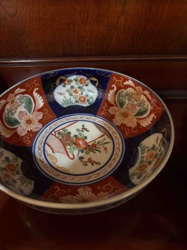
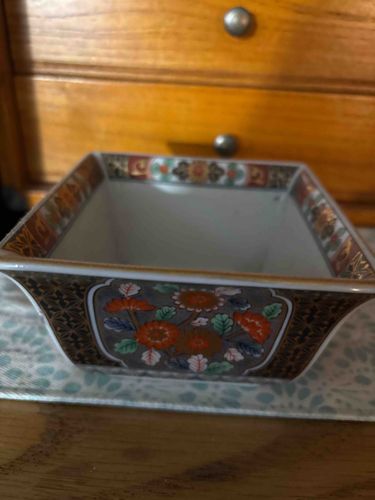
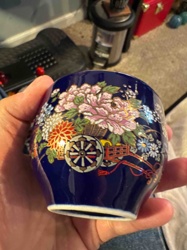
This item is a square-shaped porcelain bowl, known in Japanese pottery as a kaku-bachi, featuring flared rim edges and a tapered base. The piece is decorated in the classic Imari style, characterized by a palette of underglaze blue, iron-red, and gold gilding. The exterior panels feature intricate polychrome floral arrangements, specifically chrysanthemums (kiku), set within lobed cartouches. The surrounding background is filled with dense geometric patterns that mimic textile designs. The interior rim is equally ornate, boasting a repetitive border of stylized floral and geometric motifs. Construction appears to be fine white porcelain with a high-gloss lead glaze. Based on the uniform application of the decoration and the crispness of the lines, it likely dates to the mid-to-late 20th century (Showa period). While no specific maker's mark is visible from this angle, the quality suggests a reputable Arita or Kutani kiln. The condition is excellent with no visible chips, cracks, or significant loss to the fragile gold gilt. The base shows minimal shelf wear, indicating it was likely used primarily for display or special occasions.
Estimated Value

$150 - $250

Basic Information

Category

Asian Art / Ceramics

Appraised On

January 28, 2026

Estimated Value

$150 - $250

Item Description

This item is a square-shaped porcelain bowl, known in Japanese pottery as a kaku-bachi, featuring flared rim edges and a tapered base. The piece is decorated in the classic Imari style, characterized by a palette of underglaze blue, iron-red, and gold gilding. The exterior panels feature intricate polychrome floral arrangements, specifically chrysanthemums (kiku), set within lobed cartouches. The surrounding background is filled with dense geometric patterns that mimic textile designs. The interior rim is equally ornate, boasting a repetitive border of stylized floral and geometric motifs. Construction appears to be fine white porcelain with a high-gloss lead glaze. Based on the uniform application of the decoration and the crispness of the lines, it likely dates to the mid-to-late 20th century (Showa period). While no specific maker's mark is visible from this angle, the quality suggests a reputable Arita or Kutani kiln. The condition is excellent with no visible chips, cracks, or significant loss to the fragile gold gilt. The base shows minimal shelf wear, indicating it was likely used primarily for display or special occasions.
Get Your Items Appraised

Instant estimates of your treasures with AI-powered instant appraisals

Browse More Appraisals