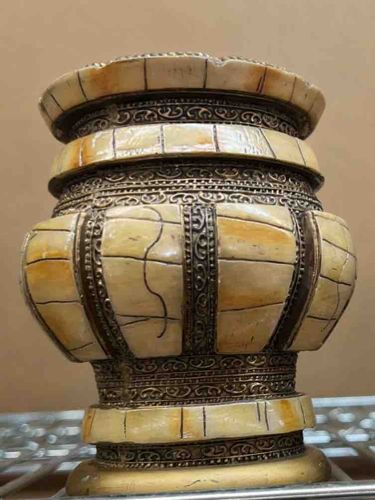
Indo-Tibetan Style Bone-Inlaid Metal Urn
This decorative vessel is a medium-sized urn featuring a complex construction of bone segments or paneling applied over a metallic frame, likely brass or a similar alloy. The piece is characterized by its tiered, bulbous central body and flared pedestal base. The physical materials include organic bone tiles in varying cream, tan, and amber hues, which are separated by intricate metallic filigree bands. These metal bands are detailed with repetitive scrollwork and floral-inspired patterns, suggesting a production style found in Indo-Tibetan or Nepalese decorative arts. Notable features include the visible 'Schreger' lines and natural cracking (crazing) on the bone panels, which indicate age and an organic origin; however, the heavy brownish staining suggests a deliberate antiquing process. The condition shows heavy patina, oxidation on the metal recessed areas, and surface dirt consistent with age. There are visible stress fractures on the primary bone panels. This piece likely dates to the mid-to-late 20th century, drawing from traditional Himalayan ritual vessel designs but serving as a decorative object. The craftsmanship involves labor-intensive inlay work, where each segment must be hand-fitted and secured around the metal core.
AI-Generated Appraisal Disclaimer
Estimated Value
$450 - $650
Basic Information
Category
Antique Decorative Arts
Appraised On
May 4, 2026
Estimated Value
$450 - $650
Item Description
This decorative vessel is a medium-sized urn featuring a complex construction of bone segments or paneling applied over a metallic frame, likely brass or a similar alloy. The piece is characterized by its tiered, bulbous central body and flared pedestal base. The physical materials include organic bone tiles in varying cream, tan, and amber hues, which are separated by intricate metallic filigree bands. These metal bands are detailed with repetitive scrollwork and floral-inspired patterns, suggesting a production style found in Indo-Tibetan or Nepalese decorative arts. Notable features include the visible 'Schreger' lines and natural cracking (crazing) on the bone panels, which indicate age and an organic origin; however, the heavy brownish staining suggests a deliberate antiquing process. The condition shows heavy patina, oxidation on the metal recessed areas, and surface dirt consistent with age. There are visible stress fractures on the primary bone panels. This piece likely dates to the mid-to-late 20th century, drawing from traditional Himalayan ritual vessel designs but serving as a decorative object. The craftsmanship involves labor-intensive inlay work, where each segment must be hand-fitted and secured around the metal core.
Get Your Items Appraised
Instant estimates of your treasures with AI-powered instant appraisals