Goethite Pseudomorph after Pyrite Crystal
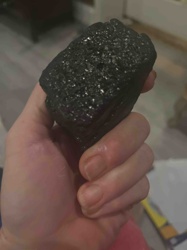
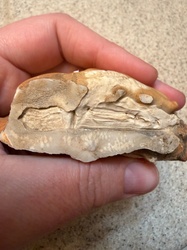
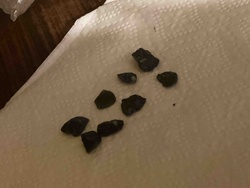
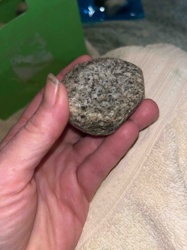
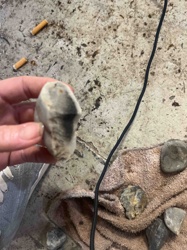
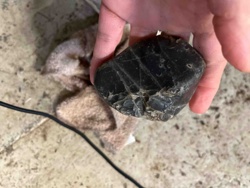
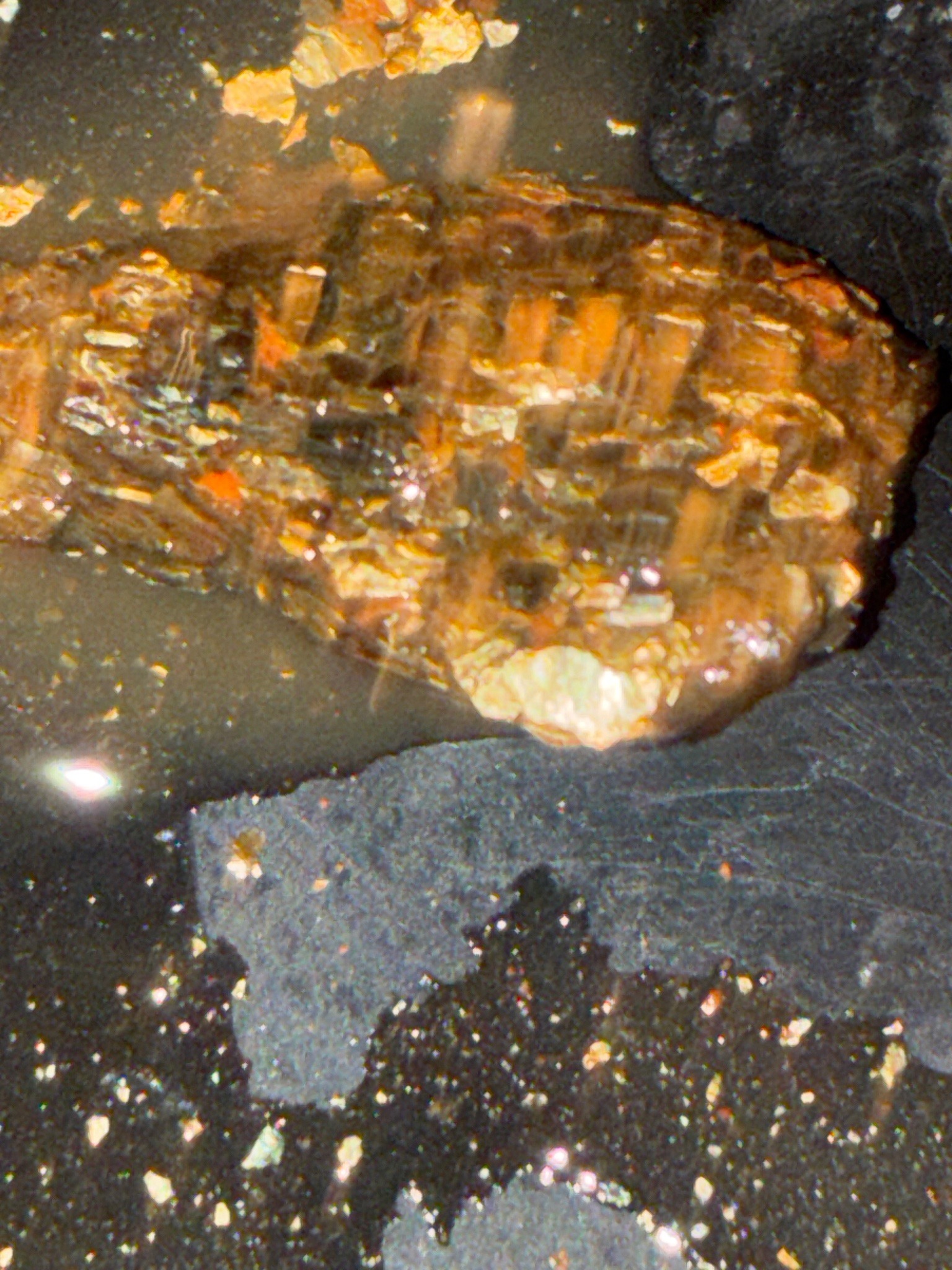
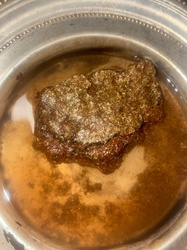
This mineral specimen is a goethite pseudomorph after a cluster of pyrite crystals. It showcases a dark, earthy brown to black coloration with distinct metallic golden and orange highlights peeking through the oxidation layers. Physically, the specimen retains the characteristic isometric or cubic crystalline shapes of the original pyrite, but the chemical composition has been replaced by goethite through a process of natural hydration and oxidation. The texture is heavily weathered and encrusted, exhibiting a rugged, sub-metallic to dull luster. Notable features include the sharply defined step-like growth patterns and angular corners typical of pyrite cubes. Condition issues include significant crumbling along the edges and a high degree of surface degradation, common for replacement specimens. There are no visible maker's marks as this is a natural geological formation. The age of such geological specimens spans millions of years, likely occurring in an oxidized zone of a sulfur-rich mineral deposit. The presence of 'limonite' staining (yellowish-brown) adds to its complex aesthetic, making it an interesting study in mineral replacement and geological weathering processes.
AI-Generated Appraisal Disclaimer
Estimated Value
$45.00 - $75.00
Basic Information
Category
Geological Specimens / Minerals
Appraised On
May 7, 2026
Estimated Value
$45.00 - $75.00
Item Description
This mineral specimen is a goethite pseudomorph after a cluster of pyrite crystals. It showcases a dark, earthy brown to black coloration with distinct metallic golden and orange highlights peeking through the oxidation layers. Physically, the specimen retains the characteristic isometric or cubic crystalline shapes of the original pyrite, but the chemical composition has been replaced by goethite through a process of natural hydration and oxidation. The texture is heavily weathered and encrusted, exhibiting a rugged, sub-metallic to dull luster. Notable features include the sharply defined step-like growth patterns and angular corners typical of pyrite cubes. Condition issues include significant crumbling along the edges and a high degree of surface degradation, common for replacement specimens. There are no visible maker's marks as this is a natural geological formation. The age of such geological specimens spans millions of years, likely occurring in an oxidized zone of a sulfur-rich mineral deposit. The presence of 'limonite' staining (yellowish-brown) adds to its complex aesthetic, making it an interesting study in mineral replacement and geological weathering processes.
Get Your Items Appraised
Instant estimates of your treasures with AI-powered instant appraisals