Capodimonte Porcelain Mark with Pattern Number
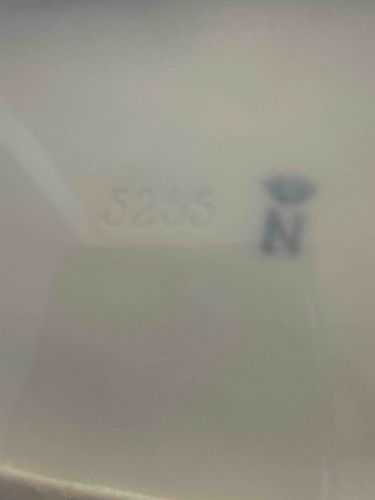
This image features the reverse side markings of a porcelain item, specifically an Imari-style platter, showcasing a distinctive underglaze backstamp. The primary mark consists of the blue 'Crowned N' logo, which is the historical hallmark of the Royal Factory in Naples, later utilized by various Italian and European porcelain manufacturers in the Capodimonte style during the 19th and early 20th centuries. Adjacent to the blue mark is a four-digit impressed or debossed number '5255,' which likely serves as a mold, shape, or production pattern identifier. The base material is a fine, white-bodied porcelain with a smooth, translucent glaze typical of high-quality European ceramics. The surface shows a slightly cream-colored tint through the glaze, common in aged earthenware or 'soft-paste' porcelain transitions. While the overall surface appears intact, there is a soft focus and slight yellowing to the image, suggesting natural age and light exposure. The crispness of the impressed '5255' and the specific serif style of the 'N' are key indicators of its manufacturing era, likely dating to the late 19th or early 20th century. This mark ensures the piece identifies as a Capodimonte-style production, even if used on an 'Imari' (Japanese-inspired) pattern, which was a very popular decorative motif for European export and domestic markets.
AI-Generated Appraisal Disclaimer
Estimated Value
$450 - $650
Basic Information
Category
Antique Ceramics and Porcelain
Appraised On
March 13, 2026
Estimated Value
$450 - $650
Additional Details Provided By Owner
User Provided Information
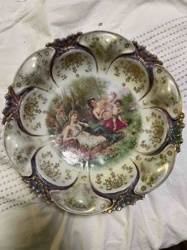
Imari platter
Item Description
This image features the reverse side markings of a porcelain item, specifically an Imari-style platter, showcasing a distinctive underglaze backstamp. The primary mark consists of the blue 'Crowned N' logo, which is the historical hallmark of the Royal Factory in Naples, later utilized by various Italian and European porcelain manufacturers in the Capodimonte style during the 19th and early 20th centuries. Adjacent to the blue mark is a four-digit impressed or debossed number '5255,' which likely serves as a mold, shape, or production pattern identifier. The base material is a fine, white-bodied porcelain with a smooth, translucent glaze typical of high-quality European ceramics. The surface shows a slightly cream-colored tint through the glaze, common in aged earthenware or 'soft-paste' porcelain transitions. While the overall surface appears intact, there is a soft focus and slight yellowing to the image, suggesting natural age and light exposure. The crispness of the impressed '5255' and the specific serif style of the 'N' are key indicators of its manufacturing era, likely dating to the late 19th or early 20th century. This mark ensures the piece identifies as a Capodimonte-style production, even if used on an 'Imari' (Japanese-inspired) pattern, which was a very popular decorative motif for European export and domestic markets.
Get Your Items Appraised
Instant estimates of your treasures with AI-powered instant appraisals