Paleo-Indian Chert Effigy Hand Tool
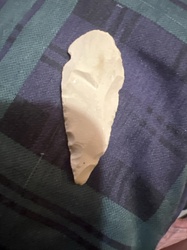
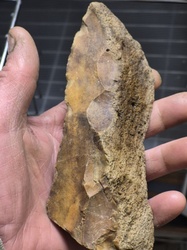
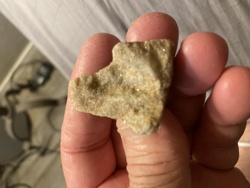
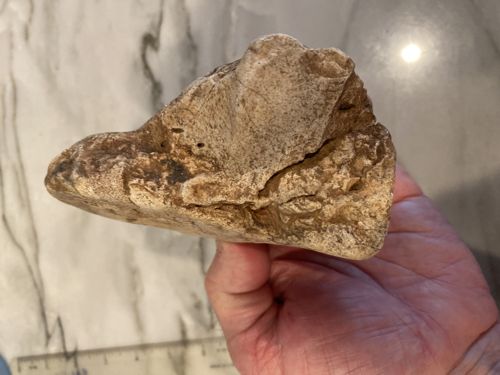
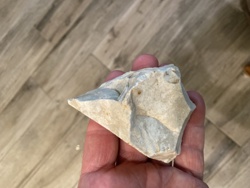
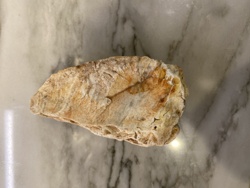
This specimen is a lithic artifact composed of chert, specifically identified as a Paleo-Indian hand tool with potential portable rock art effigy characteristics. Found in Guthrie, Oklahoma, the item exhibits the earthy, tan, and cream-colored tones characteristic of local chert variants in the Great Plains region. The object fits comfortably in the palm of a hand, suggesting its primary function as a multi-purpose scraping or grinding tool. The construction displays intentional unifacial or bifacial flaking along the edges to create a functional grip and working surface. Notable is the suggestive shape of the rock, which some collectors interpret as an 'effigy' due to its profile. The surface shows a heavy, aged patina and significant smoothing, likely from a combination of ancient handling and natural geological weathering over millennia. There are visible inclusions and pitting in the stone which is typical for chert, along with minor fracturing near the heavier edges. No modern maker's marks are present, placing its origin in the prehistoric Paleo-Indian period. The quality of the lithic reduction indicates skilled craftsmanship, as the tool maintains a balance between durability and ergonomic utility.
AI-Generated Appraisal Disclaimer
Estimated Value
$150 - $450
Basic Information
Category
Prehistoric Artifacts / Indigenous North American Antiquities
Appraised On
February 20, 2026
Estimated Value
$150 - $450
Additional Details Provided By Owner
User Provided Information
Paleo indian chert hand axe scraper tool portable rock art effigy found in Guthrie, OK
Item Description
This specimen is a lithic artifact composed of chert, specifically identified as a Paleo-Indian hand tool with potential portable rock art effigy characteristics. Found in Guthrie, Oklahoma, the item exhibits the earthy, tan, and cream-colored tones characteristic of local chert variants in the Great Plains region. The object fits comfortably in the palm of a hand, suggesting its primary function as a multi-purpose scraping or grinding tool. The construction displays intentional unifacial or bifacial flaking along the edges to create a functional grip and working surface. Notable is the suggestive shape of the rock, which some collectors interpret as an 'effigy' due to its profile. The surface shows a heavy, aged patina and significant smoothing, likely from a combination of ancient handling and natural geological weathering over millennia. There are visible inclusions and pitting in the stone which is typical for chert, along with minor fracturing near the heavier edges. No modern maker's marks are present, placing its origin in the prehistoric Paleo-Indian period. The quality of the lithic reduction indicates skilled craftsmanship, as the tool maintains a balance between durability and ergonomic utility.
Get Your Items Appraised
Instant estimates of your treasures with AI-powered instant appraisals