Paleolithic Chert Hand Axe and Scraper
Prehistoric Archaeological Artifacts

Paleolithic Chert Hand Axe and Scraper

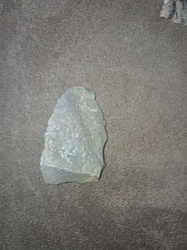
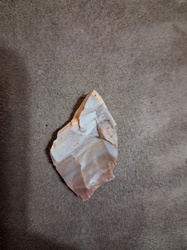
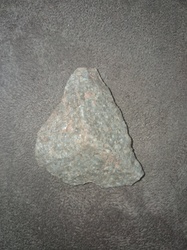
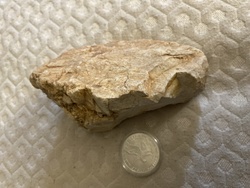
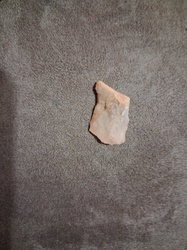
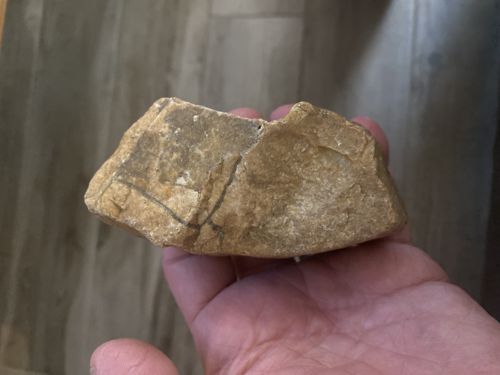
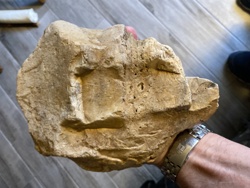
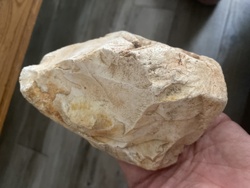
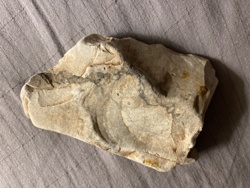
This specimen is a lithic tool measuring approximately 4 inches in length and 2 inches in width, identified as a hand axe and scraper hybrid found in Guthrie, Oklahoma. The artifact is crafted from high-quality chert, displaying a varied color palette of earthy tans, ochre, and warm browns with visible dark mineral veining and iron inclusion staining. Structurally, the tool exhibits classic unifacial and bificial flaking techniques characteristic of early stone tool production. The surface shows significant conchoidal fracturing where flakes were intentionally removed to create a sharp, durable working edge along the primary boundary. One side presents a relatively flat cortex, while the opposing side shows more aggressive percussion flaking to facilitate a palm-grip design. Notable features include a prominent ridge and a slightly concave notch on the upper edge, likely serving as a thumb rest for precision scraping tasks. The condition of the piece is consistent with its prehistoric origins, exhibiting a heavy desert varnish and natural patina. Wear is localized primarily on the working edges, which show micro-chipping and dulling from ancient use. There are no modern maker's marks, but the intentionality of the strikes suggests skilled human craftsmanship rather than natural geological weathering. This piece likely dates to the Late Paleolithic or Archaic period of North America, serving as a multi-purpose butcher and hide-processing tool for early indigenous populations.
Estimated Value

$150 - $250

Basic Information

Category

Prehistoric Archaeological Artifacts

Appraised On

February 19, 2026

Estimated Value

$150 - $250

Additional Details Provided By Owner

User Provided Information

Paleolithic Chert hand axe scraper found in Guthrie OK measuring tool measuring 4" x 2"

Item Description

This specimen is a lithic tool measuring approximately 4 inches in length and 2 inches in width, identified as a hand axe and scraper hybrid found in Guthrie, Oklahoma. The artifact is crafted from high-quality chert, displaying a varied color palette of earthy tans, ochre, and warm browns with visible dark mineral veining and iron inclusion staining. Structurally, the tool exhibits classic unifacial and bificial flaking techniques characteristic of early stone tool production. The surface shows significant conchoidal fracturing where flakes were intentionally removed to create a sharp, durable working edge along the primary boundary. One side presents a relatively flat cortex, while the opposing side shows more aggressive percussion flaking to facilitate a palm-grip design. Notable features include a prominent ridge and a slightly concave notch on the upper edge, likely serving as a thumb rest for precision scraping tasks. The condition of the piece is consistent with its prehistoric origins, exhibiting a heavy desert varnish and natural patina. Wear is localized primarily on the working edges, which show micro-chipping and dulling from ancient use. There are no modern maker's marks, but the intentionality of the strikes suggests skilled human craftsmanship rather than natural geological weathering. This piece likely dates to the Late Paleolithic or Archaic period of North America, serving as a multi-purpose butcher and hide-processing tool for early indigenous populations.
Get Your Items Appraised

Instant estimates of your treasures with AI-powered instant appraisals

Browse More Appraisals