AI Appraisal Estimate

AI-generated estimates · not official valuations

From the user

What was submitted

Photo and notes provided by the user — not generated by AI

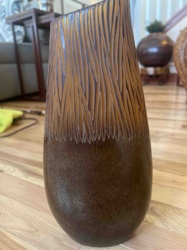
Submitted item photo
Submitted photo · June 13, 2026

User's notes

No additional notes provided.

AI analysis below

AI appraisal

AI analysis & estimate

AI-Generated · Verify before acting

Everything below is generated by AI for informational purposes only. AI can make mistakes — the AI may misidentify items or misattribute them (artist, maker, brand, designer, origin, era). This is not an official valuation and should not be used for insurance, sale, tax, estate, legal, or lending purposes — or any decision requiring a certified appraisal. It is not an authoritative claim about any person, brand, or rights holder — do not share or rely on it as a factual statement about a third party. Always consult qualified professionals before making financial decisions.

Read the full disclaimer

AI Identification

·Not independently authenticated·Verify before acting

Hand-Painted Southeast Asian Terracotta Ovoid Vase

Decorative Arts / Studio Pottery

AI Estimated Value

·Not an official valuation·Verify before acting

$45–$85

As of June 13, 2026

AI Item Analysis

·AI can make mistakes·Verify before acting
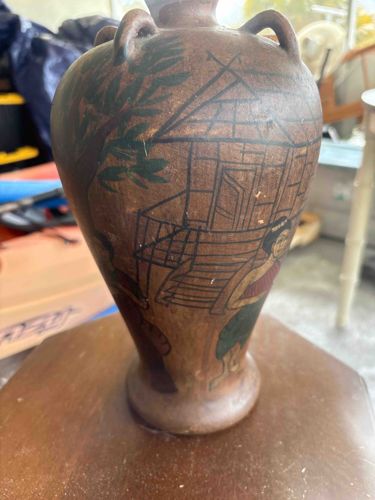
This is a hand-formed terracotta vase featuring an ovoid or amphora-inspired body that tapers significantly toward a flared circular pedestal base. The vessel is constructed with multiple small looped handles encircling the shoulder, suggesting an aesthetic influenced by traditional water vessels. The body is finished in a natural, matte reddish-brown clay with a slightly textured surface. Central to the piece is a hand-painted narrative scene rendered in black outlines and muted green and red pigments. The scene depicts a rural landscape featuring a vernacular-style house on stilts—likely a Bahay Kubo or similar Southeast Asian dwelling—alongside a large tree and a human figure in traditional dress near the base. The style and subject matter suggest a mid-to-late 20th-century artisan production, possibly from the Philippines or Indonesia. Regarding condition, the piece shows visible age-related wear, including several small surface chips and white contact marks on the painted area, particularly over the house motif. The matte finish appears to have some surface grim and minor abrasions consistent with shelf wear. The craftsmanship is rustic yet deliberate, showcasing a folk-art aesthetic rather than high-gloss fine ceramic standards.
AI Appraisal Report

·AI can make mistakes·Verify before acting
I have examined the digital representations of this hand-painted terracotta ovoid vase. The vessel exhibits the hallmarks of mid-to-late 20th-century Southeast Asian studio pottery, specifically the folk-art traditions likely originating from the Philippines. The ovoid form, multiple shoulder loops, and the depiction of a stilt-house (Bahay Kubo) suggest a piece created for the decorative export or local artisan market rather than a utilitarian ancient artifact. My assessment of the condition reveals notable superficial wear; specifically, the white abrasions across the pigment and several small chips on the terracotta body detract from the visual continuity of the narrative scene. The matte finish has attracted surface grime, typical for unglazed earthenware of this age. The market for mid-century Southeast Asian folk pottery is currently stable but niche. This item is considered a 'decorative accessory' rather than a high-end investment piece. Comparables for similar unauthenticated earthenware vessels typically realize prices under $100 in an auction setting, depending on the vibrancy of the regional scene depicted. The primary value-driver here is the rustic aesthetic and the cultural narrative of the painting. It is important to note that this appraisal is based on image analysis alone. A definitive attribution to a specific artist or workshop would require an in-person inspection to locate a signature or maker's mark, which may be obscured by grime or wear on the base. Furthermore, scientific testing (such as thermoluminescence) would be necessary to confirm the age of the clay if there were claims of pre-colonial origin, though the stylistic elements strongly suggest a modern folk-art production. Provenance documentation from the original point of sale would significantly enhance the item's marketability.

Get your items appraised

Instant estimates of your treasures with AI-powered appraisals

Browse More Appraisals