AI Appraisal Estimate

AI-generated estimates · not official valuations

From the user

What was submitted

Photo and notes provided by the user — not generated by AI

Submitted item photo
Submitted photo · June 4, 2026

User's notes

No additional notes provided.

AI analysis below

AI appraisal

AI analysis & estimate

AI-Generated · Verify before acting

Everything below is generated by AI for informational purposes only. AI can make mistakes — the AI may misidentify items or misattribute them (artist, maker, brand, designer, origin, era). This is not an official valuation and should not be used for insurance, sale, tax, estate, legal, or lending purposes — or any decision requiring a certified appraisal. It is not an authoritative claim about any person, brand, or rights holder — do not share or rely on it as a factual statement about a third party. Always consult qualified professionals before making financial decisions.

Read the full disclaimer

AI Identification

·Not independently authenticated·Verify before acting

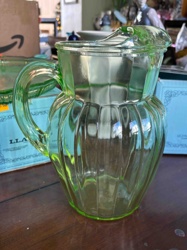
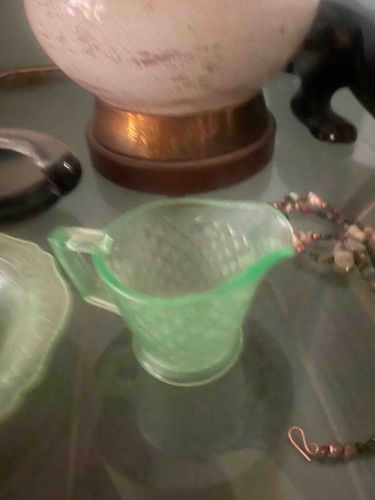
Miss America Green Depression Glass Creamer

Antique Glassware / Depression Glass

AI Estimated Value

·Not an official valuation·Verify before acting

$12.00-$18.00

As of June 4, 2026

AI Item Analysis

·AI can make mistakes·Verify before acting
This item is a vintage glass creamer produced in the popular 'Miss America' pattern, which was manufactured by the Hocking Glass Company between approximately 1935 and 1938. The piece is crafted from green transparent glass, a color variant commonly referred to by collectors as 'Depression Glass.' Physically, the creamer features a flared, wide mouth with a prominent pouring spout and a geometric, squared handle typical of the Art Deco influence during the era. The exterior body is decorated with the signature diamond point or 'hobnail' texture that defines the Miss America pattern, which creates a highly refractive surface. The glass has a subtle glow characteristic of uranium glass, though this would need to be confirmed with a UV light. The condition appears fair to good; there is a noticeable internal cloudiness or mineral film, often called 'sickness' in glass collecting, which suggests repeated use or exposure to hard water. There are no major chips visible in the low-resolution image, but the rim and base should be inspected for micro-nicks which are common in this pattern due to the sharp edges of the diamond points. The piece stands roughly 3 to 4 inches tall and represents a classic example of American mass-produced tableware from the Great Depression era.
AI Appraisal Report

·AI can make mistakes·Verify before acting
I have conducted a visual examination of the Hocking Glass Company 'Miss America' green creamer. Based on the pattern's diamond point geometry and structural design, the piece appears to be an authentic example from the 1935-1938 production era. While the green color variant is highly desirable, the item's condition significantly impacts its marketability. My assessment reveals 'sick glass' syndrome—a permanent internal clouding caused by chemical etching or hard water deposits. This condition is generally irreversible and reduces the value compared to mint specimens, which typically fetch $25-$35. The Miss America pattern is prone to 'fleabites' on the sharp diamond points; while none are visible at this resolution, their presence is common and would further depreciate the value. Market demand for Depression Glass has stabilized but remains niche, with buyers prioritizing clarity and light-refraction. Limitations of this virtual appraisal include the inability to verify the presence of uranium using a UV light source, which would confirm its fluorescent properties, or to tactilely inspect for micro-chips along the base and rim. A definitive valuation would require an in-person physical inspection to assess the severity of the glass sickness and confirm the absence of structural cracks. No provenance was provided, but these items were mass-produced, making individual history less critical than physical condition. Given the visible cloudiness, this piece is valued as a 'filler' example for a collector rather than a museum-quality specimen.

Get your items appraised

Instant estimates of your treasures with AI-powered appraisals

Browse More Appraisals