Dogon Bronze Seated Figures
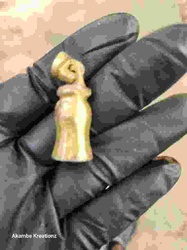
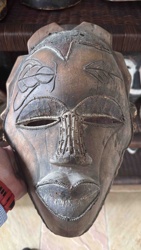
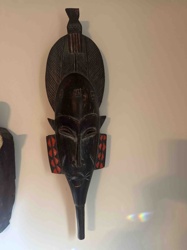
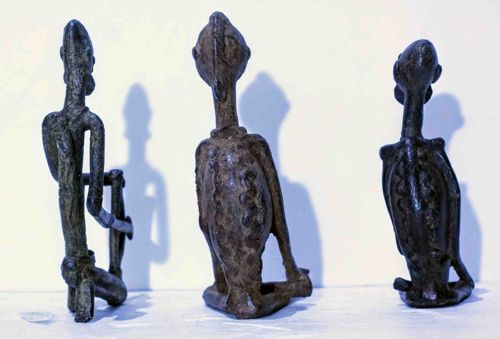
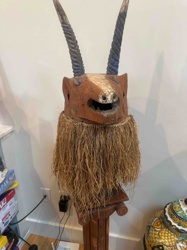
This set of three sculptural works displays the distinctive stylistic hallmarks of West African Dogon artistry, likely originating from the Mali region. Each figure is cast in a dark, weathered copper alloy or bronze using the lost-wax casting technique. The miniatures feature elongated torsos, slender limbs, and stylized, crest-like heads typical of Dogon ancestor figures. The central figure is notably robust, displaying a textured surface with undulating, scale-like patterns along the back, while the flanking figures appear more skeletal with prominent spinal ridges. The construction shows high levels of artisanal craftsmanship, characterized by smooth transitions between geometric forms and organic curves. The patina is heavy and dark, ranging from deep charcoal to verdigris green, suggesting significant age or exposure to the elements. There is visible surface pitting and oxidation consistent with authentic ritual use or long-term burial. Each figure is depicted in a seated or kneeling posture, a position often associated with reverence or communal gathering in Dogon iconography. Though the specific artist is unknown, the stylistic consistency suggests they were created within the same workshop or period, likely dating between the 19th and early 20th centuries. No maker's marks or signatures are visible, which is standard for traditional ethnographic artworks of this type.
AI-Generated Appraisal Disclaimer
Estimated Value
$400 - $800
Basic Information
Category
African Tribal Art & Antiquities
Appraised On
March 22, 2026
Estimated Value
$400 - $800
Additional Details Provided By Owner
User Provided Information
Unknown artist, untitled sculpture
Item Description
This set of three sculptural works displays the distinctive stylistic hallmarks of West African Dogon artistry, likely originating from the Mali region. Each figure is cast in a dark, weathered copper alloy or bronze using the lost-wax casting technique. The miniatures feature elongated torsos, slender limbs, and stylized, crest-like heads typical of Dogon ancestor figures. The central figure is notably robust, displaying a textured surface with undulating, scale-like patterns along the back, while the flanking figures appear more skeletal with prominent spinal ridges. The construction shows high levels of artisanal craftsmanship, characterized by smooth transitions between geometric forms and organic curves. The patina is heavy and dark, ranging from deep charcoal to verdigris green, suggesting significant age or exposure to the elements. There is visible surface pitting and oxidation consistent with authentic ritual use or long-term burial. Each figure is depicted in a seated or kneeling posture, a position often associated with reverence or communal gathering in Dogon iconography. Though the specific artist is unknown, the stylistic consistency suggests they were created within the same workshop or period, likely dating between the 19th and early 20th centuries. No maker's marks or signatures are visible, which is standard for traditional ethnographic artworks of this type.
Related Tags
Get Your Items Appraised
Instant estimates of your treasures with AI-powered instant appraisals