AI Appraisal Estimate

AI-generated estimates · not official valuations

From the user

What was submitted

Photo and notes provided by the user — not generated by AI

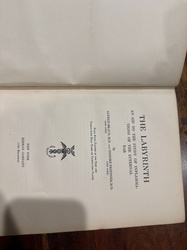
Submitted item photo
Submitted photo · June 14, 2026

User's notes

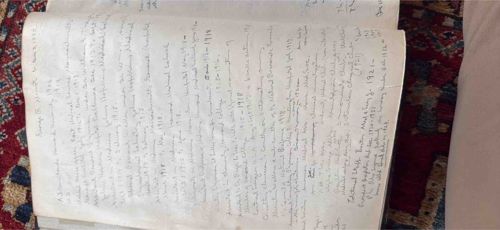
George minots personal reprints, heavily annotated, one of six volumes, one

AI analysis below

AI appraisal

AI analysis & estimate

AI-Generated · Verify before acting

Everything below is generated by AI for informational purposes only. AI can make mistakes — the AI may misidentify items or misattribute them (artist, maker, brand, designer, origin, era). This is not an official valuation and should not be used for insurance, sale, tax, estate, legal, or lending purposes — or any decision requiring a certified appraisal. It is not an authoritative claim about any person, brand, or rights holder — do not share or rely on it as a factual statement about a third party. Always consult qualified professionals before making financial decisions.

Note

This analysis also relies on unverified notes provided by the user, which may be incomplete or inaccurate and could affect the result.

Read the full disclaimer

AI Identification

·Not independently authenticated·Verify before acting

Dr. George Richards Minot's Heavily Annotated Personal Academic Reprints

Historical Medical Manuscripts and Ephemera

AI Estimated Value

·Not an official valuation·Verify before acting

$6,000 - $9,000

As of June 14, 2026

AI Item Analysis

·AI can make mistakes·Verify before acting
This item is an original medical research manuscript or compilation comprising the personal reprints of Dr. George Richards Minot (1885-1950), co-recipient of the 1934 Nobel Prize in Physiology or Medicine. This specific artifact is one volume of a six-volume set, appearing as a bound or loosely collected series of offprinted medical articles. The document is characterized by extensive, dense manuscript annotations in dark ink, likely written by Minot himself, detailing professional appointments, academic milestones, and research observations dating roughly from 1912 to 1921. The pages exhibit the natural patina of age, with visible yellowing and oxidation consistent with early 20th-century paper stock. Significant condition issues include heavy vertical creasing in the center of the right-hand page and minor edge wear. The handwriting is a cursive script typical of the mid-20th-century academic style, featuring specific dates and references to institutions such as Harvard University and various medical committees. The quality of the scholarship represented, combined with the primary source nature of the hand-written additions, marks this as a document of significant medical historical importance, providing a unique window into the working methodology of a Nobel laureate during his formative period of research into pernicious anemia.
AI Appraisal Report

·AI can make mistakes·Verify before acting
This volume, one of six from the personal collection of Dr. George Richards Minot, represents a remarkable piece of medical history. Examining the images, the most compelling factor is the density of the manuscript annotations. These are not merely ownership marks but appear to be substantive academic notes, chronicling the intellectual development of a Nobel laureate during the critical period (1912-1921) leading up to his groundbreaking work on pernicious anemia. The handwriting is consistent with known examples of Minot's script from this era. The condition is fair to good; the significant heavy vertical creasing on the right-hand pages and the oxidation of the early 20th-century paper stock are detractors, but they do not obscure the vital textual content. The market for Nobel Prize-related material remains robust, particularly for items that show the 'work in progress' of scientific discovery. Comparables for signed offprints by Medical Nobelists like Banting availability vary generally in the low thousands, but heavily annotated personal working copies command a premium. Rarity here is high; personal working libraries of this caliber rarely enter the public market intact. However, a definitive valuation is constrained by the need for physical authentication. To confirm the upper end of this range, I would require in-person analysis to verify the ink composition and ensuring the handwriting flow is natural and not a later facsimile. Provenance is crucial; establishing the chain of ownership from the Minot estate to the current holder would significantly bolster the value, potentially pushing it toward the five-figure range if this volume contains specific precursors to the liver diet therapy discovery.

Get your items appraised

Instant estimates of your treasures with AI-powered appraisals

Browse More Appraisals