AI Appraisal Estimate

AI-generated estimates · not official valuations

From the user

What was submitted

Photo and notes provided by the user — not generated by AI

Submitted item photo
Submitted photo · June 8, 2026

User's notes

No additional notes provided.

AI analysis below

AI appraisal

AI analysis & estimate

AI-Generated · Verify before acting

Everything below is generated by AI for informational purposes only. AI can make mistakes — the AI may misidentify items or misattribute them (artist, maker, brand, designer, origin, era). This is not an official valuation and should not be used for insurance, sale, tax, estate, legal, or lending purposes — or any decision requiring a certified appraisal. It is not an authoritative claim about any person, brand, or rights holder — do not share or rely on it as a factual statement about a third party. Always consult qualified professionals before making financial decisions.

Read the full disclaimer

AI Identification

·Not independently authenticated·Verify before acting

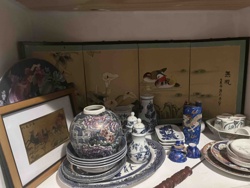
Japanese Four-Panel Byobu Folding Screen

Antiques / Decorative Arts / Asian Art

AI Estimated Value

·Not an official valuation·Verify before acting

$300 - $1500 USD

As of June 8, 2026

AI Item Analysis

·AI can make mistakes·Verify before acting
A four-panel Japanese folding screen (Byobu) featuring a painted nature scene on what appears to be paper or silk. The artwork depicts quail (uzura) amidst tall grasses (possibly Susuki grass), chrysanthemums, and other flowers against a neutral background with stylized gold leaf clouds or mist (kinpaku). The panels are joined and set within a black lacquer or ebonized frame.
AI Appraisal Report

·AI can make mistakes·Verify before acting
This is an estimate for a Japanese four-panel folding screen (Byobu) likely dating from the mid-20th century, possibly Showa period, based on the style and subject matter (quail, grasses, flowers, gold leaf clouds - a traditional motif). The value is determined by factors such as age, condition, artistic quality, materials (use of gold leaf), and artist (which is unknown here). Screens of this type and era, assuming good condition without significant damage or restoration, typically fall within this price bracket in the current decorative arts market. More valuable screens usually have identifiable artists, are older (Edo/Meiji period), have finer artistry, or more panels. This appears to be a decorative piece rather than a high-art example. A closer inspection for signatures, seals, condition issues (tears, stains, fading, frame damage), and material quality would refine the valuation.

Get your items appraised

Instant estimates of your treasures with AI-powered appraisals

Browse More Appraisals