AI Appraisal Estimate

AI-generated estimates · not official valuations

From the user

What was submitted

Photo and notes provided by the user — not generated by AI

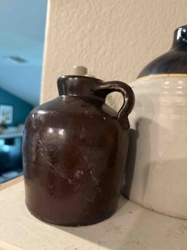
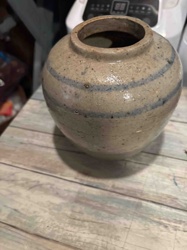
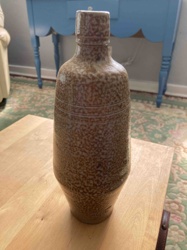
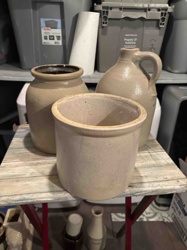
Submitted item photo
Submitted photo · July 3, 2026

User's notes

No additional notes provided.

AI analysis below

AI appraisal

AI analysis & estimate

AI-Generated · Verify before acting

Everything below is generated by AI for informational purposes only. AI can make mistakes — the AI may misidentify items or misattribute them (artist, maker, brand, designer, origin, era). This is not an official valuation and should not be used for insurance, sale, tax, estate, legal, or lending purposes — or any decision requiring a certified appraisal. It is not an authoritative claim about any person, brand, or rights holder — do not share or rely on it as a factual statement about a third party. Always consult qualified professionals before making financial decisions.

Read the full disclaimer

AI Identification

·Not independently authenticated·Verify before acting

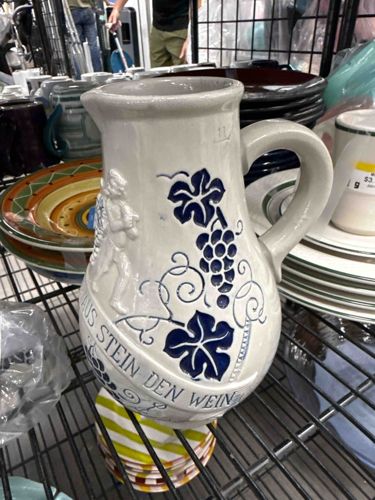
Vintage German Salt-Glazed Stoneware Wine Pitcher (Westerwald Style)

Antique and Vintage Ceramics / European Stoneware

AI Estimated Value

·Not an official valuation·Verify before acting

$45.00 - $75.00

As of July 3, 2026

AI Item Analysis

·AI can make mistakes·Verify before acting
This is a traditional German stoneware pitcher, commonly referred to as a ‘Bembel,’ crafted in the iconic Westerwald style. The piece is constructed from high-fired grey stoneware with a distinctive salt-glaze finish, providing a slightly pebbled, glossy texture. It features hand-painted cobalt blue highlights, a classic color combination for this type of pottery. The body is decorated with raised relief motifs including a bunch of grapes, stylized vine leaves with tendrils, and a figural relief of a man carrying a bundle, likely representing a grape harvester. A ribbon banner at the base of the belly contains the German inscription 'AUS STEIN DEN WEIN,' translated as 'From stone, the wine,' emphasizing the traditional vessel material. The pitcher has a bulbous body, a flared rim with a small integrated spout, and a sturdy, curved D-shaped handle. Visible markings include an incised '1 l' (1 liter) capacity mark near the rim. The overall condition appears excellent with no visible cracks or large chips; the cobalt glaze is vibrant, and the salt glaze remains consistent across the surface. This style of stoneware has been produced in Germany for centuries, but based on the crispness of the relief and the capacity marking, this specific example likely dates from the mid-to-late 20th century. The craftsmanship is typical of German regional folk pottery, intended for both utility and decorative display.
AI Appraisal Report

·AI can make mistakes·Verify before acting
Based on my visual examination of this Westerwald-style 'Bembel' wine pitcher, I have assessed it as a mid-to-late 20th-century production. The piece exhibits the classic characteristics of high-fired salt-glazed stoneware, including the signature 'orange peel' texture and vibrant cobalt blue slip decoration. The relief work—specifically the grape motifs and the 'AUS STEIN DEN WEIN' banner—is crisp, suggesting a well-maintained mold, while the '1 l' capacity mark is a standard feature of modern commercial utility wares from the Rhineland-Palatinate region. The condition appears excellent; the glaze is consistent with no evident crazing or significant structural damage. However, these items were produced in high volumes during the post-war era for the tourism and domestic giftware markets. While the craftsmanship is high, the item is not rare. Comparable sales for 1-liter pitchers of this vintage and decorative complexity typically fall within the $45 to $75 range. Higher values are reserved for early 19th-century examples or those with documented maker's marks from prestigious kilns like Reinhold Merkelbach. Limitations of Image-Based Appraisal: This assessment is based solely on digital representation. I cannot verify the presence of hairline cracks that may be hidden under the glaze or feel for 'flea bites' along the footring. A physical inspection is required to check for impressed manufacturer logos on the base, which could slightly elevate the value. To confirm authenticity as a genuine German-made piece rather than a modern East Asian reproduction, I would need to examine the clay's porosity at the unglazed base and verify the weight and density of the stoneware.

Get your items appraised

Instant estimates of your treasures with AI-powered appraisals

Browse More Appraisals