AI Appraisal Estimate

AI-generated estimates · not official valuations

From the user

What was submitted

Photo and notes provided by the user — not generated by AI

Submitted item photo
Submitted photo · June 17, 2026

User's notes

No additional notes provided.

AI analysis below

AI appraisal

AI analysis & estimate

AI-Generated · Verify before acting

Everything below is generated by AI for informational purposes only. AI can make mistakes — the AI may misidentify items or misattribute them (artist, maker, brand, designer, origin, era). This is not an official valuation and should not be used for insurance, sale, tax, estate, legal, or lending purposes — or any decision requiring a certified appraisal. It is not an authoritative claim about any person, brand, or rights holder — do not share or rely on it as a factual statement about a third party. Always consult qualified professionals before making financial decisions.

Read the full disclaimer

AI Identification

·Not independently authenticated·Verify before acting

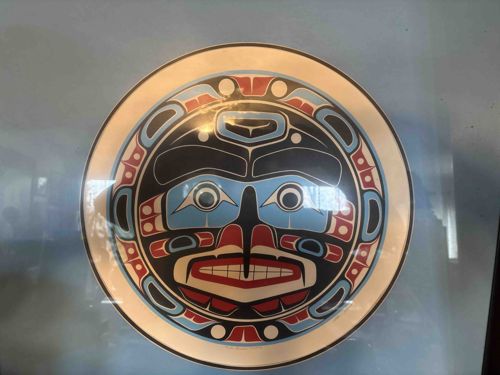
Tlingit-style Coastal Indigenous Totemic Moon Mask Print

Native American / First Nations Fine Art

AI Estimated Value

·Not an official valuation·Verify before acting

$450.00 - $700.00

As of June 17, 2026

AI Item Analysis

·AI can make mistakes·Verify before acting
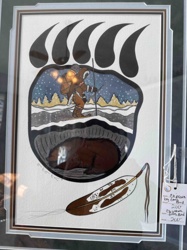
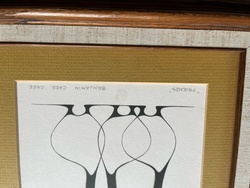
This is a circular serigraph or high-quality art print featuring Northwest Coast Indigenous iconography, specifically rendered in the 'Formline' style characteristic of the Tlingit, Haida, or Tsimshian peoples. The central subject is a totemic face, likely representing the Moon or a Sun spirit, characterized by wide secondary eyes, a prominent nose beak, and a bared-teeth grimace showing individual rectangular teeth. The color palette is traditional, utilizing deep carbon black for primary formlines, accented with terracotta red and a pale cerulean blue. The design is symmetrically balanced within a circular frame, suggesting it may be a representation of a traditional wooden spindle whorl or a ceremonial mask. Constructed on light-cream or off-white heavy paper stock, the artwork is professionally matted and framed under glass. Fine lines at the bottom of the circular image indicate a pencil signature and possible edition number, which are often found on contemporary Indigenous prints from the late 20th century (approx. 1970s–1990s). The craftsmanship displays precise line weight and expert use of ovoid and U-form shapes. The condition appears fair to good; while the print colors remain vibrant, there is a prominent circular glare and reflection on the glass surface indicating it is currently housed in a standard reflective glazing. No visible foxing or water damage is noted on the paper itself, though the frame edges are partially obscured.

AI Appraisal Report

·AI can make mistakes·Verify before acting
I have conducted a visual analysis of this contemporary Northwest Coast serigraph. The work features classic Tlingit/Haida formline aesthetics, specifically a Crescent Moon or Spirit Face motif. The use of tertiary blue and red pigments alongside black formlines suggests a late 20th-century production, likely between 1975 and 1995, a period of significant 'Renascence' for Indigenous printmaking. The condition appears stable with vibrant pigment retention. While the frame protects the integrity of the paper, the standard reflective glazing obscures fine details and increases the risk of UV-related fading over time. I note no obvious signs of acid burn from the matting, though a physical inspection of the verso would be required to confirm archival mounting. The market for Northwest Coast prints remains steady, with demand driven by the artist’s reputation. Comparable works by mid-career artists (such as those in the circle of Robert Davidson or Bill Reid) typically command this mid-range price point. Critically, a definitive valuation is limited by the inability to clearly legibilize the pencil signature and edition number (e.g., 'A/P' or numbered out of a specific run). Authenticity is inferred through stylistic mastery, but I cannot verify if this is a hand-pulled serigraph or a high-quality offset lithograph without tactile examination of the ink's 'bite' on the paper. For full authentication, I would require provenance documentation or a bill of sale from a reputable First Nations gallery. A physical inspection would also determine if the paper is 100% cotton rag or a lesser pulp-based stock, which significantly impacts long-term investment value.

Get your items appraised

Instant estimates of your treasures with AI-powered appraisals

Browse More Appraisals