AI Appraisal Estimate

AI-generated estimates · not official valuations

From the user

What was submitted

Photo and notes provided by the user — not generated by AI

Submitted item photo
Submitted photo · June 20, 2026

User's notes

No additional notes provided.

AI analysis below

AI appraisal

AI analysis & estimate

AI-Generated · Verify before acting

Everything below is generated by AI for informational purposes only. AI can make mistakes — the AI may misidentify items or misattribute them (artist, maker, brand, designer, origin, era). This is not an official valuation and should not be used for insurance, sale, tax, estate, legal, or lending purposes — or any decision requiring a certified appraisal. It is not an authoritative claim about any person, brand, or rights holder — do not share or rely on it as a factual statement about a third party. Always consult qualified professionals before making financial decisions.

Read the full disclaimer

AI Identification

·Not independently authenticated·Verify before acting

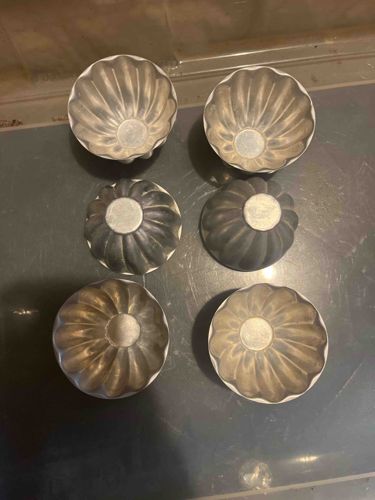
Set of Six Vintage Fluted Brioche Molds

Vintage Kitchenware / Bakeware

AI Estimated Value

·Not an official valuation·Verify before acting

$45.00 - $65.00

As of June 20, 2026

AI Item Analysis

·AI can make mistakes·Verify before acting
This is a set of six individual-sized baking molds, specifically designed for small brioche pastries or gelatin molds. Constructed from a lightweight metal, likely tinned steel or aluminum, each vessel features a classic deeply fluted or scalloped radial design that tapers down to a flat circular base. The exterior surfaces of several molds exhibit a significant dark, matte patina and oxidation, suggesting extensive previous culinary use and age, likely dating from the mid-20th century. The interior surfaces show a dull metallic sheen with visible scratching, surface abrasions, and some pitting consistent with age and mechanical cleaning with abrasives. There are no prominent maker's marks visible on the bases in the current orientation, though such items were commonly produced by commercial kitchenware manufacturers like Matfer or Gobel. The construction is seamless, indicating they were formed via a deep-pressing or industrial stamping process. While the edges appear relatively intact, the significant carbonization and surface wear on the exterior indicate these are authentic vintage utilitarian kitchen tools rather than modern reproductions. The variety in the darker coloration suggests they may have been seasoned or exposed to high heat over many years, a characteristic highly valued by collectors of rustic kitchenware.

AI Appraisal Report

·AI can make mistakes·Verify before acting
I have conducted a visual examination of this set of six vintage fluted brioche molds. The items exhibit characteristics consistent with mid-20th-century commercial-grade bakeware, specifically the deep-pressed fluting and seamless construction typical of manufacturers such as Gobel or Matfer. The patina is the most significant indicator of age; the heavy carbonization and surface oxidation on the exterior suggest decades of seasoning and high-heat use in a domestic or professional kitchen. While the interior pitting and surface abrasions noted reflect heavy mechanical cleaning, they do not detract from the 'rustic charm' currently sought after in the kitchenalia market. Market demand for vintage French-style bakeware remains steady, particularly among collectors of copper and tinned steel who prefer the heat-conductive properties of older metals over modern non-stick alternatives. Comparables for sets of six range from $30 for common aluminum versions to $90 for stamped tinned steel in pristine condition. The value of this specific set is slightly tempered by the lack of visible maker’s marks and the degree of oxidation, which requires a specific buyer interested in the 'found object' aesthetic. Limitations: This appraisal is based solely on digital imagery. Verification of the base metal (distinguishing between tinned steel, aluminum, or a heavier nickel-plated alloy) is impossible without physical handle or a magnet test. Full authentication would require an in-person inspection to locate faint manufacturer stamps often hidden under carbon buildup and to assess the structural integrity of the metal for potential 'tin rot.' Documentation of a professional culinary provenance would further enhance the valuation.

Get your items appraised

Instant estimates of your treasures with AI-powered appraisals

Browse More Appraisals