Japanese Ceramic Karyu-yaki Tile with Saito Mokichi Tanka Poem
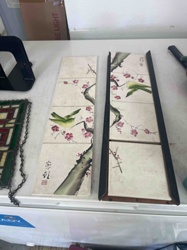
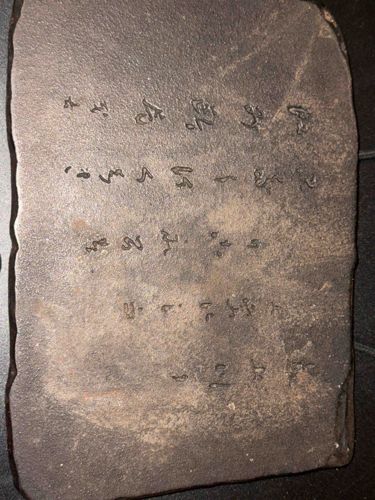
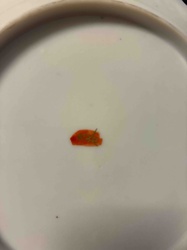
This rectangular ceramic tile features a textured, unglazed surface that mimics the appearance of natural stone or weathered slate. The item is characterized by its earthy, dark-brown to charcoal grey coloration with subtle variations in tone. The surface is inscribed with calligraphic characters executed in a cursive style, likely a tanka poem by the renowned Japanese poet and psychiatrist Saito Mokichi (1882–1953). The calligraphy is incised or impressed into the damp clay before firing, creating a tactile depth. The tile's edges are irregular and rugged, suggesting a 'karyu-yaki' or similar folk-art pottery style that emphasizes wabi-sabi aesthetics. Measuring several inches in width, the piece shows a matte, porous finish with visible surface dust and light organic patina in the recesses of the characters. There is minor chipping or wear along the right vertical edge, which appears consistent with the age of the piece, potentially mid-20th century. The craftsmanship reflects a deliberate primitive elegance, intended for display in a tokonoma (alcove) or as a scholar's desk accessory. No modern manufacturer marks are visible, though the signature within the calligraphy serves as the primary identifier.
AI-Generated Appraisal Disclaimer
Estimated Value
$450 - $700
Basic Information
Category
Japanese Fine Art & Ceramics
Appraised On
March 26, 2026
Estimated Value
$450 - $700
Additional Details Provided By Owner
User Provided Information
Saito mokicki
Item Description
This rectangular ceramic tile features a textured, unglazed surface that mimics the appearance of natural stone or weathered slate. The item is characterized by its earthy, dark-brown to charcoal grey coloration with subtle variations in tone. The surface is inscribed with calligraphic characters executed in a cursive style, likely a tanka poem by the renowned Japanese poet and psychiatrist Saito Mokichi (1882–1953). The calligraphy is incised or impressed into the damp clay before firing, creating a tactile depth. The tile's edges are irregular and rugged, suggesting a 'karyu-yaki' or similar folk-art pottery style that emphasizes wabi-sabi aesthetics. Measuring several inches in width, the piece shows a matte, porous finish with visible surface dust and light organic patina in the recesses of the characters. There is minor chipping or wear along the right vertical edge, which appears consistent with the age of the piece, potentially mid-20th century. The craftsmanship reflects a deliberate primitive elegance, intended for display in a tokonoma (alcove) or as a scholar's desk accessory. No modern manufacturer marks are visible, though the signature within the calligraphy serves as the primary identifier.
Get Your Items Appraised
Instant estimates of your treasures with AI-powered instant appraisals