Ancient Roman or Hellenistic Style Bronze Coin
Ancient Numismatics

Ancient Roman or Hellenistic Style Bronze Coin

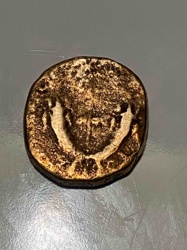
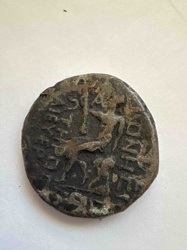
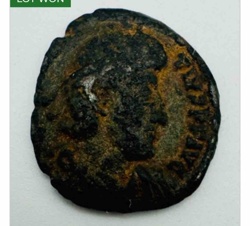
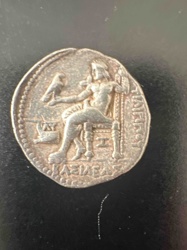
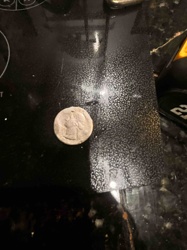
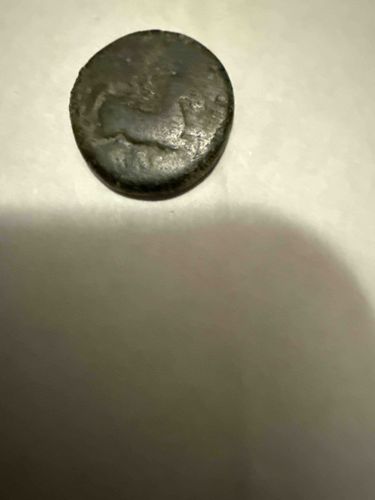
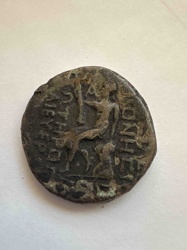
This is a small, circular numismatic specimen, likely a bronze 'unit' from the Hellenistic or early Roman period. The artifact displays a dark, aged patina with a greenish-black coloration consistent with long-term burial in earth. Physically, the coin features a thick, irregular edge suggesting a hand-struck manufacturing process. The obverse side shown depicts a stylized quadruped, possibly a horse or a bull, facing right in a galloping or lunging posture. Notable features include the raised relief of the animal and faint, illegible markings or Greek/Latin characters beneath the feet. The condition is heavily worn, with significant smoothing of the surface details and loss of crispness on the design elements. There are visible signs of oxidation, pits, and small scrapes consistent with its estimated age of approximately 1,800 to 2,300 years. The craftsmanship reflects the mass-produced currency of provincial mints, where the dies were hand-cut. The quality is considered 'fair' to 'average' for an archaeological find, as the primary motif remains identifiable despite the heavy wear.
Estimated Value

$45.00 - $75.00

Basic Information

Category

Ancient Numismatics

Appraised On

January 9, 2026

Estimated Value

$45.00 - $75.00

Item Description

This is a small, circular numismatic specimen, likely a bronze 'unit' from the Hellenistic or early Roman period. The artifact displays a dark, aged patina with a greenish-black coloration consistent with long-term burial in earth. Physically, the coin features a thick, irregular edge suggesting a hand-struck manufacturing process. The obverse side shown depicts a stylized quadruped, possibly a horse or a bull, facing right in a galloping or lunging posture. Notable features include the raised relief of the animal and faint, illegible markings or Greek/Latin characters beneath the feet. The condition is heavily worn, with significant smoothing of the surface details and loss of crispness on the design elements. There are visible signs of oxidation, pits, and small scrapes consistent with its estimated age of approximately 1,800 to 2,300 years. The craftsmanship reflects the mass-produced currency of provincial mints, where the dies were hand-cut. The quality is considered 'fair' to 'average' for an archaeological find, as the primary motif remains identifiable despite the heavy wear.
Get Your Items Appraised

Instant estimates of your treasures with AI-powered instant appraisals

Browse More Appraisals