Modern Souvenir Olpe in the Corinthian Orientalizing Style
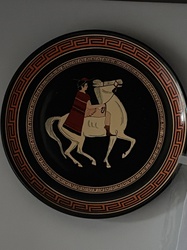
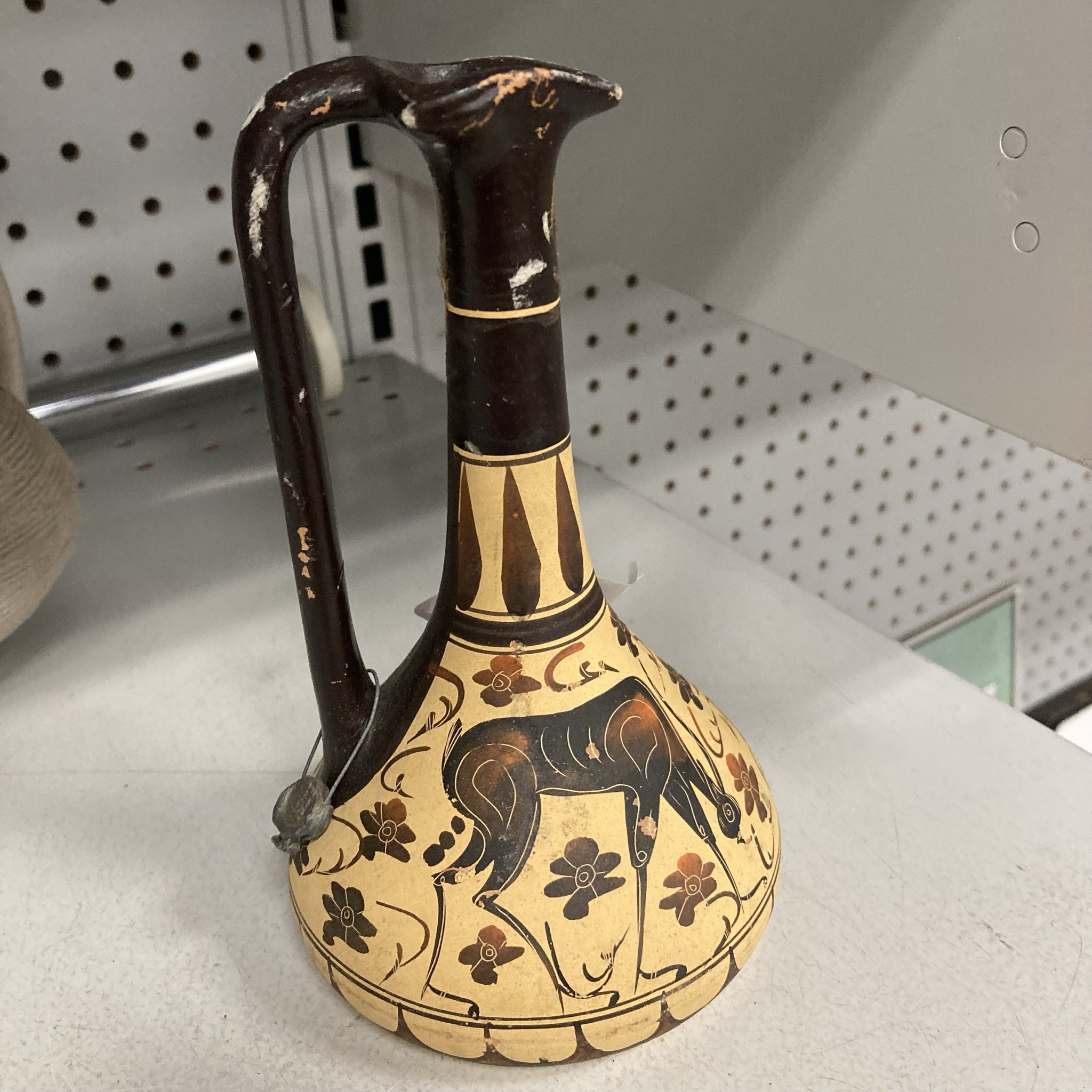
This item is a ceramic pitcher, or olpe, crafted in the 'Orientalizing' style of ancient Corinthian pottery. It features a tall, slender neck that flares into a trilobed pouring rim and a single arching handle. The body is bulbous and decorated using the black-figure technique on a light buff slip. The central motif depicts a stylized quadruped, possibly a bull or goat, surrounded by rosette fillers and scrollwork common in Proto-Corinthian designs. The neck is finished in a dark brown glaze with cream-colored banding and ray-like geometric patterns at the shoulder. The condition is fair to poor, showing significant wear for a modern piece; there are multiple chips along the rim and handle, as well as white scuff marks and loss of glaze throughout the dark-fired sections. A lead seal or tag is wired to the handle, which may indicate a previous inventory or export marking. While it mimics an ancient artifact from the 7th-6th century BCE, the clay texture, glaze application, and overall finish suggest it is a mid-20th-century decorative reproduction produced for the tourism market in Greece or Italy.

AI-Generated Appraisal Disclaimer
Estimated Value
$60-110
Basic Information
Category
Art & Antiques: Ceramics: Decorative Pottery
Appraised On
May 6, 2026
Estimated Value
$60-110
Item Description
This item is a ceramic pitcher, or olpe, crafted in the 'Orientalizing' style of ancient Corinthian pottery. It features a tall, slender neck that flares into a trilobed pouring rim and a single arching handle. The body is bulbous and decorated using the black-figure technique on a light buff slip. The central motif depicts a stylized quadruped, possibly a bull or goat, surrounded by rosette fillers and scrollwork common in Proto-Corinthian designs. The neck is finished in a dark brown glaze with cream-colored banding and ray-like geometric patterns at the shoulder. The condition is fair to poor, showing significant wear for a modern piece; there are multiple chips along the rim and handle, as well as white scuff marks and loss of glaze throughout the dark-fired sections. A lead seal or tag is wired to the handle, which may indicate a previous inventory or export marking. While it mimics an ancient artifact from the 7th-6th century BCE, the clay texture, glaze application, and overall finish suggest it is a mid-20th-century decorative reproduction produced for the tourism market in Greece or Italy.
Get Your Items Appraised
Instant estimates of your treasures with AI-powered instant appraisals