AI Appraisal Estimate

AI-generated estimates · not official valuations

From the user

What was submitted

Photo and notes provided by the user — not generated by AI

Submitted item photo
Submitted photo · June 26, 2026

User's notes

No additional notes provided.

AI analysis below

AI appraisal

AI analysis & estimate

AI-Generated · Verify before acting

Everything below is generated by AI for informational purposes only. AI can make mistakes — the AI may misidentify items or misattribute them (artist, maker, brand, designer, origin, era). This is not an official valuation and should not be used for insurance, sale, tax, estate, legal, or lending purposes — or any decision requiring a certified appraisal. It is not an authoritative claim about any person, brand, or rights holder — do not share or rely on it as a factual statement about a third party. Always consult qualified professionals before making financial decisions.

Read the full disclaimer

AI Identification

·Not independently authenticated·Verify before acting

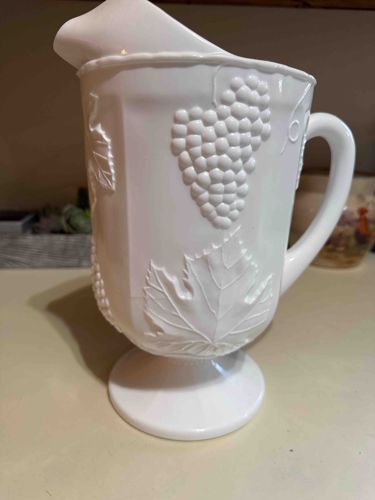
Milk Glass Grape and Leaf Pitcher

Decorative Glassware

AI Estimated Value

·Not an official valuation·Verify before acting

$20-40

As of June 26, 2026

AI Item Analysis

·AI can make mistakes·Verify before acting
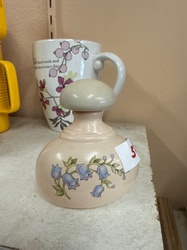
This is a white milk glass pitcher, likely dating from the mid-20th century, possibly the 1950s to 1970s. It features a decorative relief pattern of grape clusters and grape leaves on its exterior. The pitcher has a classic ewer or jug shape, widening slightly towards the bottom before narrowing into a distinct, circular footed base. The handle is C-shaped, integrated into the body of the pitcher and appears sturdy. The rim is slightly rolled, and it has a pouring spout on one side. The overall color is an opaque, glossy white, characteristic of milk glass. The raised grape and leaf design provides textural contrast and visual interest. There are no obvious chips, cracks, or repairs visible in the provided image, suggesting it is in good, used condition. The manufacturing technique would have involved pressing molten glass into a mold, which is common for milk glass items of this period. The craftsmanship appears to be of standard quality for mass-produced decorative glassware, with clear detailing in the relief patterns. No maker's marks or specific signatures are discernible from the image, which is common for many milk glass pieces.
AI Appraisal Report

·AI can make mistakes·Verify before acting
Based on my visual examination of the provided image, this white milk glass pitcher, featuring a grape and leaf relief pattern, appears to be an authentic example of mid-20th century decorative glassware, likely produced between the 1950s and 1970s. The opaque, glossy white color and molded grape and leaf design are typical characteristics of milk glass from this period. The condition appears to be good, with no visible chips, cracks, or repairs in the photograph. Market conditions for common milk glass pieces like this pitcher are relatively modest. It falls into a category of mass-produced decorative items that were popular for everyday use and display. While aesthetically pleasing, such pieces are not considered rare. Numerous similar grape and leaf patterns were produced by various manufacturers (e.g., Westmoreland, Fenton, Imperial, Duncan & Miller), making specific attribution without a maker's mark or physical inspection difficult. Comparables on online marketplaces and at antique malls typically range from $15 to $50, depending on condition, specific pattern, and manufacturer (if identifiable). Demand for common milk glass has a niche following, but it is not high enough to drive significant value increases. Factors impacting value for this specific piece are its good condition and classic design. The lack of rarity and specific maker identification limits its potential value. Full authentication and a more precise valuation would benefit from a physical inspection to check for subtle imperfections, confirm the absence of damage, identify any hidden maker's marks, and assess the glass quality firsthand. Provenance documentation would also be helpful, though rarely available for such items.

Get your items appraised

Instant estimates of your treasures with AI-powered appraisals

Browse More Appraisals