AI estimate as of June 24, 2025 · verify with a professional before acting
AI-Generated · Verify before acting
Everything on this page is generated by AI for informational purposes only. AI can make mistakes — the AI may misidentify items or misattribute them (artist, maker, brand, designer, origin, era). This is not an official valuation and should not be used for insurance, sale, tax, estate, legal, or lending purposes — or any decision requiring a certified appraisal. It is not an authoritative claim about any person, brand, or rights holder — do not share or rely on it as a factual statement about a third party. Always consult qualified professionals before making financial decisions.
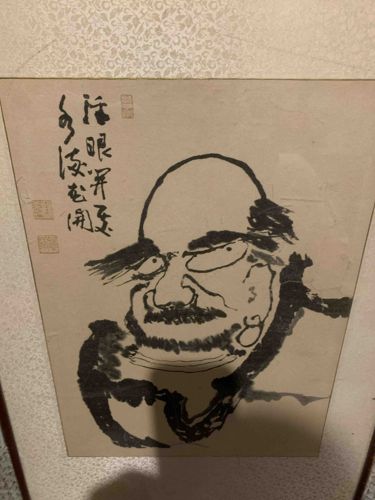
This item is an East Asian ink painting depicting a caricature-like portrait of a figure, likely a male, rendered in black ink on a light-colored paper or silk ground. The figure is characterized by a prominent, bald head with some hair visible around the ears, large, expressive eyes (one of which appears to be slightly obscured or in motion), a distinctive nose, and a robust mustache and beard. The brushwork is dynamic and gestural, typical of Sumi-e or ink wash painting, suggesting a masterful and confident hand. The dark ink is applied with varying pressure, creating areas of bold black and lighter washes, adding depth and texture to the facial features and the flowing lines of the beard and shoulders. To the upper left of the figure's head, there are lines of calligraphy in East Asian script, likely Chinese or Japanese, along with several red seals, which are characteristic of traditional East Asian ink paintings and often represent the artist's signature or studio stamps. The paper or silk support appears to be mounted within a larger frame or on a scroll-like backing, which is visible as a textured, patterned border around the central image. The visible backing features a repeating circular or floral motif in a light, neutral tone. The overall condition appears good for an older piece, with some subtle discoloration or patina on the paper, consistent with age. There are no overt signs of damage like tears, significant folds, or water stains visible in the provided image. The style suggests it could be from the Edo period or later, perhaps Meiji or early 20th century, given the lively expressiveness often found in folk art or more character-driven pieces of those eras. The quality of the brushwork indicates a skilled artist.
AI Appraisal Report
Based on my visual examination of this East Asian ink painting, I assess its condition as good, displaying a visible patina consistent with age but no obvious damage like tears or significant stains. Authenticity is suggested by the calligraphic inscriptions, red seals, and the expressive, confident brushwork, indicative of a skilled artist. However, without physical inspection, I cannot definitively authenticate the seals, translate the calligraphy, or verify the paper's age. In-person examination would allow for tactile assessment of the paper/silk, closer inspection of brushstrokes under magnification, and analysis of pigment stability. Provenance documentation, such as exhibition history or previous ownership records, would significantly enhance authentication. Scientific testing, like ink composition analysis or carbon dating, could provide definitive age verification. Market conditions for East Asian ink paintings, particularly those with a unique character like this caricature, are generally stable, with strong demand for authenticated pieces by recognized artists. The rarity of authenticated works by significant artists in this expressive style contributes to their value. Its characterful subject matter might appeal to a broader audience than more traditional landscapes, potentially increasing demand. The primary factors impacting value are artist identification through the seals and calligraphy, precise dating, and full authentication. If attributed to a known artist from the Edo or Meiji period, its value would rise significantly. Conversely, if it were an anonymous work, its value would be based more on decorative appeal and artistic merit.