AI Appraisal Estimate

AI-generated estimates · not official valuations

From the user

What was submitted

Photo and notes provided by the user — not generated by AI

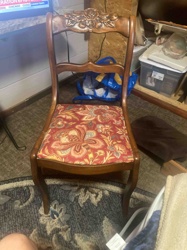
Submitted item photo
Submitted photo · June 15, 2026

User's notes

No additional notes provided.

AI analysis below

AI appraisal

AI analysis & estimate

AI-Generated · Verify before acting

Everything below is generated by AI for informational purposes only. AI can make mistakes — the AI may misidentify items or misattribute them (artist, maker, brand, designer, origin, era). This is not an official valuation and should not be used for insurance, sale, tax, estate, legal, or lending purposes — or any decision requiring a certified appraisal. It is not an authoritative claim about any person, brand, or rights holder — do not share or rely on it as a factual statement about a third party. Always consult qualified professionals before making financial decisions.

Read the full disclaimer

AI Identification

·Not independently authenticated·Verify before acting

Queen Anne Style Vasiform Splat Back Side Chair with Appliqué

Furniture - Chairs

AI Estimated Value

·Not an official valuation·Verify before acting

$150-$250

As of June 15, 2026

AI Item Analysis

·AI can make mistakes·Verify before acting
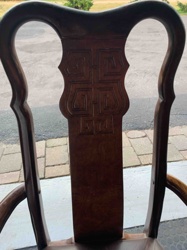
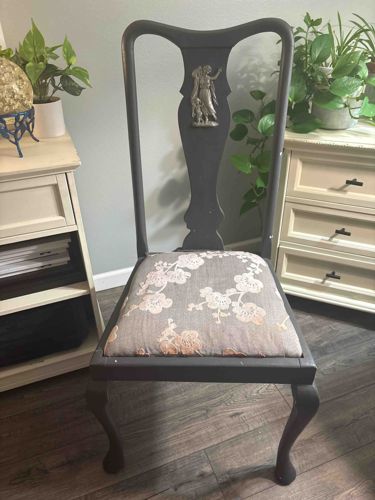
This is a Queen Anne style side chair featuring a distinctive vasiform (vase-shaped) back splat and cabriole front legs. The chair is constructed of wood, which has been modernly refinished in a matte charcoal or deep slate grey paint. A notable and non-traditional feature is the silver-toned metal relief appliqué affixed to the center of the splat, depicting a classical female figure and child in a Hellenistic style. The seat is upholstered in a contemporary jacquard fabric with a grey ground and cream-colored floral/cherry blossom embroidery, suggesting a modern refurbishing. Physically, the chair displays the classic S-curve in both the uprights and the front legs, terminating in pad feet. The condition shows signs of use with minor paint scuffs on the right stile and along the seat rail edges. The paint application appears to be a DIY or aftermarket modification, masking the original wood grain and any potential maker's stamps. Based on the silhouette and construction, this is likely a 20th-century reproduction of the 18th-century Queen Anne style, rather than a period antique. The craftsmanship is solid but the value is reflective of its status as a decorative upcycled piece rather than a fine antique.
AI Appraisal Report

·AI can make mistakes·Verify before acting
My examination of this chair identifies it as a mid-20th-century reproduction of the Queen Anne style that has undergone significant modern modifications. While the vasiform splat and cabriole legs with pad feet accurately mimic 18th-century silhouettes, the structural joinery visible beneath the paint suggests mass-production techniques rather than period hand-craftsmanship. The application of charcoal matte paint and the addition of a metallic Hellenistic relief appliqué fundamentally alter the piece from an antique perspective, transitioning its classification from a historical furniture item to a contemporary upcycled decorative object. The condition is fair, with visible scuffs on the stiles and rails revealing that the paint application is aftermarket and susceptible to wear. In the current secondary market, authentic 18th-century Queen Anne pieces command high prices due to their mahogany or walnut construction and historical significance. Conversely, modern reproductions that have been heavily customized or painted generally lose appeal for serious collectors, finding a market instead among interior decorators looking for 'shabby chic' or 'eclectic' accent pieces. This specific piece is common in form and does not carry the provenance or maker’s marks of high-end manufacturers like Kittinger or Baker. Please note that this appraisal is based on photographic evidence. A definitive authentication would require an in-person inspection to examine the wood species beneath the paint, the specific type of joinery used in the seat rails, and the age of the upholstery tacks. Without physical access or provenance documentation detailing the chair's history, I cannot rule out the possibility of earlier 19th-century origins, though the current aesthetic modifications make that unlikely.

Get your items appraised

Instant estimates of your treasures with AI-powered appraisals

Browse More Appraisals