AI Appraisal Estimate

AI-generated estimates · not official valuations

From the user

What was submitted

Photo and notes provided by the user — not generated by AI

Submitted item photo
Submitted photo · June 23, 2026

User's notes

No additional notes provided.

AI analysis below

AI appraisal

AI analysis & estimate

AI-Generated · Verify before acting

Everything below is generated by AI for informational purposes only. AI can make mistakes — the AI may misidentify items or misattribute them (artist, maker, brand, designer, origin, era). This is not an official valuation and should not be used for insurance, sale, tax, estate, legal, or lending purposes — or any decision requiring a certified appraisal. It is not an authoritative claim about any person, brand, or rights holder — do not share or rely on it as a factual statement about a third party. Always consult qualified professionals before making financial decisions.

Read the full disclaimer

AI Identification

·Not independently authenticated·Verify before acting

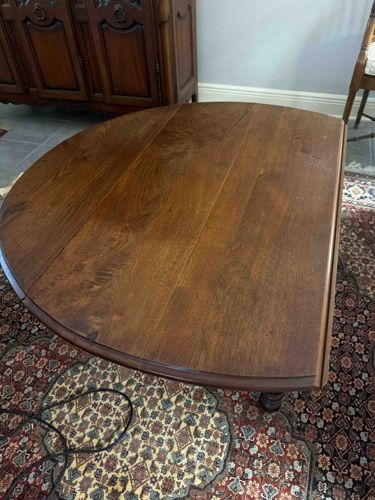
Gateleg Drop-Leaf Dining Table

Antique Furniture

AI Estimated Value

·Not an official valuation·Verify before acting

$400 - $650

As of June 23, 2026

AI Item Analysis

·AI can make mistakes·Verify before acting
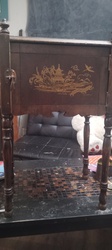
This is a vintage or antique circular gateleg drop-leaf dining table, likely constructed from solid oak or walnut based on the prominent grain patterns visible on the surface. The table features a three-panel top consisting of a fixed central rectangular section flanked by two semi-circular drop leaves. When both leaves are extended, the table forms a full oval or circle. The wood exhibits a rich, medium-toned brown finish with a natural patina that highlights the character of the timber. The construction utilizes traditional joinery, with visible hinges connecting the leaves to the main body. The edges of the tabletop are slightly rounded, adding a softened aesthetic to the piece. A single turned support leg is partially visible, indicating a traditional pedestal or gateleg base style common in 18th-century revivals or 19th-century colonial furniture. In terms of condition, the surface shows signs of age-appropriate wear, including minor scuffs, light surface scratches, and slight darkening of the finish along the grain. There is no evidence of major structural damage, though the alignment of the leaves suggests well-used mechanical hinges. Given the style and hardware, this piece likely dates to the early to mid-20th century, drawing inspiration from English Jacobean or American Colonial designs. The craftsmanship appears solid, intended for functional domestic use while maintaining a formal aesthetic suitable for a dining room or library.
AI Appraisal Report

·AI can make mistakes·Verify before acting
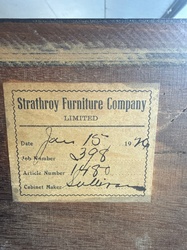
I have conducted a visual inspection of this circular gateleg drop-leaf dining table. The piece appears to be a mid-20th-century revival of the Jacobean style, likely crafted from solid oak. The medium-toned finish shows a developed patina consistent with age. Structurally, the table utilizes traditional gateleg mechanics, which appear functional, though the slight leaf misalignment indicates centuries of seasonal wood movement or hinge wear typical for this form. The condition is 'good' for its vintage, showing minor surface abrasions and darkening of the grain that do not detract from its utility. The current market for 20th-century revival brown furniture is currently soft, as modern buyers often prioritize lighter woods or mid-century modern aesthetics. However, gateleg tables remain popular for their space-saving versatility. Comparables for mass-produced revival pieces of this era typically sell at auction or secondary markets within the $300-$700 range, depending on the intricacy of the leg turnings. This appraisal is limited by the digital nature of the inspection. Without a physical examination, I cannot verify the presence of modern screws versus hand-forged nails, nor can I inspect the underside for maker’s marks or secondary wood species (like pine or poplar) that would clarify the manufacturer. Full authentication would require an in-person review of the joinery and grain density to rule out 19th-century origins. Documentation such as a bill of sale or family provenance would further solidify its historical context and potential value at the higher end of the spectrum.

Get your items appraised

Instant estimates of your treasures with AI-powered appraisals

Browse More Appraisals