AI Appraisal Estimate

AI-generated estimates · not official valuations

From the user

What was submitted

Photo and notes provided by the user — not generated by AI

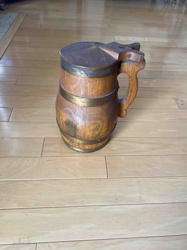
Submitted item photo
Submitted photo · May 27, 2026

User's notes

No additional notes provided.

AI analysis below

AI appraisal

AI analysis & estimate

AI-Generated · Verify before acting

Everything below is generated by AI for informational purposes only. AI can make mistakes — the AI may misidentify items or misattribute them (artist, maker, brand, designer, origin, era). This is not an official valuation and should not be used for insurance, sale, tax, estate, legal, or lending purposes — or any decision requiring a certified appraisal. It is not an authoritative claim about any person, brand, or rights holder — do not share or rely on it as a factual statement about a third party. Always consult qualified professionals before making financial decisions.

Read the full disclaimer

AI Identification

·Not independently authenticated·Verify before acting

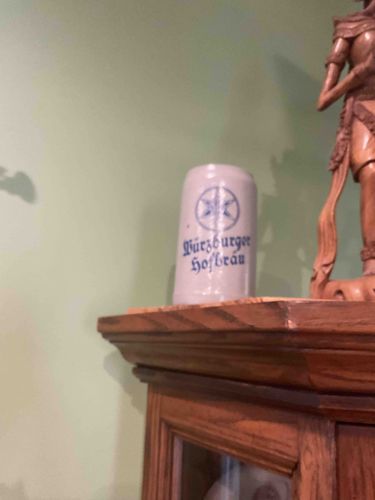
Vintage Würzburger Hofbräu Stoneware Beer Stein

Antiques & Collectibles / Breweriana

AI Estimated Value

·Not an official valuation·Verify before acting

$45-75

As of May 27, 2026

AI Item Analysis

·AI can make mistakes·Verify before acting
This item is a traditional German beer stein, or Humpen, specifically associated with the Würzburger Hofbräu brewery. The piece is constructed from salt-glazed stoneware, typically referred to as 'Keitler' or 'grey stoneware' in German ceramics. It features a cylindrical, slightly tapered body with a smooth, light grey or off-white finish characteristic of salt-glazing processes from the 19th and 20th centuries. The front of the stein prominently displays the brewery name "Würzburger Hofbräu" in a classic cobalt blue Fraktur or Gothic script, topped with the brewery's circular star emblem. This specific branding suggests a production date likely ranging from the early to mid-20th century. The stoneware's surface shows a subtle orange-peel texture typical of salt glazing, providing a durable and non-porous finish. While the handle and interior are not fully visible, the exterior appears to be in good vintage condition with no major cracks or chips apparent from this angle. The cobalt blue pigment is well-saturated and remains crisp. Such vessels were standard serving housewares in Franconian beer halls, representing utilitarian craftsmanship designed for heavy institutional use. The absence of a pewter lid suggests this may be a standard open-top mug or 'Maßkrug' style used for daily service rather than a purely decorative commemorative piece.
AI Appraisal Report

·AI can make mistakes·Verify before acting
Based on my visual examination of this Würzburger Hofbräu stoneware beer stein, I find it to be an authentic example of early-to-mid 20th-century German brewery service ware. The salt-glaze finish exhibits the characteristic 'orange-peel' texture and cobalt blue lettering typical of the Westerwald region's production methods. The vessel appears to be a 0.5-liter or 1-liter 'Maßkrug' intended for high-volume tavern use rather than ornamental display. The condition is excellent, showing well-saturated pigment and no visible structural fractures or 'flea bites' on the rim, which often occur with heavy use. The market for breweriana remains steady, though values for open-top stoneware crocks are generally lower than their lidded counterparts. Comparable pieces from major Bavarian and Franconian breweries typically sell within the $30 to $80 range depending on the specific era of the branding. Würzburger Hofbräu is a recognized name, but because these were produced in large quantities for mass consumption, rarity is low. The crispness of the Gothic script and the brewery star logo add to its collectibility for enthusiasts of regional German beer history. Limitations: This appraisal is based solely on digital images. A physical inspection is required to check for internal hairline cracks, professional restorations, or base markings (such as a capacity stamp or manufacturer's mark) that could further refine the date of manufacture. To fully authenticate the piece, I would need to examine the 'pontil' or base wear to distinguish it from modern reproductions. Provenance documentation regarding its origin in a specific German establishment would provide a premium to the stated value.

Get your items appraised

Instant estimates of your treasures with AI-powered appraisals

Browse More Appraisals