Bactrian Camel Sancai-Style Ceramic Figurine
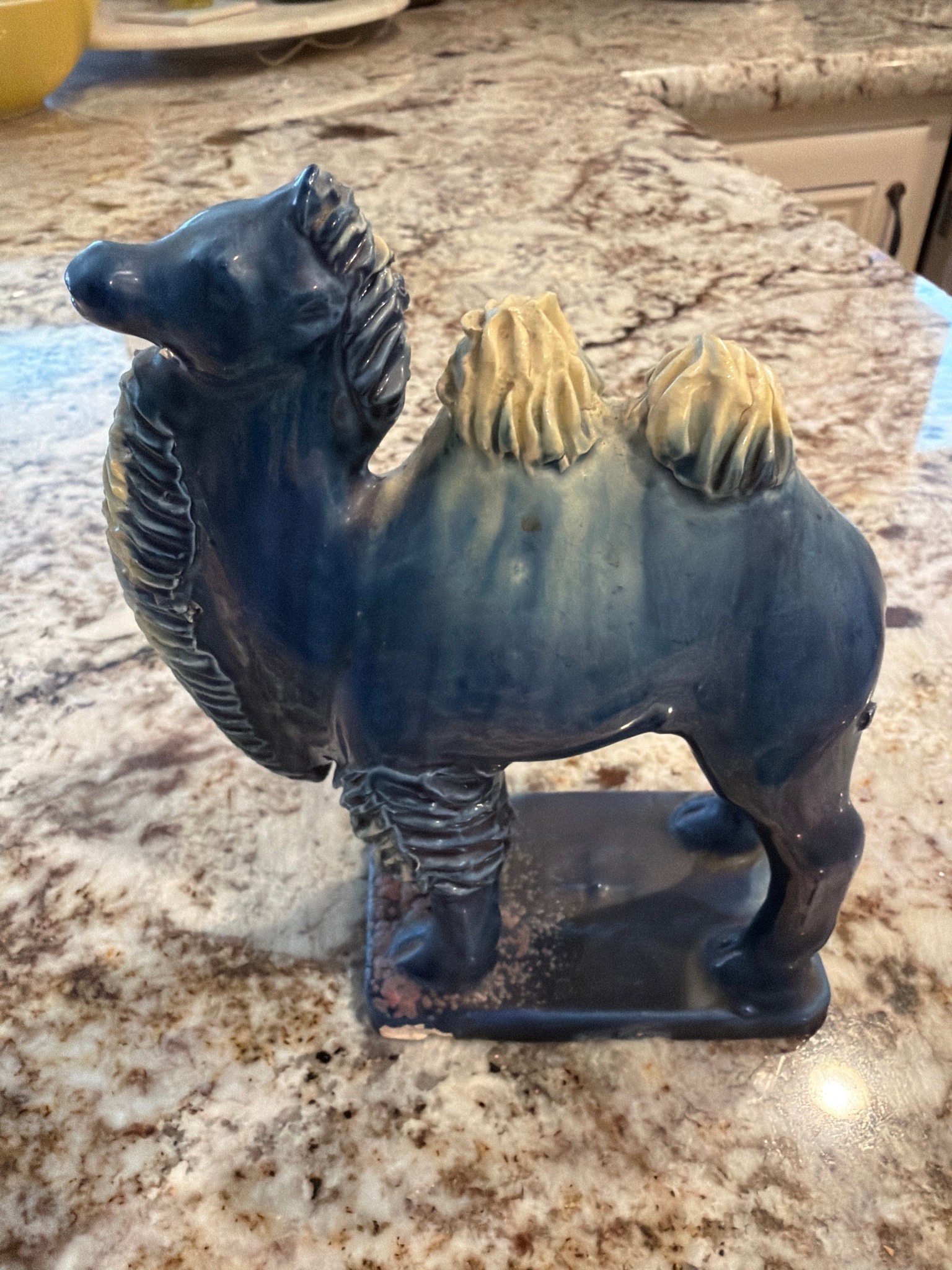
This is a ceramic figurine of a Bactrian (two-humped) camel, standing upon a rectangular plinth base. The piece is clearly inspired by Chinese Tang Dynasty Sancai (three-color) tomb figures, though this specific example appears to be a 20th-century decorative reproduction. It features a predominantly deep cobalt blue glaze, which transitions into a creamy yellowish-white at the tops of the humps and along the lower neck. The animal is depicted in a standing pose with the head arched back as if vocalizing. Distinguishing elements include stylized tufts of hair along the neck, upper front legs, and humps, rendered with molded textures. The glaze exhibits a runny, variegated quality typical of lead-based glazes. Condition-wise, there is visible chipping along the front edge of the rectangular base, revealing a pale earthenware body beneath. There are also signs of surface wear and small darkened spots on the central body. While no maker's mark is visible in this orientation, the overall craftsmanship, glaze application, and base construction suggest it was produced as a high-quality decorative export item in the mid-to-late 20th century. The blue coloration was historically one of the most expensive and rare colors in authentic Sancai pottery.
AI-Generated Appraisal Disclaimer
Estimated Value
$150 - $250
Basic Information
Category
Decorative Arts / Ceramics
Appraised On
May 8, 2026
Estimated Value
$150 - $250
Item Description
This is a ceramic figurine of a Bactrian (two-humped) camel, standing upon a rectangular plinth base. The piece is clearly inspired by Chinese Tang Dynasty Sancai (three-color) tomb figures, though this specific example appears to be a 20th-century decorative reproduction. It features a predominantly deep cobalt blue glaze, which transitions into a creamy yellowish-white at the tops of the humps and along the lower neck. The animal is depicted in a standing pose with the head arched back as if vocalizing. Distinguishing elements include stylized tufts of hair along the neck, upper front legs, and humps, rendered with molded textures. The glaze exhibits a runny, variegated quality typical of lead-based glazes. Condition-wise, there is visible chipping along the front edge of the rectangular base, revealing a pale earthenware body beneath. There are also signs of surface wear and small darkened spots on the central body. While no maker's mark is visible in this orientation, the overall craftsmanship, glaze application, and base construction suggest it was produced as a high-quality decorative export item in the mid-to-late 20th century. The blue coloration was historically one of the most expensive and rare colors in authentic Sancai pottery.
Get Your Items Appraised
Instant estimates of your treasures with AI-powered instant appraisals