Paleolithic-style Chert Hand Axe Scraper
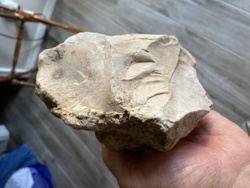
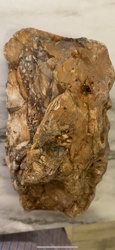
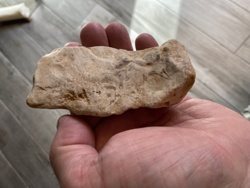
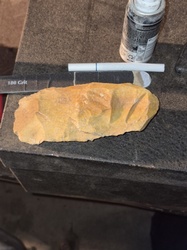
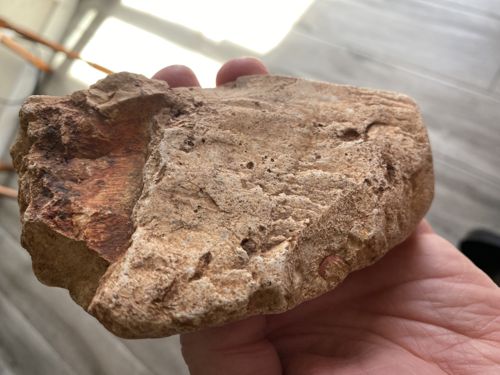
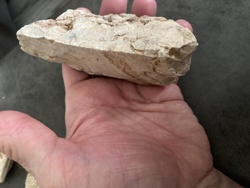
This is a large lithic implement crafted from chert, measuring approximately 4 to 6 inches in length, designed to fit comfortably within the palm of the hand. The material exhibits a variety of earthy tones, primarily sandy tan and beige, with a significant area of reddish-brown oxidation or iron staining on the left flank. The construction displays a combination of primary percussion flaking and more refined unifacial retouching along the primary working edge to create a scraper surface. The bifacial nature of the tool suggests it functioned as a multi-purpose hand axe. Visible condition issues include heavy patination across the surfaces, which indicates significant age and exposure to the elements. There is some minor edge crushing and hinge fractures resulting from both use-wear and natural taphonomic processes. The stone lacks any modern maker's marks or signatures, consistent with prehistoric artifacts. While identified as Paleolithic by the owner, such tools in North America (Oklahoma) typically correspond to the Paleo-Indian or Archaic periods. The quality or craftsmanship is functional rather than ceremonial, showing expert knowledge of lithic reduction to achieve a sharp, durable edge. The inclusion of visible cortex on certain sections provides a glimpse into the raw cobble from which it was knapped.
AI-Generated Appraisal Disclaimer
Estimated Value
$150 - $250
Basic Information
Category
Archaeological Artifacts & Lithics
Appraised On
February 19, 2026
Estimated Value
$150 - $250
Additional Details Provided By Owner
User Provided Information
Paleolithic chert hand axe scraper tool found in Guthrie OK
Item Description
This is a large lithic implement crafted from chert, measuring approximately 4 to 6 inches in length, designed to fit comfortably within the palm of the hand. The material exhibits a variety of earthy tones, primarily sandy tan and beige, with a significant area of reddish-brown oxidation or iron staining on the left flank. The construction displays a combination of primary percussion flaking and more refined unifacial retouching along the primary working edge to create a scraper surface. The bifacial nature of the tool suggests it functioned as a multi-purpose hand axe. Visible condition issues include heavy patination across the surfaces, which indicates significant age and exposure to the elements. There is some minor edge crushing and hinge fractures resulting from both use-wear and natural taphonomic processes. The stone lacks any modern maker's marks or signatures, consistent with prehistoric artifacts. While identified as Paleolithic by the owner, such tools in North America (Oklahoma) typically correspond to the Paleo-Indian or Archaic periods. The quality or craftsmanship is functional rather than ceremonial, showing expert knowledge of lithic reduction to achieve a sharp, durable edge. The inclusion of visible cortex on certain sections provides a glimpse into the raw cobble from which it was knapped.

Related Tags
Get Your Items Appraised
Instant estimates of your treasures with AI-powered instant appraisals