AI Appraisal Estimate

AI-generated estimates · not official valuations

From the user

What was submitted

Photo and notes provided by the user — not generated by AI

Submitted item photo
Submitted photo · May 24, 2026

User's notes

No additional notes provided.

AI analysis below

AI appraisal

AI analysis & estimate

AI-Generated · Verify before acting

Everything below is generated by AI for informational purposes only. AI can make mistakes — the AI may misidentify items or misattribute them (artist, maker, brand, designer, origin, era). This is not an official valuation and should not be used for insurance, sale, tax, estate, legal, or lending purposes — or any decision requiring a certified appraisal. It is not an authoritative claim about any person, brand, or rights holder — do not share or rely on it as a factual statement about a third party. Always consult qualified professionals before making financial decisions.

Read the full disclaimer

AI Identification

·Not independently authenticated·Verify before acting

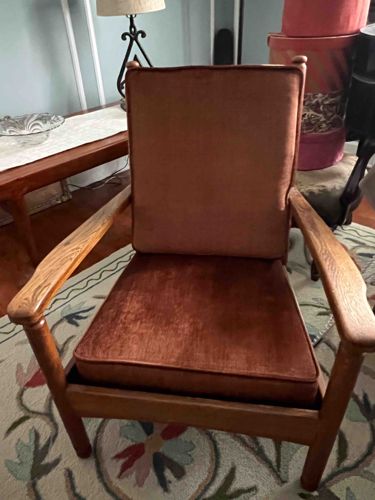
Mid-Century Modern Oak Frame Lounge Chair with Rusty Orange Velvet Upholstery

Furniture - Seating

AI Estimated Value

·Not an official valuation·Verify before acting

$450 - $650

As of May 24, 2026

AI Item Analysis

·AI can make mistakes·Verify before acting
This is a vintage lounge chair, likely dating from the mid-20th century (circa 1950s-1970s), showcasing a blend of Mid-Century Modern and transitional aesthetics. The chair features a solid oak frame characterized by a prominent wood grain and a warm, medium-honey oak finish. The design incorporates distinctive wide, flat armrests with ergonomic curving near the front, terminating in rounded finial-like caps. These arms are supported by cylindrical front legs. The backrest is tall and rectangular, featuring small decorative wooden knobs on the top corners and containing a loose rectangular cushion. Both the seat and back cushions are upholstered in a rust-toned or burnt orange velvet fabric, finished with classic welting (piping) along the edges. The chair’s construction appears sturdy, utilizing thick wooden rails for the seat box. From the photo, the wood shows a natural age-related patina with minor surface scratches and darkening at the joints. The upholstery appears intact but shows slight compression and pile tracking, common in vintage velvet furniture. While no maker's mark is visible in this view, the silhouette is reminiscent of American manufacturers from the transitional period like Paoli or similar commercial-grade furniture makers of that era. The level of craftsmanship is indicated by the integrated joinery and the shaping of the armrests, which provide both comfort and a stylistic mid-century flair.
AI Appraisal Report

·AI can make mistakes·Verify before acting
I have virtually examined this Mid-Century Modern lounge chair featuring a solid oak frame and rust velvet upholstery. The piece exhibits a strong transitional silhouette, likely produced in the 1960s or 70s. The wide, sculpted armrests and cylindrical legs suggest a commercial-grade manufacturer such as Paoli or Gunlocke, known for durability and functional design. Condition-wise, the oak retains a warm patina, though I noted minor surface abrasions and joint darkening consistent with age. The velvet cushions show characteristic pile tracking and minor compression, but appear structurally sound without visible tears. The current market for 'warm' MCM pieces is stable, particularly as burnt orange and oak wood tones have seen a resurgence in popularity. Comparables for unsigned but well-crafted oak armchairs of this era typically fall within the sub-$1,000 range. Factors limiting the value include the lack of a visible designer label and the relatively common nature of this specific frame design compared to high-end Danish imports. However, the ergonomic design and intact upholstery maintain its appeal for residential use. Authenticity cannot be fully verified through imagery alone. A physical inspection is required to check for manufacturer tags under the seat rail, verify the presence of original tension springs or webbing, and confirm that the wood is indeed solid oak rather than a veneer. Scientific testing of the foam would clarify if it has been replaced to meet modern fire safety standards, which can impact value for commercial resale.

Get your items appraised

Instant estimates of your treasures with AI-powered appraisals

Browse More Appraisals